


Cross-Sectional Analysis of Sleep-Promoting and Wake-Promoting Drug Use on Health, Fatigue-Related Error, and Near-Crashes in Police Officers
Supporting Files

-
2018/09/19
-
File Language:
English
Details
-
Journal Article:BMJ Open
-
Personal Author:
-
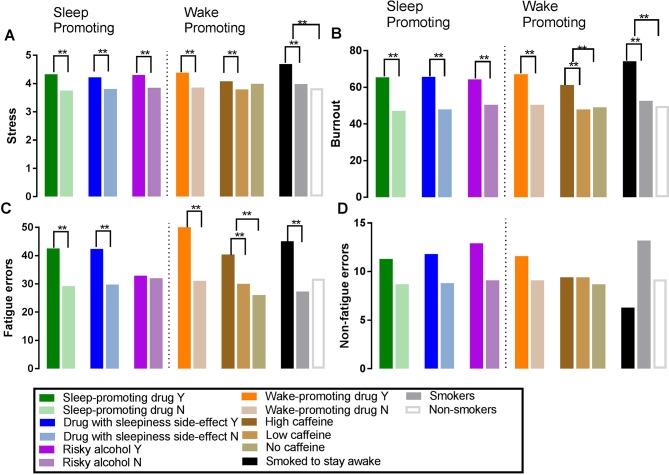
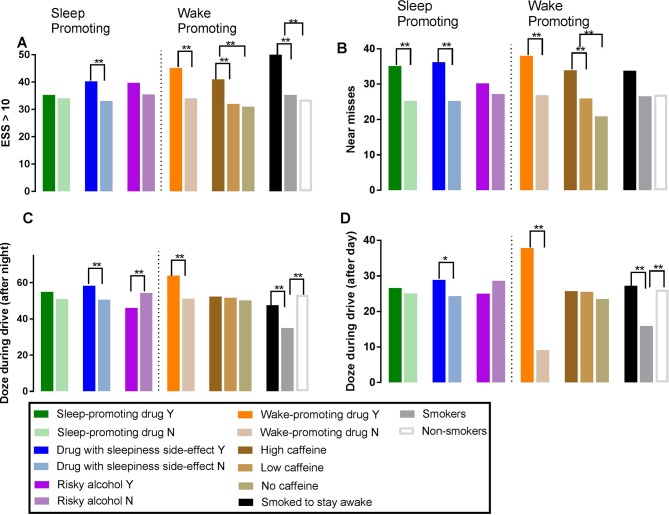
Description:Objectives: To examine sleep-promoting and wake-promoting drug use in police officers and associations between their use and health (excessive sleepiness, stress and burnout), performance (fatigue-related errors) and safety (near-crashes) outcomes, both alone and in combination with night-shift work. Design: Cross-sectional survey. Setting: Police officers from North America completed the survey either online or via paper/pencil at a police station. Participants: 4957 police participated, 3693 online (91.9%, participation rate) and 1264 onsite (cooperation rate 63.1%). Main outcome measures Sleep-promoting and wake-promoting drug use, excessive sleepiness, near-crash motor vehicle crashes, dozing while driving, fatigue errors, stress and burnout. Results: Over the past month, 20% of police officers reported using sleep-promoting drugs and drugs causing sleepiness, while wake-promoting agents were used by 28% of police (5% used wake-promoting drugs, 23% used high levels of caffeine and 4% smoked to stay awake). Use of sleep-promoting drugs was associated with increased near-crashes (OR=1.61; 95% CI 1.21 to 2.13), fatigue-related errors (OR=1.75; 95% CI 1.32 to 2.79), higher stress (OR=1.41; 95% CI 1.10 to 1.82), and higher burnout (OR=1.83; 95% CI 1.40 to 2.38). Wake-promoting drug use, high caffeine and smoking to stay awake were associated with increased odds of a fatigue-related error, stress and burnout (ORs ranging from 1.68 to 2.56). Caffeine consumption was common, and while smoking was not, of those participants who did smoke, one-in-three did so to remain awake. Night-shift work was associated with independent increases in excessive sleepiness, near crashes and fatigue-related errors. Interactions between night-shift work and wake-promoting drug use were also found for excessive sleepiness. Conclusions: Police who use sleep-promoting and wake-promoting drugs, especially when working night shifts, are most vulnerable to adverse health, performance and safety outcomes. Future research should examine temporal relationships between shift work, drug use and adverse outcomes, in order to develop optimal alertness management strategies. [Description provided by NIOSH]
-
Subjects:
-
Keywords:Author Keywords: Drug Use; Health; Mental Health; Performance; Safety; Shift Work Sleep; Sleep Disorders; Drugs; Stress; Psychological Effects; Psychology; Physical Stress; Physiological Effects; Physiological Stress; Physiology; Fatigue; Safety; Health Effects; Shift Work; Humans; Men; Women; Statistical Analysis; Police Officers; Law Enforcement Officer; LEO; Caffeine; Smoking; Motor Vehicles; Accidents; Injuries;
-
Source:BMJ Open 2018 Sep; 8(9):e022041
-
ISSN:2044-6055
-
Pubmed ID:30232109
-
Pubmed Central ID:PMC6150149
-
Document Type:
-
Funding:
-
Genre:
-
Place as Subject:
-
CIO:
-
Topic:
-
Location:
-
Pages in Document:9 pdf pages
-
Volume:8
-
Issue:9
-
NIOSHTIC Number:nn:20052998
-
Contact Point Address:Rowan P Ogeil, Division of Sleep and Circadian Disorders, Departments of Medicine and Neurology, Brigham and Women's Hospital, Boston, Massachusetts
-
Email:rowan.ogeil@monash.edu
-
CAS Registry Number:
-
Federal Fiscal Year:2018
-
Performing Organization:Brigham and Women's Hospital - Boston, Massachusetts
-
Peer Reviewed:True
-
Collection(s):
-
Main Document Checksum:urn:sha-512:f67c97fd82db589603ab41136b20f62abec02213d7af521a2e69ec9475970f96d47baa56ca20c6dd2f31d7c94120b2d42728e6791b12cd33edf1434f09e2d0ac
-
Download URL:
-
File Type:
 [PDF
- 2.61 MB
]
[PDF
- 2.61 MB
]
Supporting Files


File Language:
English
ON THIS PAGE


CDC STACKS serves as an archival repository of CDC-published products including
scientific findings,
journal articles, guidelines, recommendations, or other public health information authored or
co-authored by CDC or funded partners.
As a repository, CDC STACKS retains documents in their original published format to ensure public access to scientific information.
As a repository, CDC STACKS retains documents in their original published format to ensure public access to scientific information.
You May Also Like