


Numerical and experimental investigation of carbon monoxide spread in underground mine fires
Supporting Files

-
Aug 14 2018
-
File Language:
English
Details
-
Alternative Title:J Fire Sci
-
Personal Author:
-
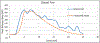
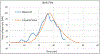
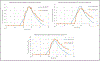
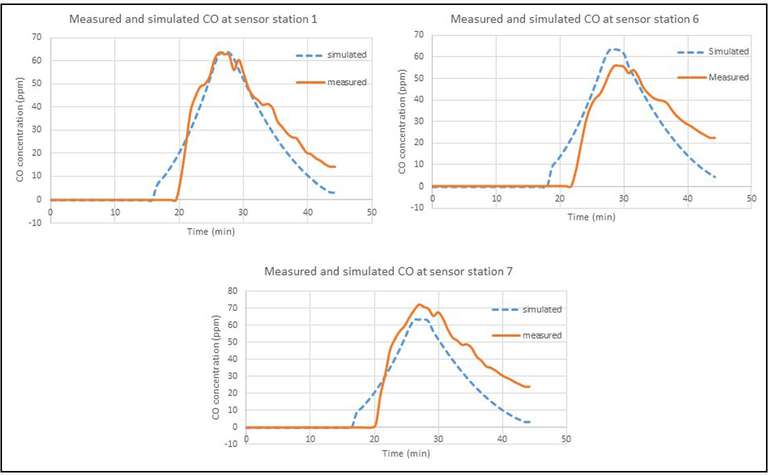
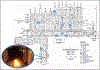
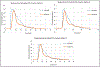
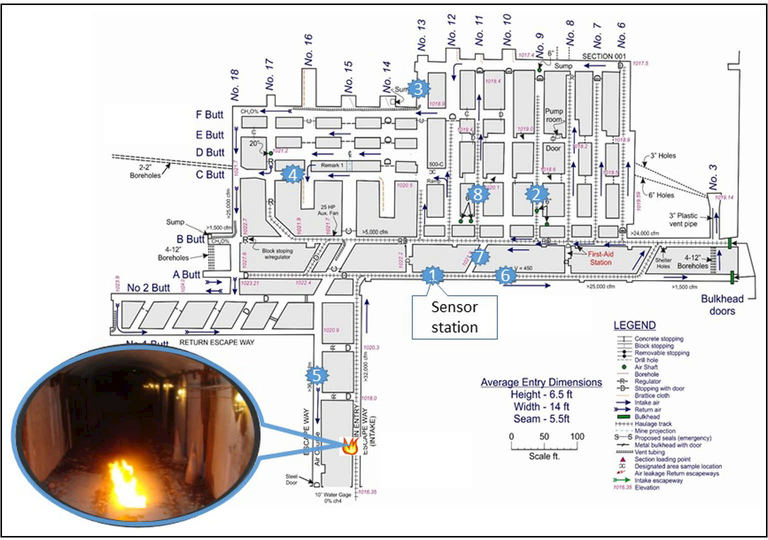
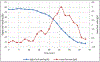
Description:The primary danger with underground mine fires is carbon monoxide poisoning. A good knowledge of smoke and carbon monoxide movement in an underground mine during a fire is of importance for the design of ventilation systems, emergency response, and miners' escape and rescue. Mine fire simulation software packages have been widely used to predict carbon monoxide concentration and its spread in a mine for effective mine fire emergency planning. However, they are not highly recommended to be used to forecast the actual carbon monoxide concentration due to lack of validation studies. In this article, MFIRE, a mine fire simulation software based on ventilation networks, was evaluated for its carbon monoxide spread prediction capabilities using experimental results from large-scale diesel fuel and conveyor belt fire tests conducted in the Safety Research Coal Mine at The National Institute for Occupational Safety and Health. The comparison between the simulation and test results of carbon monoxide concentration shows good agreement and indicates that MFIRE is able to predict the carbon monoxide spread in underground mine fires with confidence.
-
Subjects:
-
Source:J Fire Sci. 36(5):406-418.
-
Pubmed ID:30270967
-
Pubmed Central ID:PMC6159219
-
Document Type:
-
Funding:
-
Volume:36
-
Issue:5
-
Collection(s):
-
Main Document Checksum:urn:sha256:14be4b99327241f35608bb80a8367553739ffa7d3ce90d5d7052e14b629ad5c4
-
Download URL:
-
File Type:
 [PDF
- 1.48 MB
]
[PDF
- 1.48 MB
]
Supporting Files


File Language:
English
ON THIS PAGE







CDC STACKS serves as an archival repository of CDC-published products including
scientific findings,
journal articles, guidelines, recommendations, or other public health information authored or
co-authored by CDC or funded partners.
As a repository, CDC STACKS retains documents in their original published format to ensure public access to scientific information.
As a repository, CDC STACKS retains documents in their original published format to ensure public access to scientific information.
You May Also Like
COLLECTION
CDC Public Access