



The effect of chloroquine dose and primaquine on Plasmodium vivax recurrence: a WorldWide Antimalarial Resistance Network systematic review and individual patient pooled meta-analysis
Supporting Files
Public Domain

-
Jul 20 2018
-
Available in CDC Stacks on September 01, 2018, 12:00 AM
File Language:
English
Details
-
Alternative Title:Lancet Infect Dis
-
Personal Author:Commons, Robert J. ; Simpson, Julie A. ; Thriemer, Kamala ; Humphreys, Georgina S ; Abreha, Tesfay ; Alemu, Sisay G. ; Añez, Arletta ; Anstey, Nicholas M ; Awab, Ghulam R. ; Baird, J Kevin ; Barber, Bridget E. ; Borghini-Fuhrer, Isabelle ; Chu, Cindy S. ; D'Alessandro, Umberto ; Dahal, Prabin ; Daher, André ; de Vries, Peter J. ; Erhart, Annette ; Gomes, Margarete S. M. ; Gonzalez-Ceron, Lilia ; Grigg, Matthew J ; Heidari, Aliehsan ; Hwang, Jimee ; Kager, Piet A. ; Ketema, Tsige ; Khan, Wasif A ; Lacerda, Marcus V. G. ; Leslie, Toby ; Ley, Benedikt ; Lidia, Kartini ; Monteiro, Wuelton M ; Nosten, Francois ; Pereira, Dhelio B. ; Phan, Giao T. ; Phyo, Aung P. ; Rowland, Mark ; Saravu, Kavitha ; Sibley, Carol H. ; Siqueira, André M ; Stepniewska, Kasia ; Sutanto, Inge ; Taylor, Walter R. J. ; Thwaites, Guy ; Tran, Binh Q. ; Tran, Hien T ; Valecha, Neena ; Vieira, José Luiz F ; Wangchuk, Sonam ; William, Timothy ; Woodrow, Charles J ; Zuluaga-Idarraga, Lina ; Guerin, Philippe J. ; White, Nicholas J. ; Price, Ric N.
-
Description:Background
Chloroquine remains the mainstay of treatment for Plasmodium vivax malaria despite increasing reports of treatment failure. We did a systematic review and meta-analysis to investigate the effect of chloroquine dose and the addition of primaquine on the risk of recurrent vivax malaria across different settings.
Methods
A systematic review done in MEDLINE, Web of Science, Embase, and Cochrane Database of Systematic Reviews identified P vivax clinical trials published between Jan 1, 2000, and March 22, 2017. Principal investigators were invited to share individual patient data, which were pooled using standardised methods. Cox regression analyses with random effects for study site were used to investigate the roles of chloroquine dose and primaquine use on rate of recurrence between day 7 and day 42 (primary outcome). The review protocol is registered in PROSPERO, number CRD42016053310.
Findings
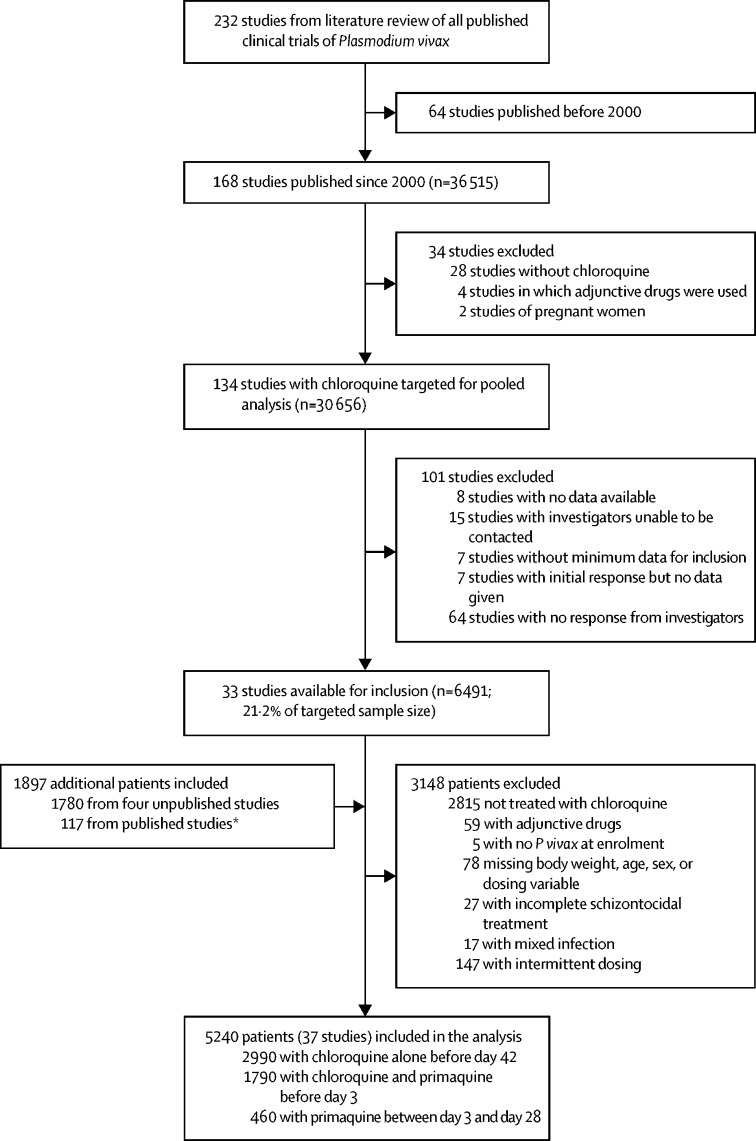
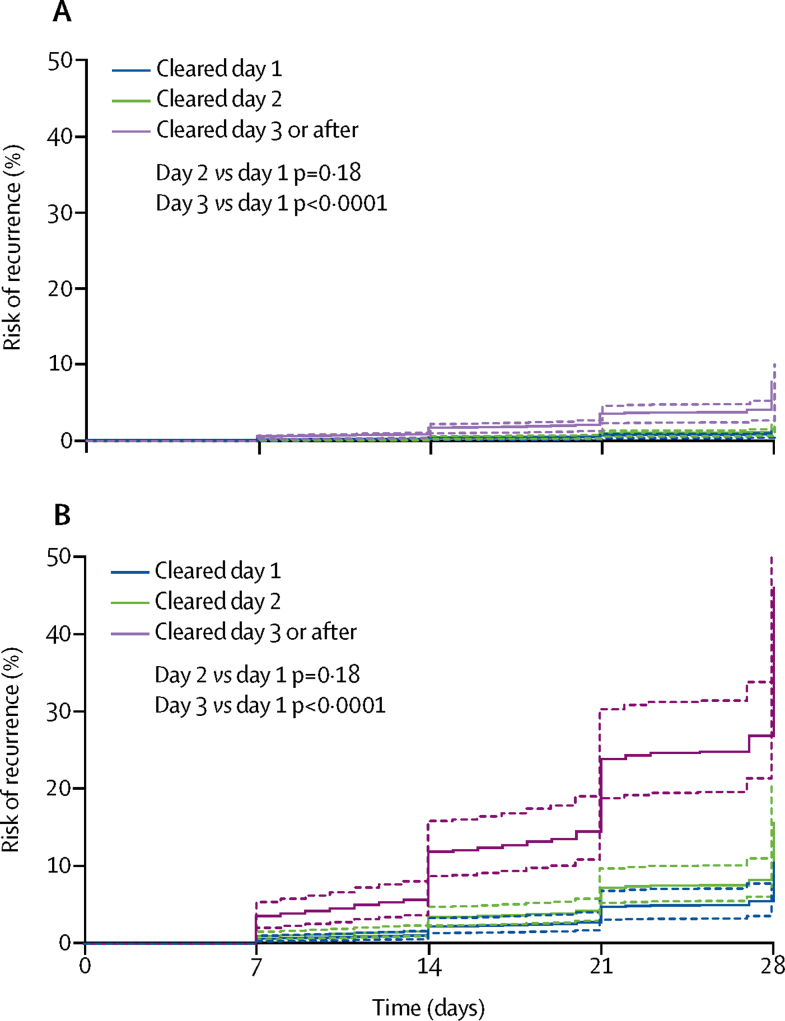
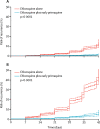
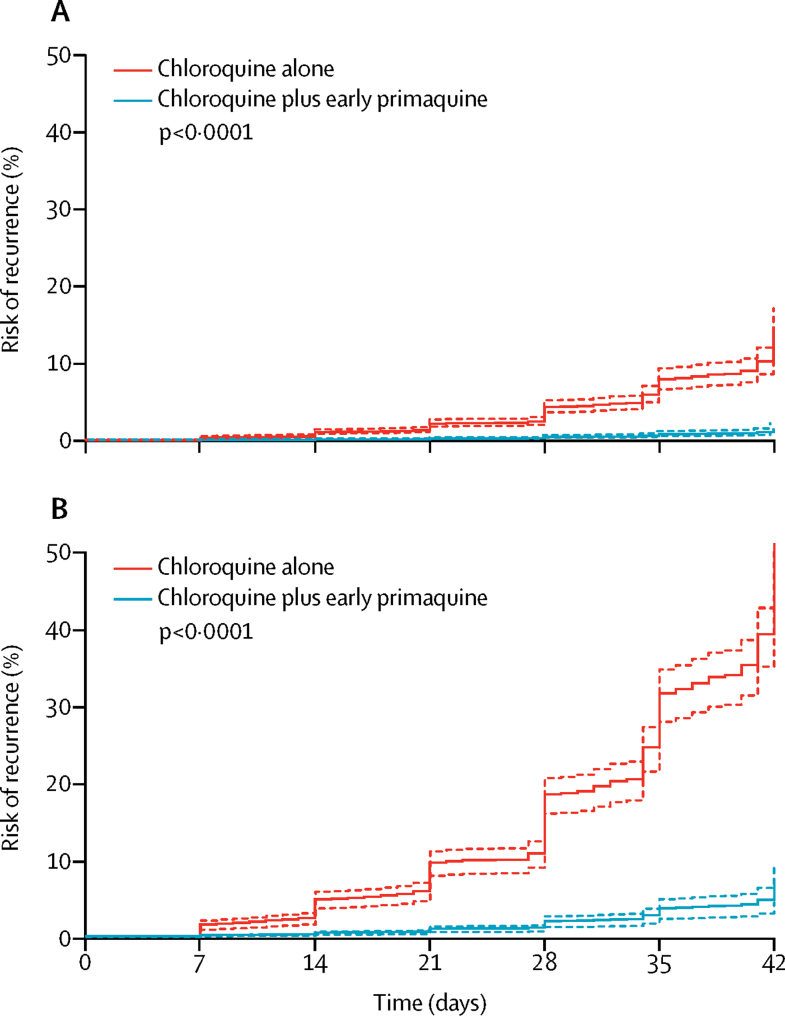
Of 134 identified chloroquine studies, 37 studies (from 17 countries) and 5240 patients were included. 2990 patients were treated with chloroquine alone, of whom 1041 (34·8%) received a dose below the target 25 mg/kg. The risk of recurrence was 32·4% (95% CI 29·8–35·1) by day 42. After controlling for confounders, a 5 mg/kg higher chloroquine dose reduced the rate of recurrence overall (adjusted hazard ratio AHR 0·82, 95% CI 0·69–0·97; p=0·021) and in children younger than 5 years (0·59, 0·41–0·86; p=0·0058). Adding primaquine reduced the risk of recurrence to 4·9% (95% CI 3·1–7·7) by day 42, which is lower than with chloroquine alone (AHR 0·10, 0·05–0·17; p<0·0001).
Interpretation
Chloroquine is commonly under-dosed in the treatment of vivax malaria. Increasing the recommended dose to 30 mg/kg in children younger than 5 years could reduce substantially the risk of early recurrence when primaquine is not given. Radical cure with primaquine was highly effective in preventing early recurrence and may also improve blood schizontocidal efficacy against chloroquine-resistant P vivax.
Funding
Wellcome Trust, Australian National Health and Medical Research Council, and Bill & Melinda Gates Foundation. -
Subjects:
-
Source:Lancet Infect Dis. 2018; 18(9):1025-1034.
-
Pubmed ID:30033231
-
Pubmed Central ID:PMC6105624
-
Document Type:
-
Volume:18
-
Issue:9
-
Download URL:
-
File Type:
 [PDF - 1.26 MB]
 -
Collection(s):
-
Main Document Checksum:urn:sha256:0ef54b2381e40bb02965725db6ffe3217ee0c30dce7ce103166da44b27d3119e


File Language:
English
 Was this page helpful?
 Found an issue?



CDC STACKS serves as an archival repository of CDC-published products including
scientific findings, journal articles, guidelines, recommendations, or other public health information authored or
co-authored by CDC or funded partners.
As a repository, CDC STACKS retains documents in their original published format to ensure public access to scientific information.
As a repository, CDC STACKS retains documents in their original published format to ensure public access to scientific information.
You May Also Like
COLLECTION
CDC Public Access