


Epidemiology and antimicrobial resistance of invasive non-typhoidal Salmonellosis in rural Thailand from 2006-2014
Supporting Files
Public Domain

-
Aug 06 2018
-
File Language:
English
Details
-
Alternative Title:PLoS Negl Trop Dis
-
Personal Author:Whistler, Toni ; Sapchookul, Patranuch ; McCormick, David W. ; Sangwichian, Ornuma ; Jorakate, Possawat ; Makprasert, Sirirat ; Jatapai, Anchalee ; Naorat, Sathapana ; Surin, Uraiwan ; Koosakunwat, Surathinee ; Supcharassaeng, Surachai ; Piralam, Barameht ; Mikoleit, Mathew ; Baggett, Henry C. ; Rhodes, Julia ; Gregory, Christopher J.
-
Description:Introduction
Invasive salmonellosis is a common cause of bloodstream infection in Southeast Asia. Limited epidemiologic and antimicrobial resistance data are available from the region.
Methods
Blood cultures performed in all 20 hospitals in the northeastern province of Nakhon Phanom (NP) and eastern province of Sa Kaeo (SK), Thailand were captured in a bloodstream infection surveillance system. Cultures were performed as clinically indicated in hospitalized patients; patients with multiple positive cultures had only the first included. Bottles were incubated using the BacT/Alert system (bioMérieux, Thailand) and isolates were identified using standard microbiological techniques; all Salmonella isolates were classified to at least the serogroup level. Antimicrobial resistance was assessed using disk diffusion.
Results
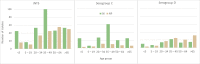
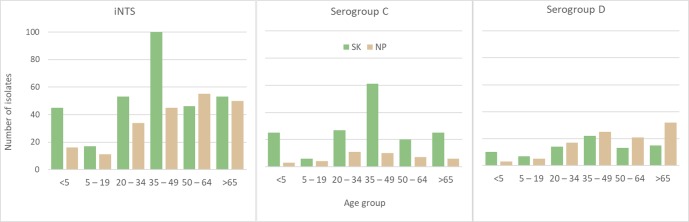
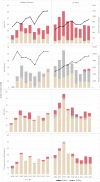
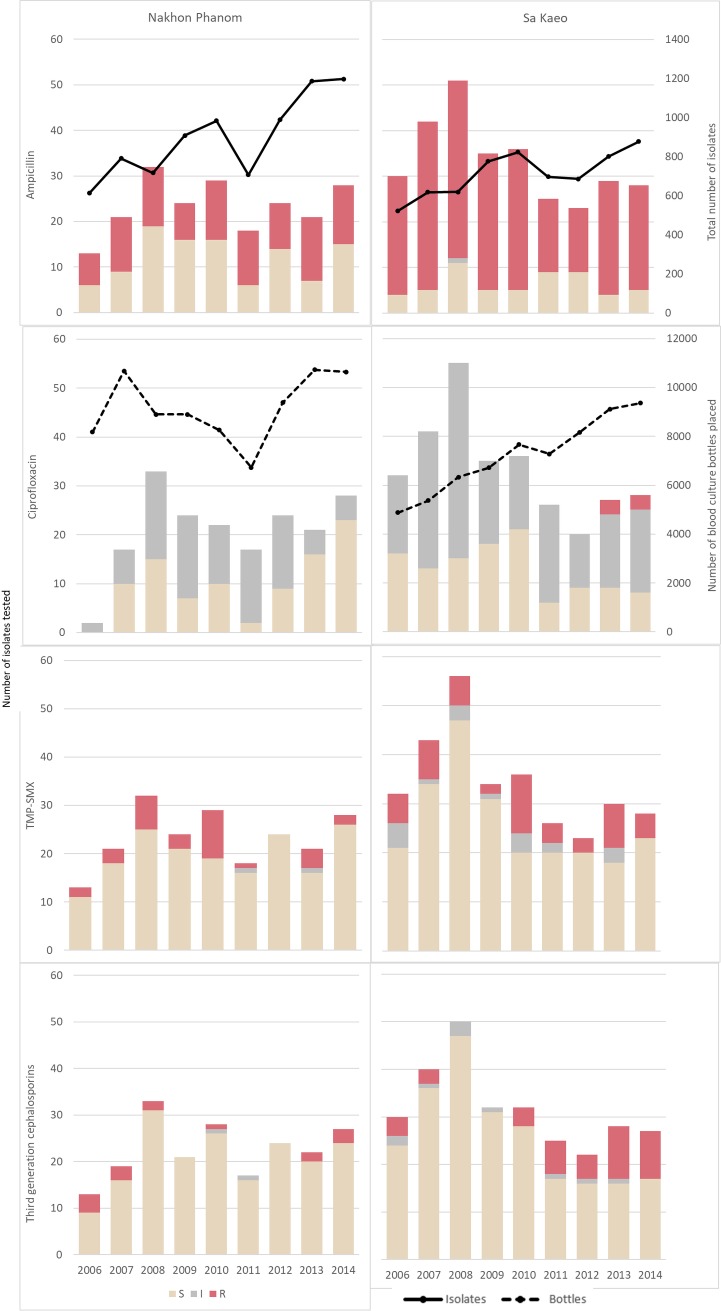
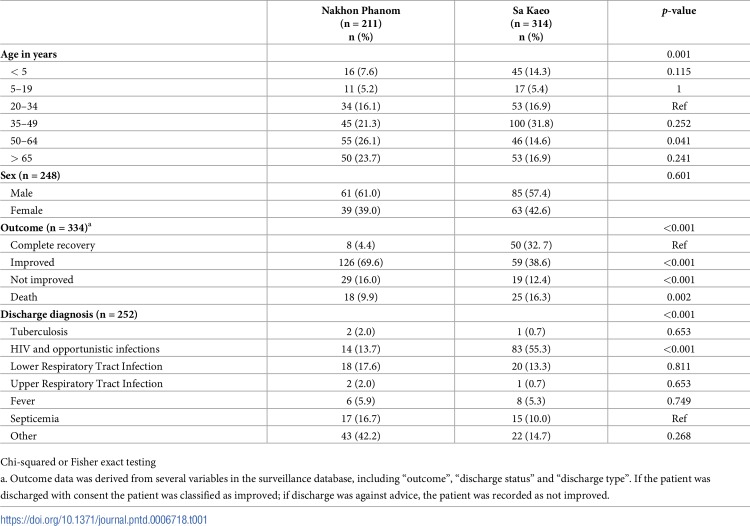
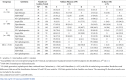
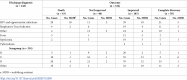
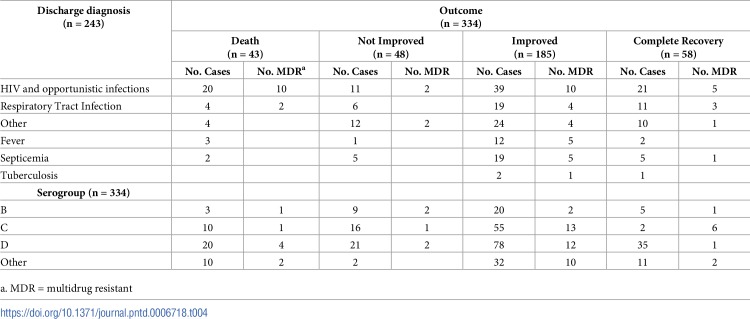
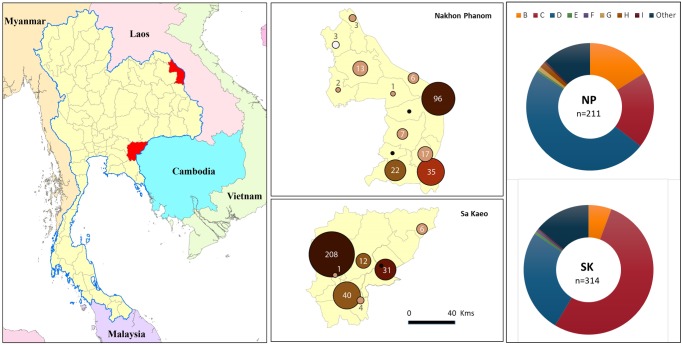
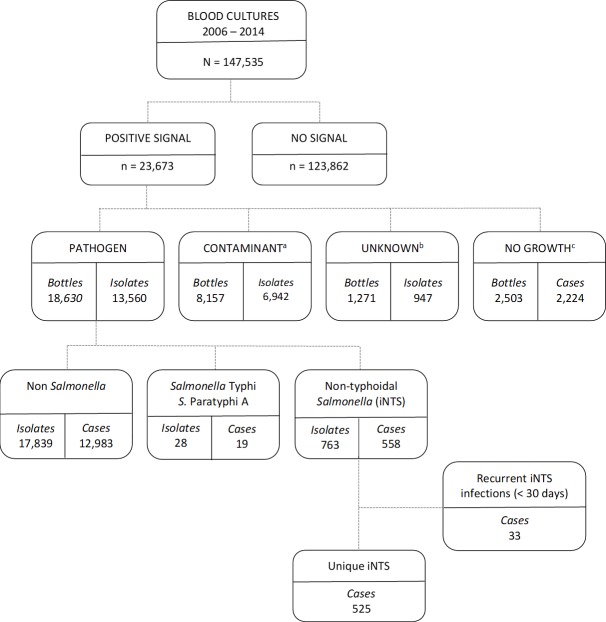
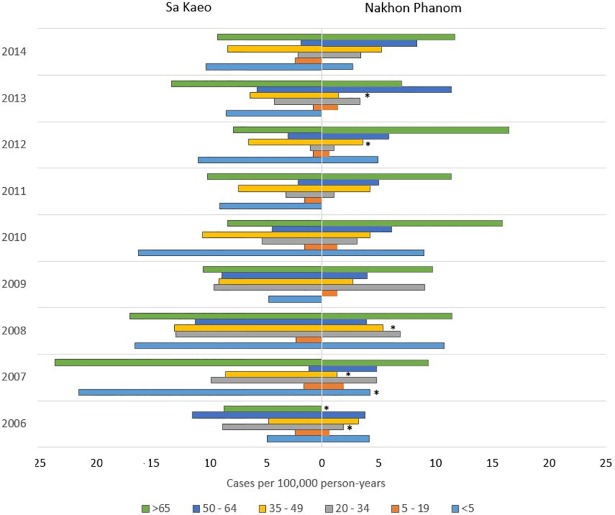
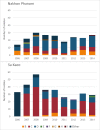
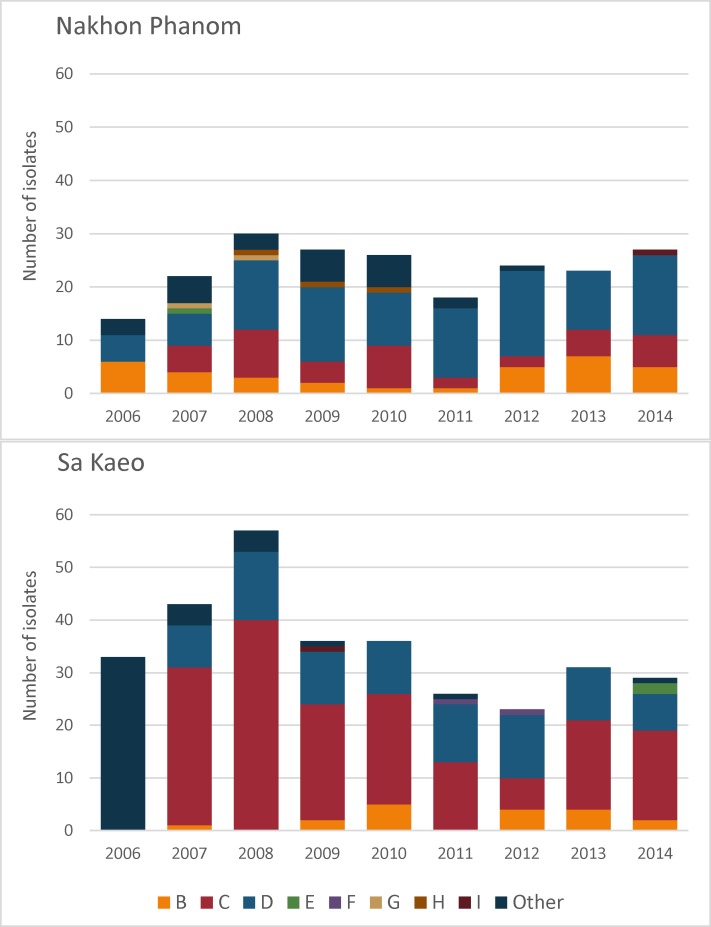
Salmonella was the fifth most common pathogen identified in 147,535 cultures with 525 cases (211 in Nakhon Phanom (NP) and 314 in Sa Kaeo (SK)). The overall adjusted iNTS incidence rate in NP was 4.0 cases/100,000 person-years (95% CI 3.5–4.5) and in SK 6.4 cases/100,000 person-years (95% CI 5.7–7.1; p = 0.001). The most common serogroups were C (39.4%), D (35.0%) and B (9.9%). Serogroup D predominated in NP (103/211) with 59.2% of this serogroup being Salmonella serovar Enteritidis. Serogroup C predominated in SK (166/314) with 84.3% of this serogroup being Salmonella serovar Choleraesuis. Antibiotic resistance was 68.2% (343/503) for ampicillin, 1.2% (6/482) for ciprofloxacin (or 58.1% (280/482) if both intermediate and resistant phenotypes are considered), 17.0% (87/512) for trimethoprim-sulfamethoxazole, and 12.2% (59/484) for third-generation cephalosporins (cefotaxime or ceftazidime). Multidrug resistance was seen in 99/516 isolates (19.2%).
Conclusions
The NTS isolates causing bloodstream infections in rural Thailand are commonly resistant to ampicillin, cefotaxime, and TMP-SMX. Observed differences between NP and SK indicate that serogroup distribution and antibiotic resistance may substantially differ throughout Thailand and the region.
-
Subjects:
-
Source:PLoS Negl Trop Dis. 12(8).
-
Pubmed ID:30080897
-
Pubmed Central ID:PMC6095622
-
Document Type:
-
Place as Subject:
-
Volume:12
-
Issue:8
-
Collection(s):
-
Main Document Checksum:urn:sha256:4ad5d8102d74a06a8a9981bbaa55e789746d076aa935a261ea855298a8f216f6
-
Download URL:
-
File Type:
 [PDF
- 2.89 MB
]
[PDF
- 2.89 MB
]
Supporting Files


File Language:
English
ON THIS PAGE



CDC STACKS serves as an archival repository of CDC-published products including
scientific findings,
journal articles, guidelines, recommendations, or other public health information authored or
co-authored by CDC or funded partners.
As a repository, CDC STACKS retains documents in their original published format to ensure public access to scientific information.
As a repository, CDC STACKS retains documents in their original published format to ensure public access to scientific information.
You May Also Like
COLLECTION
CDC Public Access