



Impact of a Shortage of First-Line Antituberculosis Medication on Tuberculosis Control — United States, 2012–2013
Supporting Files
Public Domain

-
May 24 2013
Details
-
Journal Article:Morbidity and Mortality Weekly Report (MMWR)
-
Personal Author:
-
Corporate Authors:
-
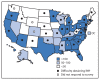
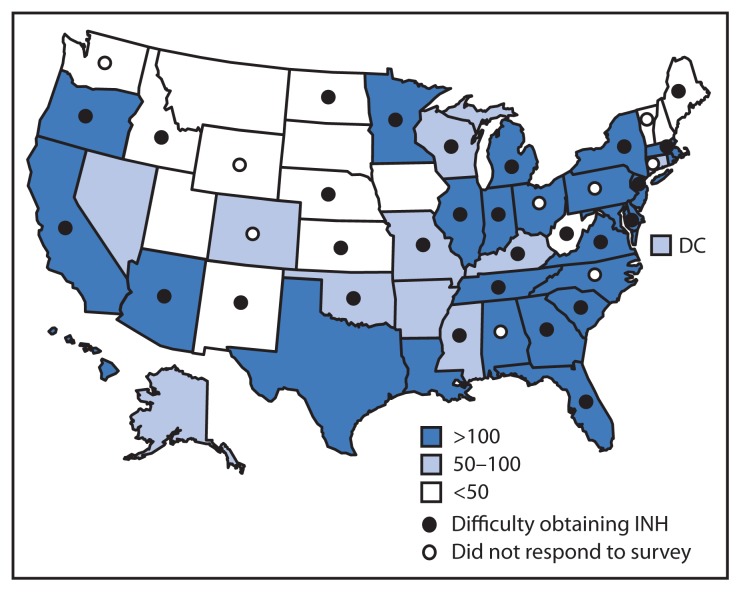
Description:Tuberculosis (TB) disease is treated in most cases with a regimen of several drugs taken for 6-9 months. Currently, 10 drugs are approved by the Food and Drug Administration (FDA) for treatment of TB. Of these, the four drugs that form the core for first-line treatment regimens are isoniazid (INH), rifampin, ethambutol, and pyrazinamide. In November 2012, the United States began to experience a severe interruption in the supply of INH. To assess the extent of the problem and its impact on TB control programs, a nationwide survey of programs was conducted in January 2013 by the National Tuberculosis Controllers Association (NTCA). The results indicated that the INH shortage was interfering with patient care and could contribute to TB Transmission in the United States This report summarizes the findings of that survey, which showed that 79% of the responding health departments reported difficulties with procuring INH within the last month, with 15% reporting that they no longer had INH and 41% reporting that they would no longer have a supply within 1 month of the survey. Because of local interruptions in INH supply, responding TB programs were changing INH suppliers (69%), prioritizing patients for treatment of latent TB infection (LTBI) (72%), delaying LTBI treatment (68%), and changing to alternative LTBI treatment regimens (88%). Potential solutions for alleviating the INH shortage and averting future shortages include maintaining a national supply of first-line drugs, sharing INH among jurisdictions, working with the World Health Organization's Global Drug Facility to obtain INH from foreign manufacturers, and strengthening reporting of shortages and impending shortages by drug suppliers to FDA.
-
Subjects:
-
Source:MMWR Morbidity Mortal Weekly Rep. 2013; 62(20):398-400.
-
Series:
-
ISSN:0149-2195 (print) ; 1545-861X (digital)
-
Pubmed ID:23698604
-
Pubmed Central ID:PMC4604936
-
Document Type:
-
Place as Subject:
-
Pages in Document:3 pdf pages
-
Volume:62
-
Issue:20
-
Download URL:
-
File Type:
 [PDF - 183.37 KB]
 -
Collection(s):
-
Main Document Checksum:urn:sha-512:9f7324505636cb95c7f3b73f561eda59a62c33314930db0602930cbd67501bd73036421f52530926ee5d35c650733c6c2a28b096367acbe97de9ca291c020a4a
Supporting Files


 Was this page helpful?
 Found an issue?

CDC STACKS serves as an archival repository of CDC-published products including
scientific findings, journal articles, guidelines, recommendations, or other public health information authored or
co-authored by CDC or funded partners.
As a repository, CDC STACKS retains documents in their original published format to ensure public access to scientific information.
As a repository, CDC STACKS retains documents in their original published format to ensure public access to scientific information.
You May Also Like
COLLECTION
Morbidity and Mortality Weekly Report (MMWR)