


Urinary Cadmium Threshold to Prevent Kidney Disease Development
Supporting Files
Public Domain

-
May 01 2018
-
File Language:
English
Details
-
Alternative Title:Toxics
-
Personal Author:
-
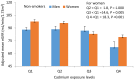
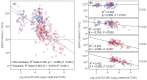
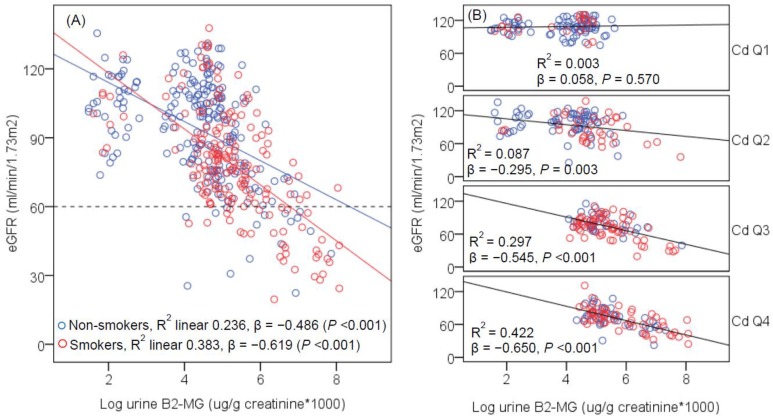
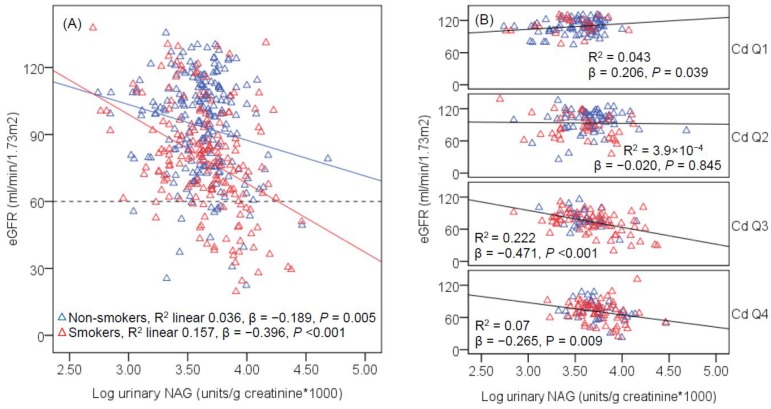
Description:The frequently observed association between kidney toxicity and long-term cadmium (Cd) exposure has long been dismissed and deemed not to be of clinical relevance. However, Cd exposure has now been associated with increased risk of developing chronic kidney disease (CKD). We investigated the link that may exist between kidney Cd toxicity markers and clinical kidney function measure such as estimated glomerular filtration rates (eGFR). We analyzed data from 193 men to 202 women, aged 16−87 years [mean age 48.8 years], who lived in a low- and high-Cd exposure areas in Thailand. The mean (range) urinary Cd level was 5.93 (0.05⁻57) μg/g creatinine. The mean (range) for estimated GFR was 86.9 (19.6−137.8) mL/min/1.73 m². Kidney pathology reflected by urinary β2-microglobulin (β2-MG) levels ≥ 300 μg/g creatinine showed an association with 5.32-fold increase in prevalence odds of CKD (| = 0.001), while urinary Cd levels showed an association with a 2.98-fold greater odds of CKD prevalence (| = 0.037). In non-smoking women, Cd in the highest urinary Cd quartile was associated with 18.3 mL/min/1.73 m² lower eGFR value, compared to the lowest quartile (| < 0.001). Evidence for Cd-induced kidney pathology could thus be linked to GFR reduction, and CKD development in Cd-exposed people. These findings may help prioritize efforts to reassess Cd exposure and its impact on population health, given the rising prevalence of CKD globally.
-
Subjects:
-
Source:Toxics. 2018; 6(2).
-
Pubmed ID:29723981
-
Pubmed Central ID:PMC6027056
-
Document Type:
-
Volume:6
-
Issue:2
-
Collection(s):
-
Main Document Checksum:urn:sha256:4d5f61189458311a3d5b050bb69ffb275c22658e3f66ae4f8968e907179052ff
-
Download URL:
-
File Type:
 [PDF
- 2.33 MB
]
[PDF
- 2.33 MB
]
Supporting Files


File Language:
English
ON THIS PAGE




CDC STACKS serves as an archival repository of CDC-published products including
scientific findings,
journal articles, guidelines, recommendations, or other public health information authored or
co-authored by CDC or funded partners.
As a repository, CDC STACKS retains documents in their original published format to ensure public access to scientific information.
As a repository, CDC STACKS retains documents in their original published format to ensure public access to scientific information.
You May Also Like
COLLECTION
CDC Public Access