


Viral etiologies of influenza‐like illness and severe acute respiratory infections in Thailand
Supporting Files
Public Domain

-
May 08 2018
File Language:
English
Details
-
Alternative Title:Influenza Other Respir Viruses
-
Personal Author:
-
Description:Background
Information on the burden, characteristics and seasonality of non‐influenza respiratory viruses is limited in tropical countries.
Objectives
Describe the epidemiology of selected non‐influenza respiratory viruses in Thailand between June 2010 and May 2014 using a sentinel surveillance platform established for influenza.
Methods
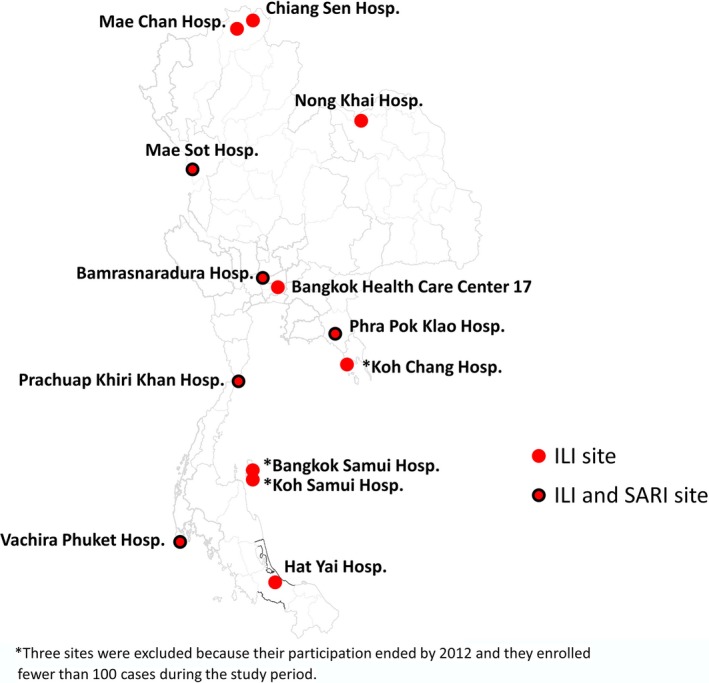
Patients with influenza‐like illness (ILI; history of fever or documented temperature ≥38°C, cough, not requiring hospitalization) or severe acute respiratory infection (SARI; history of fever or documented temperature ≥38°C, cough, onset <10 days, requiring hospitalization) were enrolled from 10 sites. Throat swabs were tested for influenza viruses, respiratory syncytial virus (RSV), metapneumovirus (MPV), parainfluenza viruses (PIV) 1‐3, and adenoviruses by polymerase chain reaction (PCR) or real‐time reverse transcriptase‐PCR.
Results
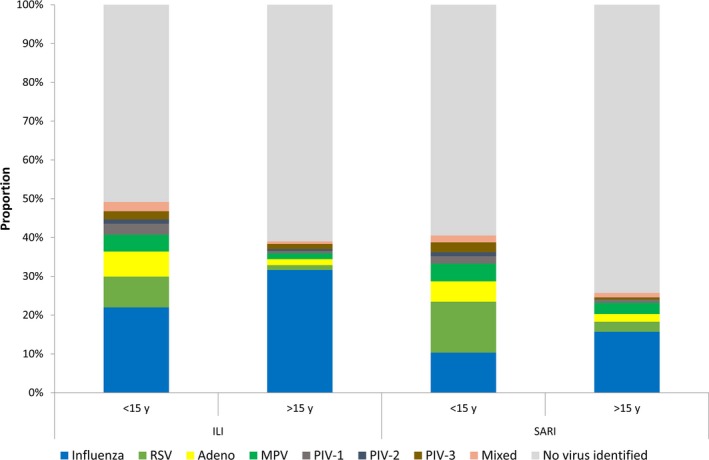
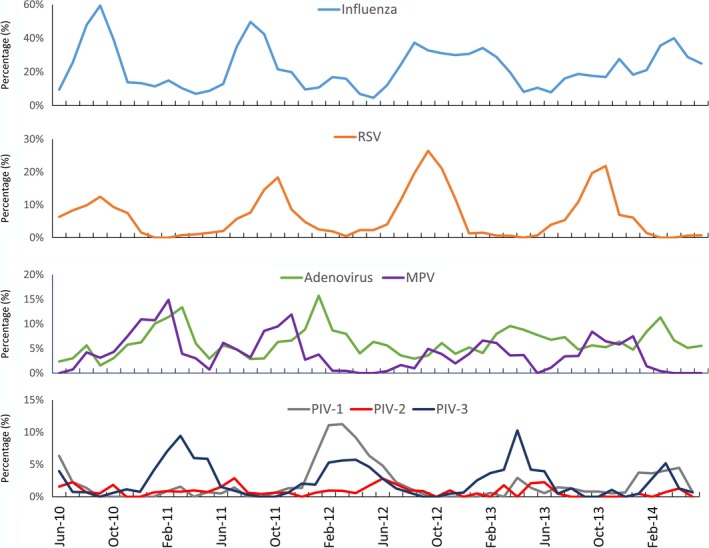
We screened 15 369 persons with acute respiratory infections and enrolled 8106 cases of ILI (5069 cases <15 years old) and 1754 cases of SARI (1404 cases <15 years old). Among ILI cases <15 years old, influenza viruses (1173, 23%), RSV (447, 9%), and adenoviruses (430, 8%) were the most frequently identified respiratory viruses tested, while for SARI cases <15 years old, RSV (196, 14%) influenza (157, 11%) and adenoviruses (90, 6%) were the most common. The RSV season significantly overlapped the larger influenza season from July to November in Thailand.
Conclusions
The global expansion of influenza sentinel surveillance provides an opportunity to gather information on the characteristics of cases positive for non‐influenza respiratory viruses, particularly seasonality, although adjustments to case definitions may be required.
-
Subjects:
-
Source:Influenza Other Respir Viruses. 12(4):482-489.
-
Pubmed ID:29518269
-
Pubmed Central ID:PMC6005612
-
Document Type:
-
Place as Subject:
-
Volume:12
-
Issue:4
-
Collection(s):
-
Main Document Checksum:urn:sha256:be4d30af0b7f9e44a412c81e62ddb77523ce1b48c4f1d0cde1bd334e166f609e
-
Download URL:
-
File Type:
 [PDF
- 576.22 KB
]
[PDF
- 576.22 KB
]
Supporting Files


File Language:
English
ON THIS PAGE



CDC STACKS serves as an archival repository of CDC-published products including
scientific findings,
journal articles, guidelines, recommendations, or other public health information authored or
co-authored by CDC or funded partners.
As a repository, CDC STACKS retains documents in their original published format to ensure public access to scientific information.
As a repository, CDC STACKS retains documents in their original published format to ensure public access to scientific information.
You May Also Like
COLLECTION
CDC Public Access