


Implementation of a Test, Treat, and Prevent HIV program among men who have sex with men and transgender women in Thailand, 2015-2016
Supporting Files

-
Jul 25 2018
File Language:
English
Details
-
Alternative Title:PLoS One
-
Personal Author:Ongwandee, Sumet ; Lertpiriyasuwat, Cheewanan ; Khawcharoenporn, Thana ; Chetchotisak, Ploenchan ; Thiansukhon, Ekkachai ; Leerattanapetch, Niramon ; Leungwaranan, Banlang ; Manopaiboon, Chomnad ; Phoorisri, Thanongsri ; Visavakum, Prin ; Jetsawang, Bongkoch ; Poolsawat, Monsicha ; Nookhai, Somboon ; Vasanti-Uppapokakorn, Monthinee ; Karuchit, Samart ; Kittinunvorakoon, Chonticha ; Mock, Philip ; Prybylski, Dimitri ; Sukkul, Ake-Chittra ; Roels, Thierry ; Martin, Michael
-
Description:Introduction
Antiretroviral therapy reduces the risk of serious illness among people living with HIV and can prevent HIV transmission. We implemented a Test, Treat, and Prevent HIV Program among men who have sex with men (MSM) and transgender women at five hospitals in four provinces of Thailand to increase HIV testing, help those who test positive start antiretroviral therapy, and increase access to pre-exposure prophylaxis (PrEP).
Methods
We implemented rapid HIV testing and trained staff on immediate antiretroviral initiation at the five hospitals and offered PrEP at two hospitals. We recruited MSM and transgender women who walked-in to clinics and used a peer-driven intervention to expand recruitment. We used logistic regression to determine factors associated with prevalent HIV infection and the decision to start antiretroviral therapy and PrEP.
Results
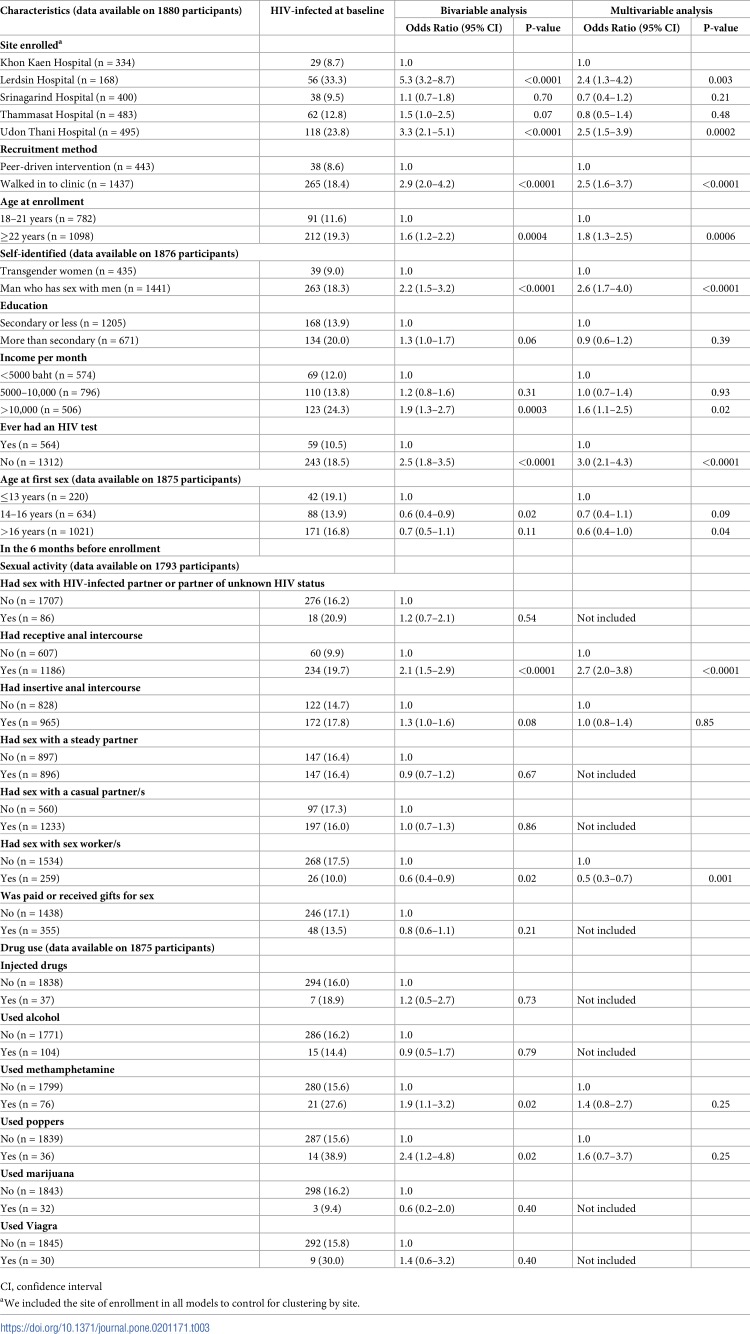
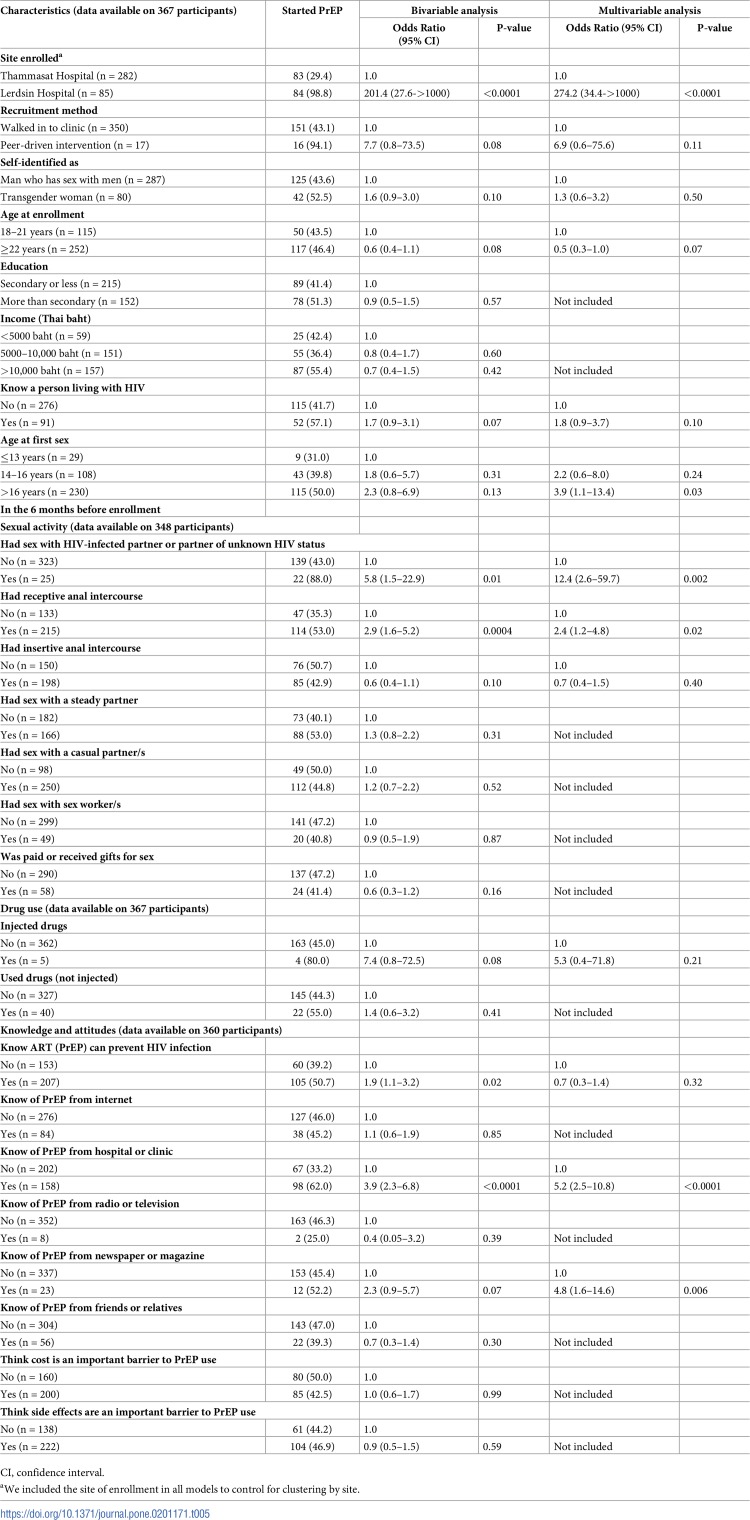
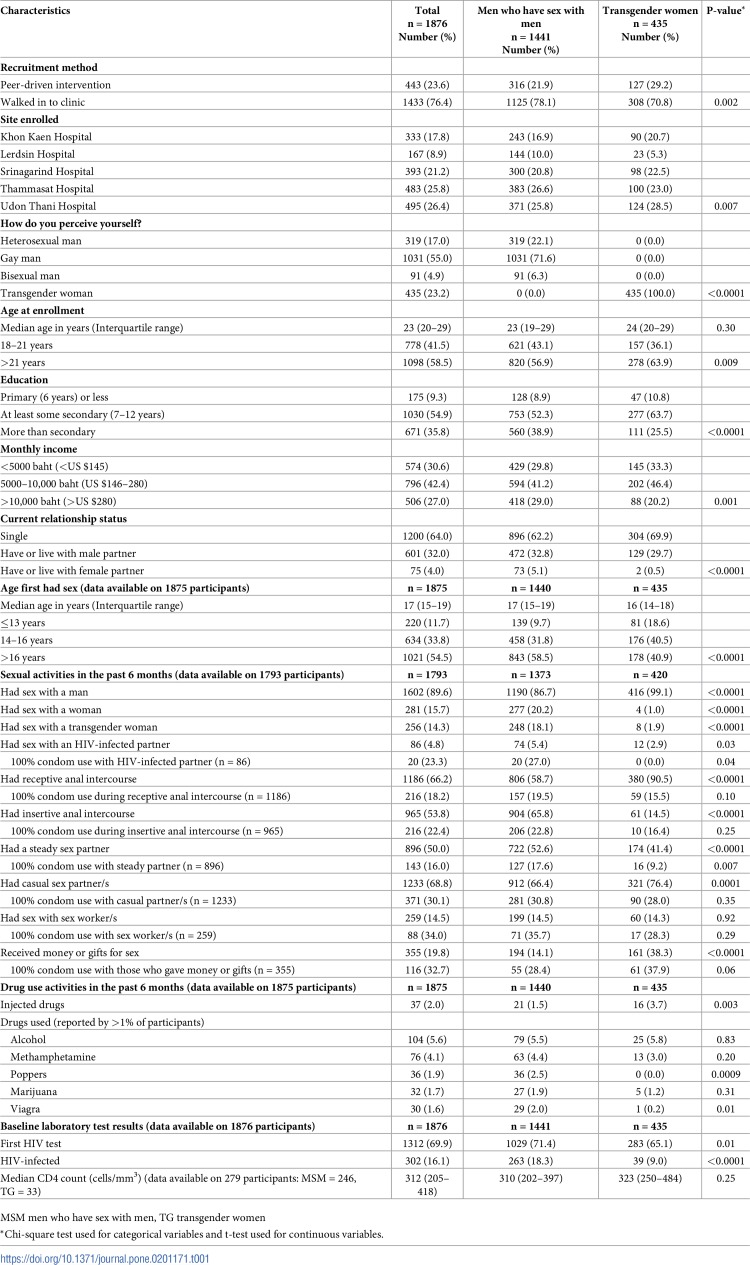
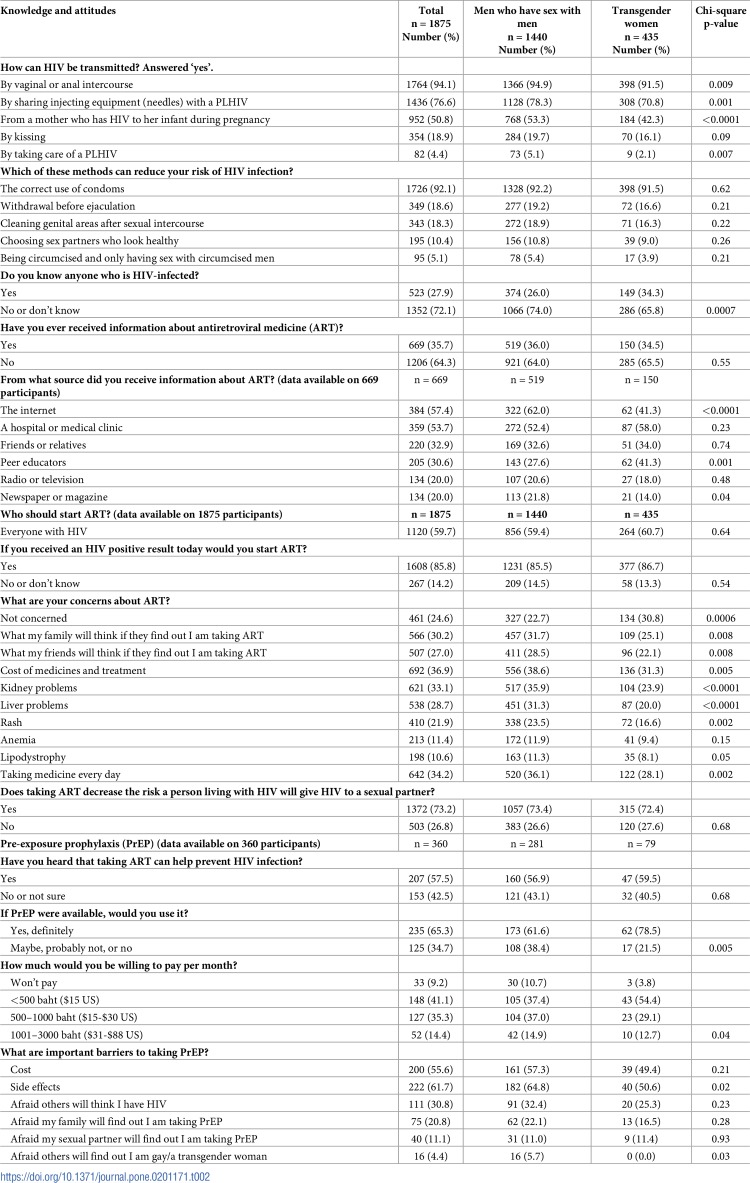
During 2015 and 2016, 1880 people enrolled. Participants recruited by peers were younger (p<0.0001), less likely to be HIV-infected (p<0.0001), and those infected had higher CD4 counts (p = 0.04) than participants who walked-in to the clinics. Overall, 16% were HIV-positive: 18% of MSM and 9% of transgender women; 86% started antiretroviral therapy and 46% of eligible participants started PrEP. A higher proportion of participants at hospitals with one-stop HIV services started antiretroviral therapy than other hospitals. Participants who started PrEP were more likely to report sex with an HIV-infected partner (p = 0.002), receptive anal intercourse (p = 0.02), and receiving PrEP information from a hospital (p<0.0001).
Conclusions
We implemented a Test, Treat, and Prevent HIV Program offering rapid HIV testing and immediate access to antiretroviral therapy and PrEP. Peer-driven recruitment reached people at high risk of HIV and people early in HIV illness, providing an opportunity to promote HIV prevention services including PrEP and early antiretroviral therapy. Sites with one-stop HIV services had a higher uptake of antiretroviral therapy and PrEP.
-
Subjects:
-
Source:PLoS One. 13(7).
-
Pubmed ID:30044867
-
Pubmed Central ID:PMC6059477
-
Document Type:
-
Funding:
-
Place as Subject:
-
Volume:13
-
Issue:7
-
Collection(s):
-
Main Document Checksum:urn:sha256:1666160d4dceeb5dd10b2148258cf9d7eb440dca015a93603458554d0bc9f0c4
-
Download URL:
-
File Type:
 [PDF
- 1.35 MB
]
[PDF
- 1.35 MB
]
Supporting Files


File Language:
English
ON THIS PAGE




CDC STACKS serves as an archival repository of CDC-published products including
scientific findings,
journal articles, guidelines, recommendations, or other public health information authored or
co-authored by CDC or funded partners.
As a repository, CDC STACKS retains documents in their original published format to ensure public access to scientific information.
As a repository, CDC STACKS retains documents in their original published format to ensure public access to scientific information.
You May Also Like
COLLECTION
CDC Public Access