


PrEP implementation by local health departments in US cities and counties: Findings from a 2015 assessment of local health departments
Supporting Files
Public Domain

-
Jul 25 2018
-
File Language:
English
Details
-
Alternative Title:PLoS One
-
Personal Author:
-
Description:Objective
The United States Public Health Service released clinical practice guidelines for daily oral preexposure prophylaxis (PrEP) in May 2014. Local health departments (LHDs) are expected to play a critical role in PrEP implementation. We surveyed LHDs to assess awareness of and interest in supporting PrEP implementation, what roles they were taking, or believed they should take, in supporting PrEP, and what resources would be required to do so.
Methods
LHDs were surveyed in 2015 to assess their engagement in PrEP implementation (n = 500). The study employed a cross-sectional survey design with a randomly selected stratified sample.
Results
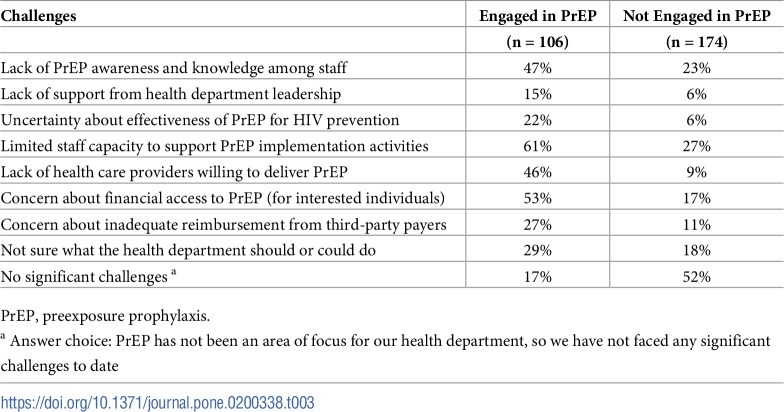
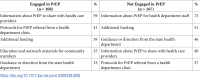
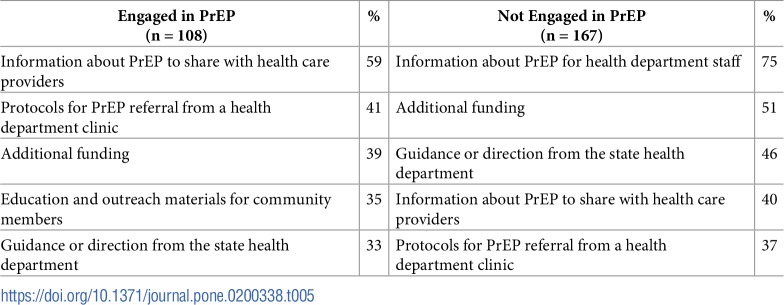
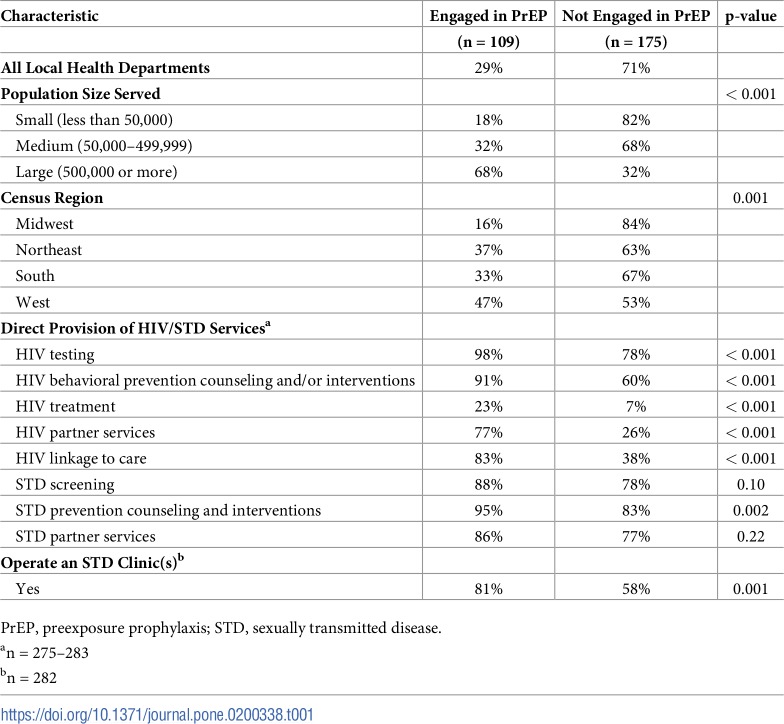
Among responding LHDs (n = 284), 109 (29%, weighted proportion) reported engagement in PrEP implementation. LHDs serving large jurisdictions (population 500,000+) and located in the West were more likely to be engaged in PrEP implementation. Making referrals for PrEP (74%) and conducting education and outreach to community members (51%) were the activities most frequently reported by LHDs engaged in PrEP implementation; 45% anticipated expanding their level of engagement. Among LHDs not engaged in PrEP implementation, 13% expected to become engaged over the next four years, 46% were undecided, and 41% reported it was unlikely. Information about PrEP for health care providers and information about PrEP for health department staff were the most frequently reported resource needs for LHDs engaged and not engaged in PrEP implementation, respectively.
Conclusions
PrEP implementation by LHDs was limited in 2015, three years after Food and Drug Administration approval and one year after the U.S. Public Health Service issued clinical practice guidelines. PrEP is a recently available intervention that is requiring LHDs to adjust existing HIV prevention efforts and service delivery models. Additional resources and implementation research is needed to effectively support PrEP scale-up by LHDs. Efforts must also be undertaken to increase PrEP awareness, knowledge, and implementation capacity among LHDs.
-
Subjects:
-
Source:PLoS One. 13(7).
-
Pubmed ID:30044820
-
Pubmed Central ID:PMC6059435
-
Document Type:
-
Place as Subject:
-
Volume:13
-
Issue:7
-
Collection(s):
-
Main Document Checksum:urn:sha256:f0b4895e5c792bd14002fa788697018f9aac2306c54805d88a346a6d967a05e2
-
Download URL:
-
File Type:
 [PDF
- 918.78 KB
]
[PDF
- 918.78 KB
]
Supporting Files


File Language:
English
ON THIS PAGE




CDC STACKS serves as an archival repository of CDC-published products including
scientific findings,
journal articles, guidelines, recommendations, or other public health information authored or
co-authored by CDC or funded partners.
As a repository, CDC STACKS retains documents in their original published format to ensure public access to scientific information.
As a repository, CDC STACKS retains documents in their original published format to ensure public access to scientific information.
You May Also Like
COLLECTION
CDC Public Access