


Fatal and Nonfatal Overdose Among Pregnant and Postpartum Women in Massachusetts
Supporting Files

-
Aug 2018
-
File Language:
English
Details
-
Alternative Title:Obstet Gynecol
-
Personal Author:
-
Description:Objective
To estimate fatal and nonfatal opioid overdose events in pregnant and postpartum women in Massachusetts, comparing rates in individuals receiving and not receiving pharmacotherapy for opioid use disorder (OUD).
Methods
We conducted a population-based retrospective cohort study using linked administrative and vital statistics databases in Massachusetts to identify women with evidence of OUD who delivered a live birth in 2012–2014. We described maternal sociodemographic, medical, and substance use characteristics, computed rates of opioid overdose events in the year before and after delivery, and compared overdose rates by receipt of pharmacotherapy with methadone or buprenorphine in the prenatal and postpartum periods.
Results
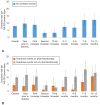
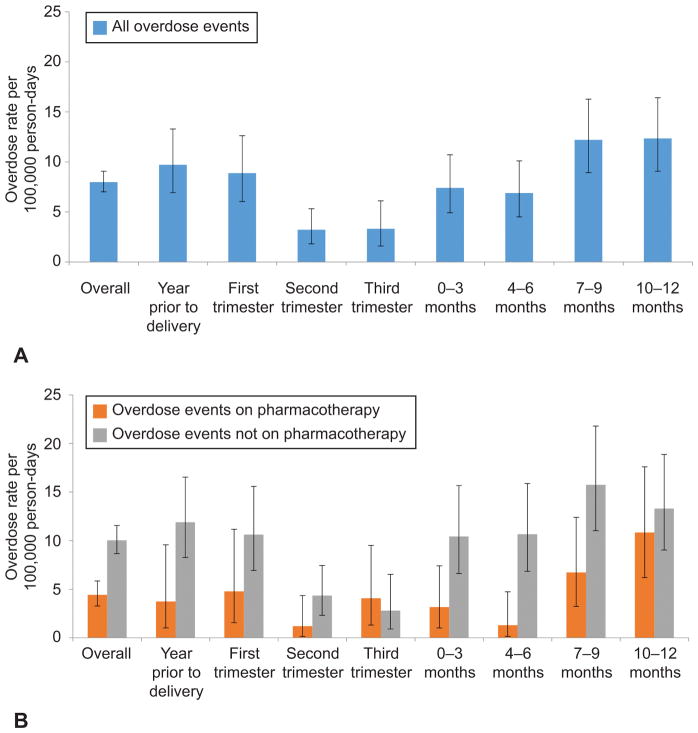
Among 177,876 unique deliveries, 4,154 (2.3%) were to women with evidence of OUD in the year prior to delivery, who experienced 242 total opioid-related overdose events (231 non-fatal, 11 fatal) in the year before or after delivery. The overall overdose rate was 8.0/100,000 person-days. Overdose were lowest in the third trimester (3.3/100,000 person-days in third trimester) then increased in the postpartum period, with the highest overdose rate 7–12 months after delivery (12.3/100,000 person-days). Overall, 64.3% of women with evidence of OUD in the year prior to delivery received any pharmacotherapy in the year prior to delivery. Women receiving pharmacotherapy had reduced overdose rates in the early postpartum period.
Conclusion
Pregnant women in Massachusetts have high rates of OUD. The year after delivery is a vulnerable period for women with OUD. Additional longitudinal supports and interventions tailored to women in the first year postpartum are needed to prevent and reduce overdose events.
-
Subjects:
-
Source:Obstet Gynecol. 132(2):466-474
-
Pubmed ID:29995730
-
Pubmed Central ID:PMC6060005
-
Document Type:
-
Funding:
-
Volume:132
-
Issue:2
-
Collection(s):
-
Main Document Checksum:urn:sha256:143d35ecaabbe30568199e4ce0ebebc6346f1028ce539ec853d83d25779a7d80
-
Download URL:
-
File Type:
 [PDF
- 412.35 KB
]
[PDF
- 412.35 KB
]
Supporting Files


File Language:
English
ON THIS PAGE


CDC STACKS serves as an archival repository of CDC-published products including
scientific findings,
journal articles, guidelines, recommendations, or other public health information authored or
co-authored by CDC or funded partners.
As a repository, CDC STACKS retains documents in their original published format to ensure public access to scientific information.
As a repository, CDC STACKS retains documents in their original published format to ensure public access to scientific information.
You May Also Like
COLLECTION
CDC Public Access