


What Features of Stigma Do the Public Most Commonly Attribute to Alzheimer’s Disease Dementia? Results of a survey of the U.S. general public
Supporting Files

-
March 27 2018
File Language:
English
Details
-
Alternative Title:Alzheimers Dement
-
Personal Author:
-
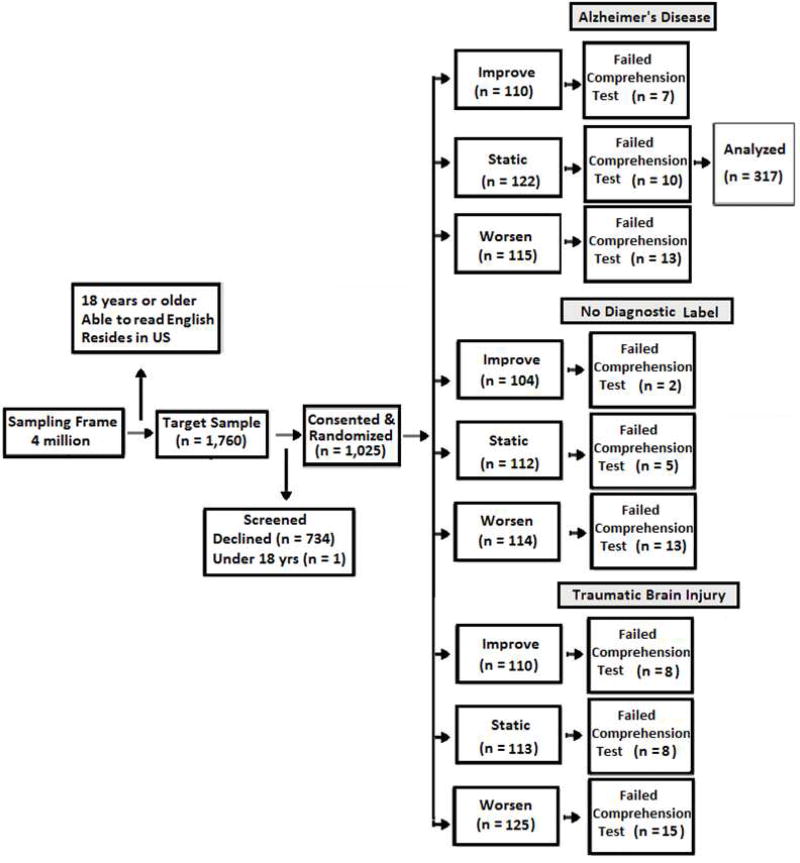
Description:Understanding the prevalence of beliefs, attitudes, and expectations about Alzheimer's disease dementia in the public could inform strategies to mitigate stigma.|Random sample of 317 adults from the U.S. public was analyzed to understand reactions toward a man with mild-stage Alzheimer's disease dementia.|In adjusted analyses, over half of respondents expected the person to be discriminated against by employers (55.3%; 95% confidence interval [CI] = 47.0-65.2) and be excluded from medical decision-making (55.3%; 95% CI = 46.9-65.4). Almost half expected his health insurance would be limited based on data in the medical record (46.6%; 95% CI = 38.0-57.2), a brain imaging result (45.6%, 95% CI = 37.0-56.3), or genetic test result (44.7%; 95% CI = 36.0-55.4).|Public education and policies are needed to address concerns about employment and insurance discrimination. Studies are needed to discover how advances in diagnosis and treatment may change Alzheimer's disease stigma.
-
Subjects:
-
Source:Alzheimers Dement. 14(7):925-932
-
Pubmed ID:29602733
-
Pubmed Central ID:PMC6050091
-
Document Type:
-
Funding:
-
Volume:14
-
Issue:7
-
Collection(s):
-
Main Document Checksum:urn:sha256:4510f6e3bc4866008b9bad23ce7a804f117bed080fdd9fce1db49867f4b6831a
-
Download URL:
-
File Type:
 [PDF
- 448.81 KB
]
[PDF
- 448.81 KB
]
Supporting Files


File Language:
English
ON THIS PAGE


CDC STACKS serves as an archival repository of CDC-published products including
scientific findings,
journal articles, guidelines, recommendations, or other public health information authored or
co-authored by CDC or funded partners.
As a repository, CDC STACKS retains documents in their original published format to ensure public access to scientific information.
As a repository, CDC STACKS retains documents in their original published format to ensure public access to scientific information.
You May Also Like
COLLECTION
CDC Public Access