



Geographic Variation in Pediatric Cancer Incidence — United States, 2003–2014
Supporting Files
Public Domain

-
Jun 29 2018
Details
-
Journal Article:Morbidity and Mortality Weekly Report (MMWR)
-
Personal Author:
-
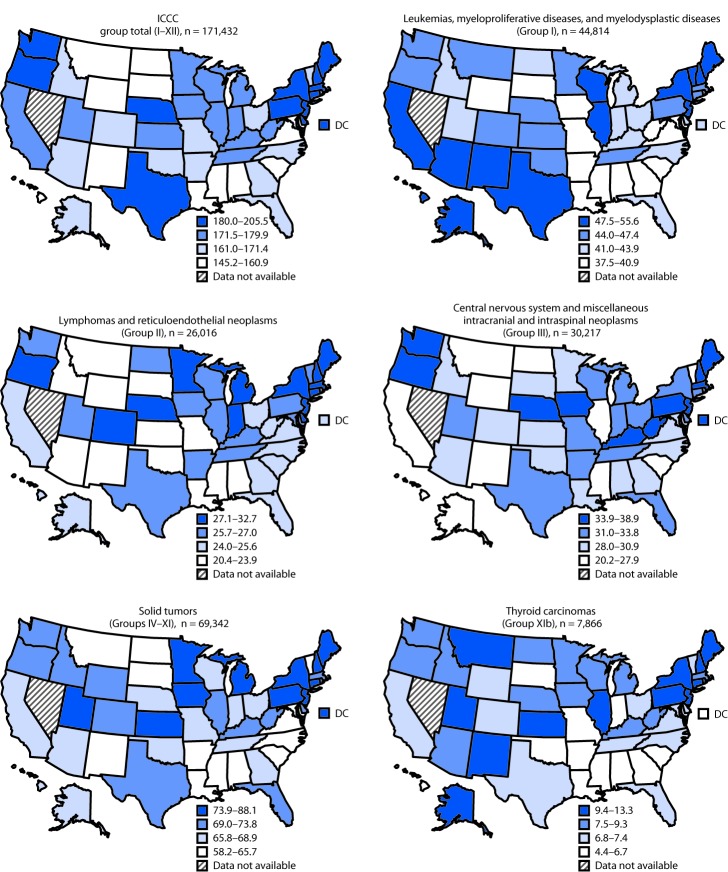
Description:Approximately 15,000 persons aged <20 years receive a cancer Diagnosis each year in the United States (1). National Surveillance data could provide understanding of geographic variation in occurrence of new cases to guide public health planning and investigation (2,3). Past research on pediatric cancer incidence described differences by U.S. Census region but did not provide state-level estimates (4). To adequately describe geographic variation in cancer incidence among persons aged <20 years in the United States, CDC analyzed data from United States Cancer Statistics (USCS) during 2003-2014 and identified 171,432 cases of pediatric cancer during this period (incidence = 173.7 cases per 1 million persons). The cancer types with the highest incidence rates were leukemias (45.7), brain tumors (30.9), and lymphomas (26.2). By U.S. Census region, pediatric cancer incidence was highest in the Northeast (188.0) and lowest in the South (168.0), whereas by state (including the District of Columbia DC), rates were highest in New Hampshire, DC, and New Jersey. Among non-Hispanic whites (whites) and non-Hispanic blacks (blacks), pediatric cancer incidence was highest in the Northeast, and the highest rates among Hispanics were in the South. The highest rates of leukemia were in the West, and the highest rates of lymphoma and brain tumors were in the Northeast. State-based differences in pediatric cancer incidence could guide interventions related to accessing care (e.g., in states with large distances to pediatric oncology centers), clinical trial enrollment, and state or regional studies designed to further explore variations in cancer incidence.
-
Subjects:
-
Source:MMWR Morbidity Mortal Weekly Rep. 67(25):707-713.
-
Series:
-
DOI:
-
ISSN:0149-2195 (print) ; 1545-861X (digital)
-
Pubmed ID:29953430
-
Pubmed Central ID:PMC6023185
-
Document Type:
-
Place as Subject:
-
Pages in Document:7 pdf pages
-
Volume:67
-
Issue:25
-
Download URL:
-
File Type:
 [PDF - 290.08 KB]
 -
Collection(s):
-
Main Document Checksum:urn:sha-512:20f77eaeb73f0d9b2f1c7c94ab03d930ee946e5948bbf5c832051aa932250b1dfdbd8074746940098ce5bbf441b9c254cfff82794726e7fa949ba9f4244d5b32
Supporting Files


 Was this page helpful?
 Found an issue?

CDC STACKS serves as an archival repository of CDC-published products including
scientific findings, journal articles, guidelines, recommendations, or other public health information authored or
co-authored by CDC or funded partners.
As a repository, CDC STACKS retains documents in their original published format to ensure public access to scientific information.
As a repository, CDC STACKS retains documents in their original published format to ensure public access to scientific information.
You May Also Like
COLLECTION
Morbidity and Mortality Weekly Report (MMWR)