



Intergenerational Continuity in Depression: The Importance of Time-Varying Effects, Maternal Co-morbid Health Risk Behaviors and Child’s Gender
Supporting Files

-
10 2018
-
Available in CDC Stacks on October 01, 2018, 12:00 AM
File Language:
English
Details
-
Alternative Title:J Youth Adolesc
-
Personal Author:
-
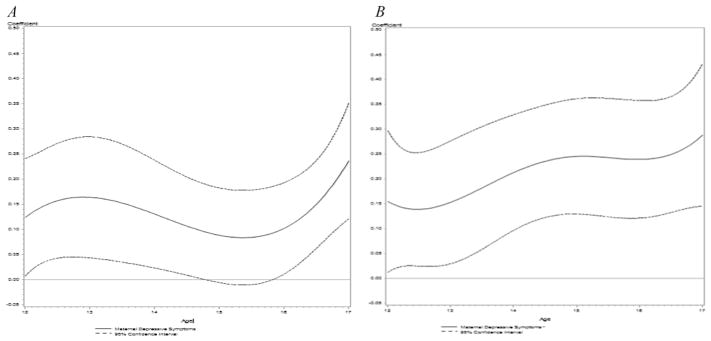
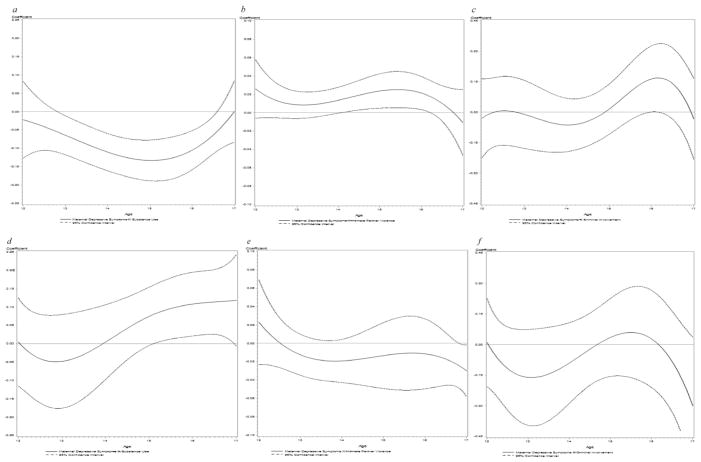
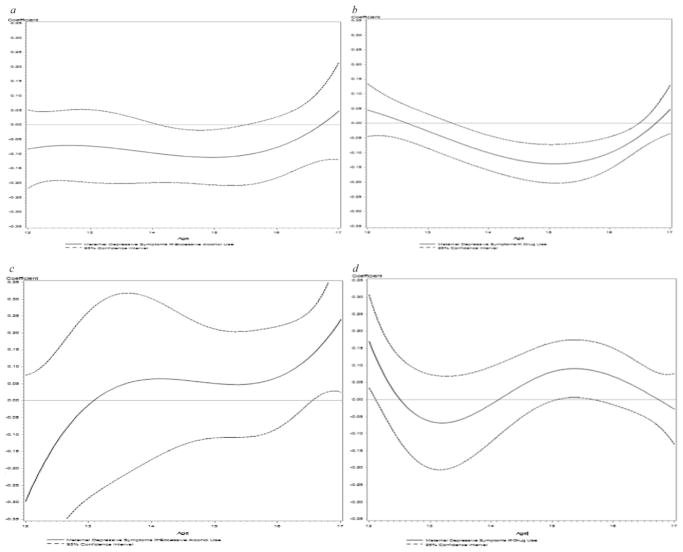
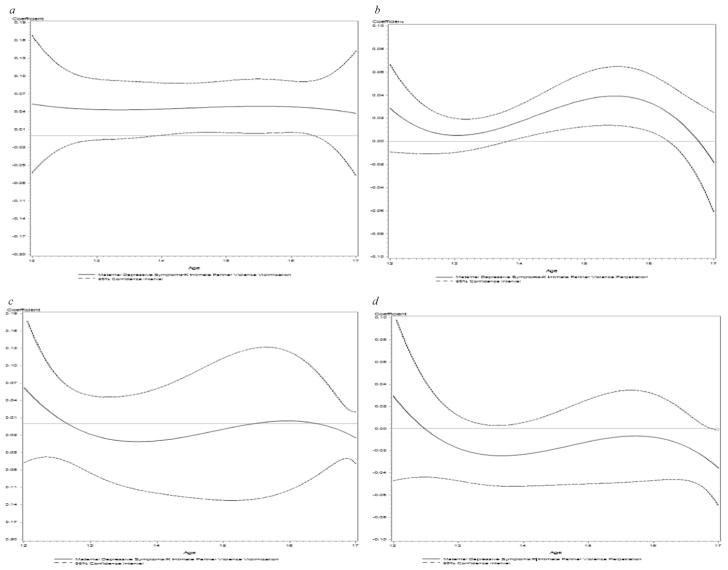
Description:Intergenerational continuity in depressive symptoms is well established between mother and child, but there are still important facets of this relationship that are underexplored. We examine intergenerational continuity in depressive symptoms between mother-child dyads as a flexible function of child age and account for the potential moderating role of maternal co-morbid health risk behaviors. Using prospective, self-report data collected yearly from 413 mother-child dyads (210 mother-son dyads and 203 mother-daughter dyads) between child ages 12-17, the results indicate that the effect of maternal depressive symptoms on daughters' depressive symptoms steadily increases throughout adolescence whereas the effect of maternal depressive symptoms on sons' depressive symptoms is relatively small, stable, and non-significant during mid-adolescence before increasing in effect in later adolescence. A positive interactive effect between maternal depressive symptoms and intimate partner violence is observed for sons and maternal depressive symptoms and substance use for daughters. A negative interactive effect of maternal depressive symptoms and substance use is observed among sons. Overall, this study identifies particular subgroups for whom intervention programming is most beneficial and suggests targeting health risk behaviors of mothers to lessen the impact of maternal depressive symptoms on offspring.
-
Keywords:
- Depression
- Intergenerational continuity
- Substance use
- Intimate partner violence
- Gender
- Adolescent
- Adult
- Child
- Comorbidity
- Criminal Behavior
- Female
- Health Risk Behaviors
- Humans
- Intergenerational Relations
- Intimate Partner Violence
- Male
- Maternal Inheritance
- Mother-Child Relations
- Mothers
- Prospective Studies
- Risk Factors
- Self Report
- Sex Factors
- Substance-Related Disorders
- Time Factors
- Young Adult
-
Source:J Youth Adolesc. 47(10):2143-2168
-
Pubmed ID:29330733
-
Pubmed Central ID:PMC6043424
-
Document Type:
-
Funding:SBR-9123299/National Science Foundation (US)/ ; R01 MH063386/MH/NIMH NIH HHSUnited States/ ; R01 CE001572/CE/NCIPC CDC HHSUnited States/ ; R01DA020195/National Institute on Drug Abuse (US)/ ; R01CE001572/Centers for Disease Control and Prevention (US)/ ; K01 DA017810/DA/NIDA NIH HHSUnited States/ ; R01DA005512/National Institute on Drug Abuse/ ; R01 MH056486/MH/NIMH NIH HHSUnited States/ ; R01MH56486/National Institute of Mental Health (US)/ ; 2006-JW-BX-0074/Office of Juvenile Justice and Delinquency Prevention (US)/ ; R01MH63386/National Institute on Drug Abuse (US)/ ; R01 DA020195/DA/NIDA NIH HHSUnited States/
-
Volume:47
-
Issue:10
-
Download URL:
-
File Type:
 [PDF - 1.06 MB]
 -
Collection(s):
-
Main Document Checksum:urn:sha256:9994d22ce49f027fd9b8f9f56c93ca16bf685a7b3374ce1f7fa3b8769d9c57a0
Supporting Files


File Language:
English
 Was this page helpful?
 Found an issue?









CDC STACKS serves as an archival repository of CDC-published products including
scientific findings, journal articles, guidelines, recommendations, or other public health information authored or
co-authored by CDC or funded partners.
As a repository, CDC STACKS retains documents in their original published format to ensure public access to scientific information.
As a repository, CDC STACKS retains documents in their original published format to ensure public access to scientific information.
You May Also Like
COLLECTION
CDC Public Access