



State Prevalence and Ranks of Adolescent Substance Use: Implications for Cancer Prevention
Supporting Files
Public Domain

-
May 31 2018
File Language:
English
Details
-
Journal Article:Preventing Chronic Disease (PCD)
-
Personal Author:
-
Description:Introduction
This study statistically ranked states’ performance on adolescent substance use related to cancer risk (past-month cigarette smoking, binge alcohol drinking, and marijuana use).
Methods
Data came from 69,200 adolescent participants (50 states and the District of Columbia) in the National Survey on Drug Use and Health (NSDUH) and 450,050 adolescent participants (47 states) in the Youth Risk Behavior Surveillance System (YRBSS). Adolescents were aged 14 to 17 years. For 2011–2015, we estimated and ranked states’ prevalence of adolescent substance use. We calculated the ranks’ 95% confidence intervals (CIs) using a Monte Carlo method with 100,000 simulations. Spearman correlations examined consistency of ranks.
Results
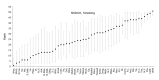
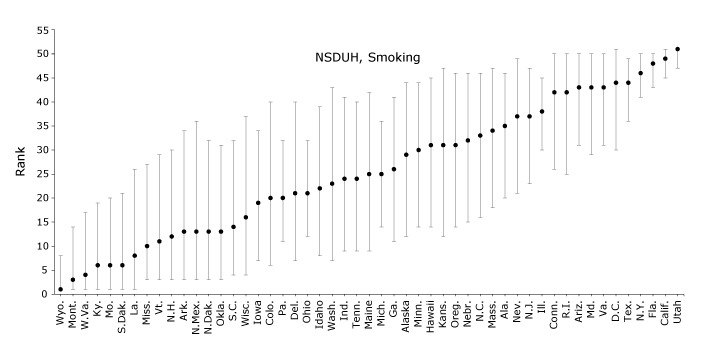
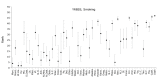
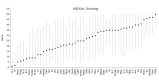
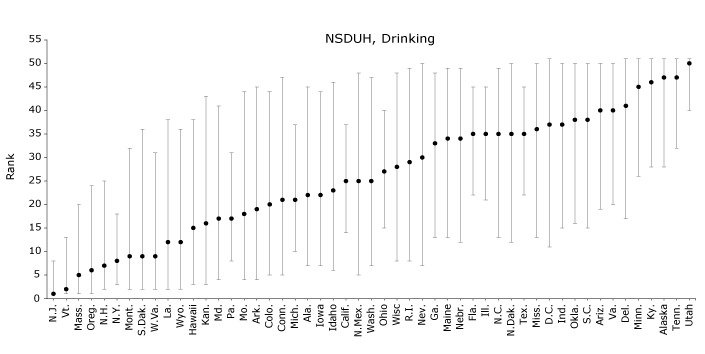
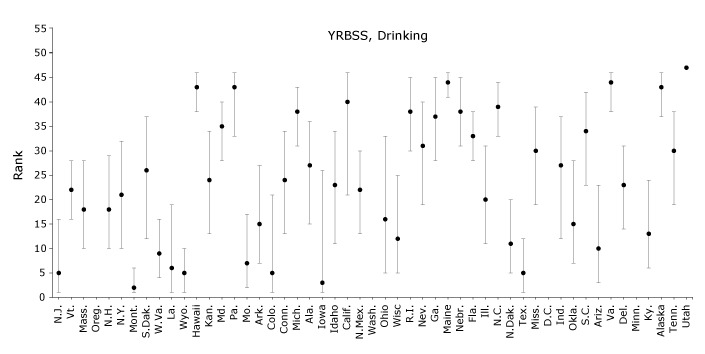
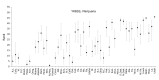
Across states, the prevalence of cigarette smoking was 4.5% to 14.3% in NSDUH and 4.7% to 18.5% in YRBSS. Utah had the lowest prevalence (NSDUH: rank = 51 95% CI, 47–51; YRBSS: rank = 47 95% CI, 46–47), and states’ ranks across surveys were correlated (r = 0.66, P < .001). The prevalence of binge alcohol drinking was 5.9% to 14.3% (NSDUH) and 7.1% to 21.7% (YRBSS). Utah had the lowest prevalence (NSDUH: rank = 50 95% CI, 40–51; YRBSS: rank = 47 95% CI, 47–47), but ranks across surveys were weakly correlated (r = 0.38, P = .01). The prevalence of marijuana use was 6.3% to 18.7% (NSDUH) and 8.2% to 27.1% (YRBSS). Utah had the lowest prevalence of marijuana use (NSDUH: rank = 50 95% CI = 33–51; YRBSS: rank= 46 95% CI, 46–46), and ranks across surveys were correlated (r = 0.70, P < .001). Wide CIs for states ranked in the middle of each distribution obscured statistical differences among them.
Conclusion
Variability emerged across adolescent substance use behaviors and surveys (perhaps because of administration differences). Most states showed statistically equivalent performance on adolescent substance use. Adolescents in all states would benefit from efforts to reduce substance use, to prevent against lifelong morbidity. -
Subjects:
-
Source:Prev Chronic Dis. 15.
-
DOI:
-
ISSN:1545-1151
-
Pubmed ID:29862962
-
Pubmed Central ID:PMC5985915
-
Document Type:
-
Place as Subject:
-
Location:
-
Volume:15
-
Download URL:
-
File Type:
 [PDF - 503.80 KB]
 -
Collection(s):
-
Main Document Checksum:urn:sha-512:7c5830198cb8f2734a7f3c7fcde72730b1a1e1d5ea0d193238334bfb58159a592f7415d910e9e803cf29822c63d0921d42654b31a3c65fc47a178c39cf6ec270
Supporting Files


File Language:
English
 Was this page helpful?
 Found an issue?




CDC STACKS serves as an archival repository of CDC-published products including
scientific findings, journal articles, guidelines, recommendations, or other public health information authored or
co-authored by CDC or funded partners.
As a repository, CDC STACKS retains documents in their original published format to ensure public access to scientific information.
As a repository, CDC STACKS retains documents in their original published format to ensure public access to scientific information.
You May Also Like
COLLECTION
Preventing Chronic Disease