



Zika Virus Transmission — Region of the Americas, May 15, 2015–December 15, 2016
Supporting Files
Public Domain

-
Mar 31 2017
Details
-
Journal Article:Morbidity and Mortality Weekly Report (MMWR)
-
Personal Author:
-
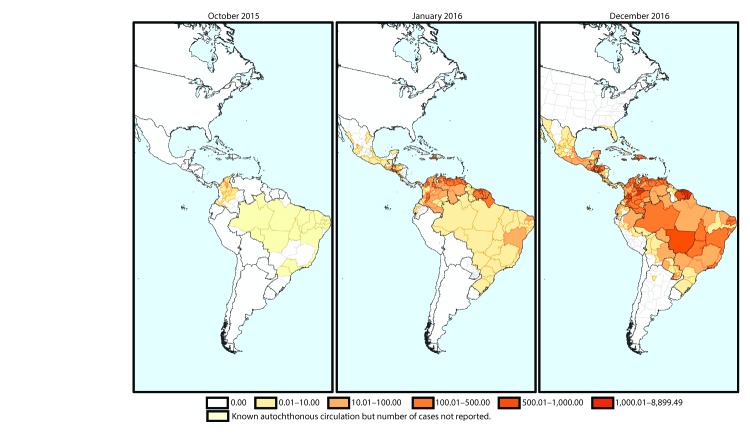
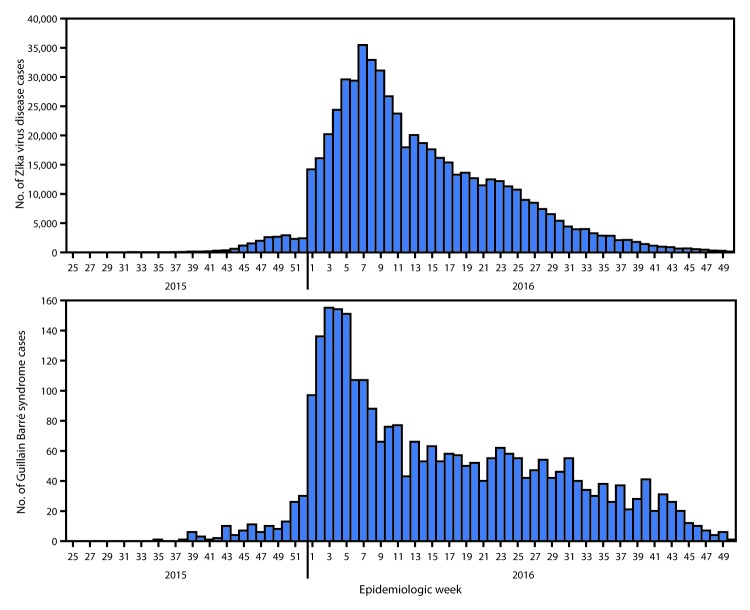
Description:Zika Virus, a mosquito-borne flaviVirus that can cause rash with fever, emerged in the Region of the Americas on Easter Island, Chile, in 2014 and in northeast Brazil in 2015 (1). In response, in May 2015, the Pan American Health Organization (PAHO), which serves as the Regional Office of the Americas for the World Health Organization (WHO), issued recommendations to enhance Surveillance for Zika Virus. Subsequently, Brazilian investigators reported Guillain-Barré syndrome (GBS), which had been previously recognized among some patients with Zika Virus disease, and identified an association between Zika Virus infection during pregnancy and Congenital microcephaly (2). On February 1, 2016, WHO declared Zika Virus-related microcephaly clusters and other neurologic disorders a Public Health Emergency of International Concern.* In March 2016, PAHO developed case definitions and Surveillance guidance for Zika Virus disease and associated Complications (3). Analysis of reports submitted to PAHO by countries in the region or published in national epidemiologic bulletins revealed that Zika Virus Transmission had extended to 48 countries and territories in the Region of the Americas by late 2016. Reported Zika Virus disease cases peaked at different times in different areas during 2016. Because of ongoing Transmission and the risk for recurrence of large outbreaks, response efforts, including Surveillance for Zika Virus disease and its Complications, and vector control and other Prevention activities, need to be maintained.
-
Subjects:
-
Source:MMWR Morbidity Mortal Weekly Rep. 66(12):329-334.
-
Series:
-
DOI:
-
ISSN:0149-2195 (print) ; 1545-861X (digital)
-
Pubmed ID:28358795
-
Pubmed Central ID:PMC5657956
-
Document Type:
-
Place as Subject:
-
Pages in Document:6 pdf pages
-
Volume:66
-
Issue:12
-
Download URL:
-
File Type:
 [PDF - 349.38 KB]
 -
Collection(s):
-
Main Document Checksum:urn:sha-512:cc5bbe97cbee26e61710ce80fe580c1a3d2b1777c8fa4a5ea2e0f964961165f94f0826890cb8d0cecc66329340de5ef16c307dc53148dd5d5f9c42ad1b701ec2
Supporting Files


 Was this page helpful?
 Found an issue?




CDC STACKS serves as an archival repository of CDC-published products including
scientific findings, journal articles, guidelines, recommendations, or other public health information authored or
co-authored by CDC or funded partners.
As a repository, CDC STACKS retains documents in their original published format to ensure public access to scientific information.
As a repository, CDC STACKS retains documents in their original published format to ensure public access to scientific information.
You May Also Like
COLLECTION
Morbidity and Mortality Weekly Report (MMWR)