



Reported Adverse Health Effects in Children from Ingestion of Alcohol-Based Hand Sanitizers — United States, 2011–2014
Supporting Files
Public Domain

-
Mar 03 2017
Details
-
Journal Article:Morbidity and Mortality Weekly Report (MMWR)
-
Personal Author:
-
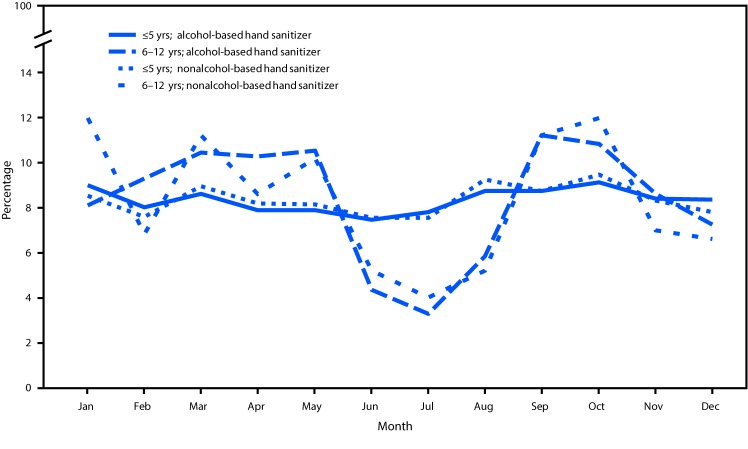
Description:Hand sanitizers are effective and inexpensive products that can reduce microorganisms on the skin, but ingestion or improper use can be associated with health risks. Many hand sanitizers contain up to 60%-95% ethanol or isopropyl alcohol by volume, and are often combined with scents that might be appealing to young children. Recent reports have identified serious consequences, including apnea, acidosis, and coma in young children who swallowed alcohol-based (alcohol) hand sanitizer (1-3). Poison control centers collect data on intentional and unintentional exposures to hand sanitizer solutions resulting from various routes of exposure, including ingestion, inhalation, and dermal and ocular exposures. To characterize exposures of children aged ≤12 years to alcohol hand sanitizers, CDC analyzed data reported to the National Poison Data System (NPDS).* The major route of exposure to both alcohol and nonalcohol-based (nonalcohol) hand sanitizers was ingestion. The majority of intentional exposures to alcohol hand sanitizers occurred in children aged 6-12 years. Alcohol hand sanitizer exposures were associated with worse outcomes than were nonalcohol hand sanitizer exposures. Caregivers and health care providers should be aware of the potential dangers associated with hand sanitizer ingestion. Children using alcohol hand sanitizers should be supervised and these products should be kept out of reach from children when not in use.
-
Subjects:
-
Source:MMWR Morbidity Mortal Weekly Rep. 66(8):223-226.
-
Series:
-
DOI:
-
ISSN:0149-2195 (print) ; 1545-861X (digital)
-
Pubmed ID:28253227
-
Pubmed Central ID:PMC5657893
-
Document Type:
-
Place as Subject:
-
Pages in Document:4 pdf pages
-
Volume:66
-
Issue:8
-
Download URL:
-
File Type:
 [PDF - 108.61 KB]
 -
Collection(s):
-
Main Document Checksum:urn:sha-512:0ec6ddfdfbef84a148188a5fc421ba61f415cdcc99f23656ce0851d43d43b7d8ddf205d76306262cb64c683aa769e237c15317b009839157aa50e9e9546e3ee5
Supporting Files


 Was this page helpful?
 Found an issue?

CDC STACKS serves as an archival repository of CDC-published products including
scientific findings, journal articles, guidelines, recommendations, or other public health information authored or
co-authored by CDC or funded partners.
As a repository, CDC STACKS retains documents in their original published format to ensure public access to scientific information.
As a repository, CDC STACKS retains documents in their original published format to ensure public access to scientific information.
You May Also Like
COLLECTION
Morbidity and Mortality Weekly Report (MMWR)