


Caring for the Elderly at Work and Home: Can a Randomized Organizational Intervention Improve Psychological Health?
Supporting Files

-
December 07 2017
-
File Language:
English
Details
-
Alternative Title:J Occup Health Psychol
-
Personal Author:
-
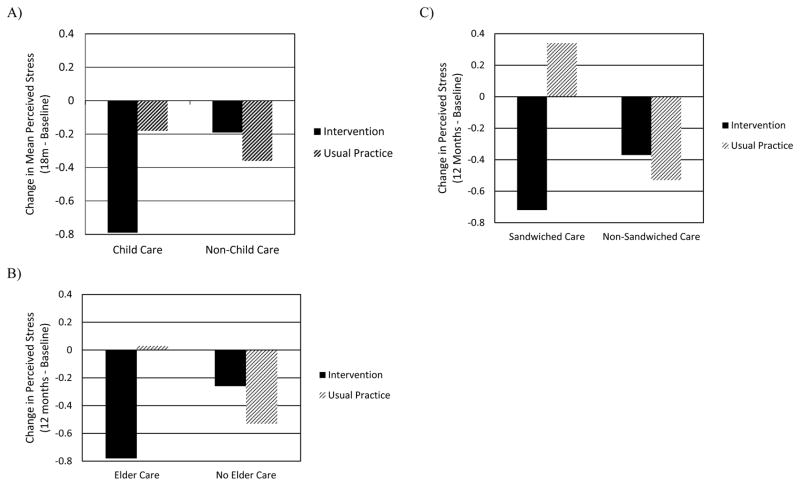
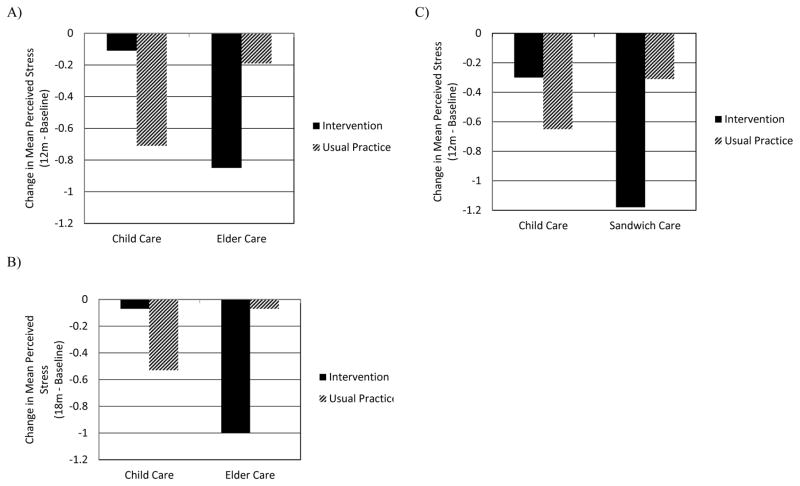
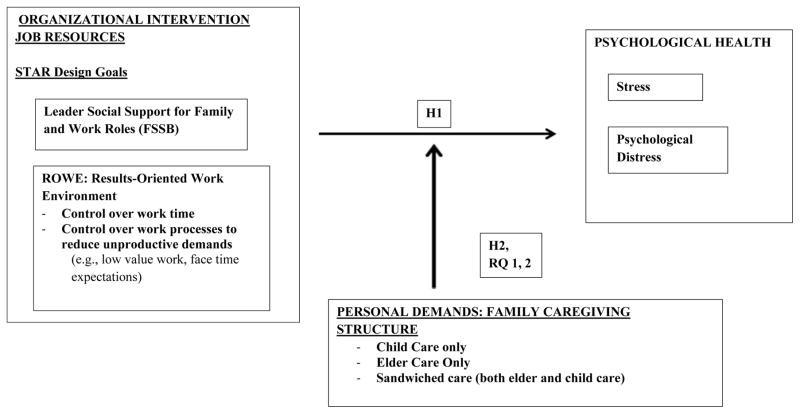
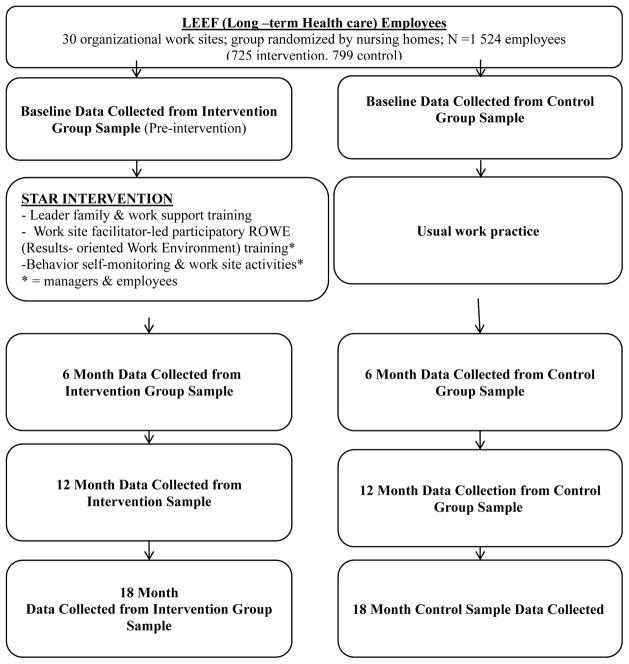
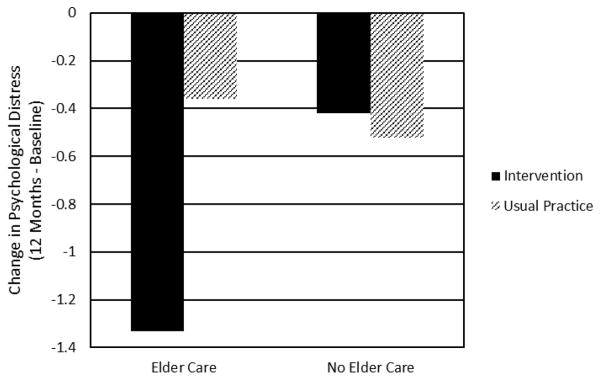
Description:Although job stress models suggest that changing the work social environment to increase job resources improves psychological health, many intervention studies have weak designs and overlook influences of family caregiving demands. We tested the effects of an organizational intervention designed to increase supervisor social support for work and nonwork roles, and job control in a results-oriented work environment on the stress and psychological distress of health care employees who care for the elderly, while simultaneously considering their own family caregiving responsibilities. Using a group-randomized organizational field trial with an intent-to-treat design, 420 caregivers in 15 intervention extended-care nursing facilities were compared with 511 caregivers in 15 control facilities at 4 measurement times: preintervention and 6, 12, and 18 months. There were no main intervention effects showing improvements in stress and psychological distress when comparing intervention with control sites. Moderation analyses indicate that the intervention was more effective in reducing stress and psychological distress for caregivers who were also caring for other family members off the job (those with elders and those "sandwiched" with both child and elder caregiving responsibilities) compared with employees without caregiving demands. These findings extend previous studies by showing that the effect of organizational interventions designed to increase job resources to improve psychological health varies according to differences in nonwork caregiving demands. This research suggests that caregivers, especially those with "double-duty" elder caregiving at home and work and "triple-duty" responsibilities, including child care, may benefit from interventions designed to increase work-nonwork social support and job control. (PsycINFO Database Record (c) 2019 APA, all rights reserved).
-
Subjects:
-
Source:J Occup Health Psychol. 24(1):36-54
-
Pubmed ID:29215909
-
Pubmed Central ID:PMC5991990
-
Document Type:
-
Funding:William T. Grant Foundation/ ; Alfred P. Sloan Foundation/ ; Administration for Children and Families/ ; National Heart, Lung, and Blood Institute/ ; National Institute on Aging/ ; National Institutes of Health/ ; Office of Behavioral and Social Sciences Research/ ; U01 HD051217/HD/NICHD NIH HHS/United States ; U01 HD051256/HD/NICHD NIH HHS/United States ; R03 AG046393/AG/NIA NIH HHS/United States ; T03 OH008435/OH/NIOSH CDC HHS/United States ; Centers for Disease Control and Prevention: Eunice Kennedy Shriver/ ; U01 OH008788/OH/NIOSH CDC HHS/United States ; U01 AG027669/AG/NIA NIH HHS/United States ; R01 HL107240/HL/NHLBI NIH HHS/United States ; U01 HD059773/HD/NICHD NIH HHS/United States ; U01 HD051276/HD/NICHD NIH HHS/United States ; U01 HD051218/HD/NICHD NIH HHS/United States ; National Institute for Occupational Safety and Health/
-
Volume:24
-
Issue:1
-
Collection(s):
-
Main Document Checksum:urn:sha256:f7e6081fb124442cfd77d189ae9e10fe646b699c679f992f7d120f4c62df1fbf
-
Download URL:
-
File Type:
 [PDF
- 1.15 MB
]
[PDF
- 1.15 MB
]
Supporting Files


File Language:
English
ON THIS PAGE



CDC STACKS serves as an archival repository of CDC-published products including
scientific findings,
journal articles, guidelines, recommendations, or other public health information authored or
co-authored by CDC or funded partners.
As a repository, CDC STACKS retains documents in their original published format to ensure public access to scientific information.
As a repository, CDC STACKS retains documents in their original published format to ensure public access to scientific information.
You May Also Like
COLLECTION
CDC Public Access