



Notes From the Field: Occupational Hazards Associated with Harvesting and Processing Cannabis — Washington, 2015–2016
Supporting Files
Public Domain

-
2018/03/02
File Language:
English
Details
-
Journal Article:Morbidity and Mortality Weekly Report
-
Personal Author:
-
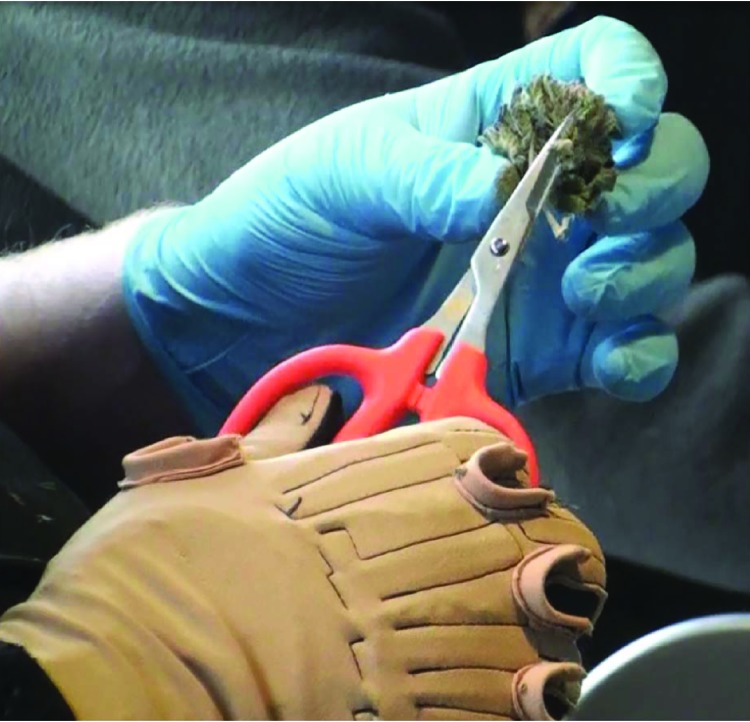
Description:Although the possession, use, and sale of all forms of cannabis are illegal under U.S. federal law, since 2012, multiple states have legalized the retail sale of cannabis for medical and recreational use. Previous research studies have indicated that delta 9-tetrahydrocannabinol (delta 9-THC), the principal psychoactive constituent of cannabis, can cause acute and chronic health effects. However, health effects from long-term occupational exposures to cannabis during harvesting and processing are unknown, in part because most studies have focused primarily on nonoccupational settings. In June 2015, the National Institute for Occupational Safety and Health (NIOSH) received a request for a Health Hazard Evaluation (HHE) from a representative of the United Food and Commercial Workers International Union to evaluate potential health and safety hazards associated with harvesting and processing cannabis at an outdoor farm. In response to the request, NIOSH visited the farm in August and October 2015. The farm was located in Washington; the state had legalized cannabis for medicinal use in 1998 and recreational use in 2012. At the time of the HHE, the farm was operated by the owner and three employees... The findings of this HHE indicated that the employees have exposures to highly repetitive work, most notably during hand trimming activities, which increase workers' risk for musculoskeletal disorders. Worker exposure to aerosolized Actinobacteria and fungi such as B. cinerea, might also result from processing and hand trimming activities, which can increase the risk for allergic and respiratory symptoms, as has previously been observed in the cannabis processing industry. Delta 9-THC surface wipe concentrations indicated the potential for dermal and ingestion exposures. However, the health implications from long-term occupational exposure to delta 9-THC are unknown. Detailed information is available in the final HHE report https://www.cdc.gov/niosh/hhe/reports/pdfs/2015-0111-3271.pdf. The NIOSH HHE program https://www.cdc.gov/niosh/hhe/ continues to evaluate potential hazards associated with the harvesting and processing of cannabis and will provide updated recommendations to educate employers and employees on the occupational hazards associated with the harvesting and processing of cannabis plants. Description provided by NIOSH
-
Subjects:
-
Keywords:
-
Source:MMWR 2018 Mar; 67(8):259-260
-
Series:
-
DOI:
-
ISSN:0149-2195
-
Pubmed ID:29494573
-
Pubmed Central ID:PMC5861698
-
Document Type:
-
Genre:
-
Place as Subject:
-
CIO:
-
Division:
-
Topic:
-
Location:
-
Pages in Document:2 pdf pages
-
Volume:67
-
Issue:8
-
NIOSHTIC Number:nn:20051107
-
Contact Point Address:James Couch, PhD, National Institute for Occupational Safety and Health, CDC
-
Email:jcouch@cdc.gov
-
CAS Registry Number:
-
Federal Fiscal Year:2018
-
NORA Priority Area:
-
Peer Reviewed:False
-
Download URL:
-
File Type:
 [PDF - 162.52 KB]
 -
Collection(s):
-
Main Document Checksum:urn:sha-512:4235bae7806fb228bc16e73d36e9c2fe066bf5d7de050238860bd91f07e73e74bfef72386c7eb4420db856b245ae166dffd532a7c492f84c05e1c7c22d100f0c
Supporting Files


File Language:
English
 Was this page helpful?
 Found an issue?

CDC STACKS serves as an archival repository of CDC-published products including
scientific findings, journal articles, guidelines, recommendations, or other public health information authored or
co-authored by CDC or funded partners.
As a repository, CDC STACKS retains documents in their original published format to ensure public access to scientific information.
As a repository, CDC STACKS retains documents in their original published format to ensure public access to scientific information.
You May Also Like