



HIV Diagnoses Among Persons Aged 13–29 Years — United States, 2010–2014
Supporting Files
Public Domain

-
Feb 23 2018
Details
-
Journal Article:Morbidity and Mortality Weekly Report (MMWR)
-
Personal Author:
-
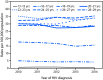
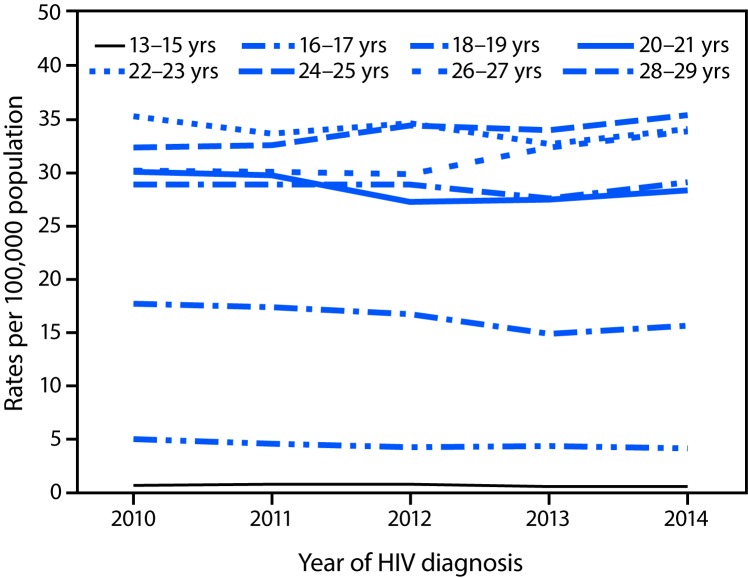
Description:In 2014, persons aged 13-29 years represented 23% of the U.S. population, yet accounted for 40% of diagnoses of human immunodeficiency Virus (HIV) infection during the same year (1). During 2010-2014, the rates of Diagnosis of HIV infection decreased among persons aged 15-19 years, were stable among persons aged 20-24 years, and increased among persons aged 25-29 years (1). However, these 5-year age groups encompass multiple developmental stages and potentially mask Trends associated with the rapid psychosocial changes during adolescence through young adulthood. To better understand HIV infection among adolescents aged 13-17 years and young adults aged 18-29 years in the United States and identify ideal ages to target primary HIV Prevention efforts, CDC analyzed data from the National HIV Surveillance System (NHSS)* using narrow age groups. During 2010-2014, rates of Diagnosis of HIV infection per 100,000 population varied substantially among persons aged 13-15 years (0.7), 16-17 years (4.5), 18-19 years (16.5), and 20-21 years (28.6), and were higher, but less variable, among persons aged 22-23 years (34.0), 24-25 years (33.8), 26-27 years (31.3), and 28-29 years (28.7). In light of the remarkable increase in rates between ages 16-17, 18-19, and 20-21 years, and a recent study revealing that infection precedes Diagnosis for young persons by an average of 2.7 years (2), these findings demonstrate the importance of targeting primary Prevention efforts to persons aged <18 years and continuing through the period of elevated risk in their mid-twenties.
-
Subjects:
-
Source:MMWR Morbidity Mortal Weekly Rep. 67(7):212-215.
-
Series:
-
DOI:
-
ISSN:0149-2195 (print) ; 1545-861X (digital)
-
Pubmed ID:29470457
-
Pubmed Central ID:PMC5858040
-
Document Type:
-
Place as Subject:
-
Pages in Document:4 pdf pages
-
Volume:67
-
Issue:7
-
Download URL:
-
File Type:
 [PDF - 131.89 KB]
 -
Collection(s):
-
Main Document Checksum:urn:sha-512:317ba756c89e76c971a8dcb4c59ae658fbb86db21a8689587d27bb4146d99635ee43394282398ea00c91ee79a76a2d875f55f3dd86b718b85bed177779740d69
Supporting Files


 Was this page helpful?
 Found an issue?

CDC STACKS serves as an archival repository of CDC-published products including
scientific findings, journal articles, guidelines, recommendations, or other public health information authored or
co-authored by CDC or funded partners.
As a repository, CDC STACKS retains documents in their original published format to ensure public access to scientific information.
As a repository, CDC STACKS retains documents in their original published format to ensure public access to scientific information.
You May Also Like
COLLECTION
Morbidity and Mortality Weekly Report (MMWR)