


Novel founder intronic variant in SLC39A14 in two families causing Manganism and potential treatment strategies
Supporting Files

-
April 06 2018
-
File Language:
English
Details
-
Alternative Title:Mol Genet Metab
-
Personal Author:
-
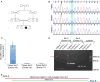
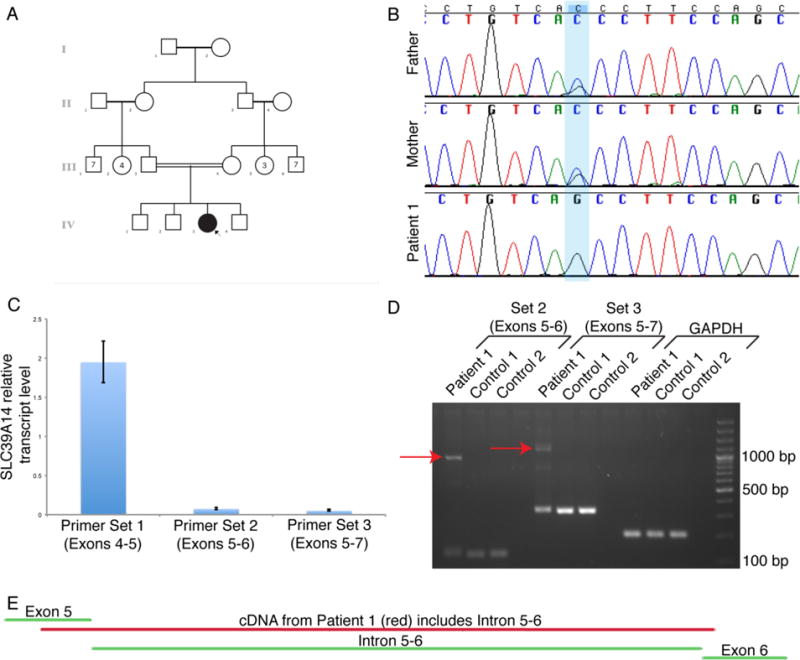
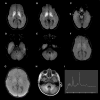
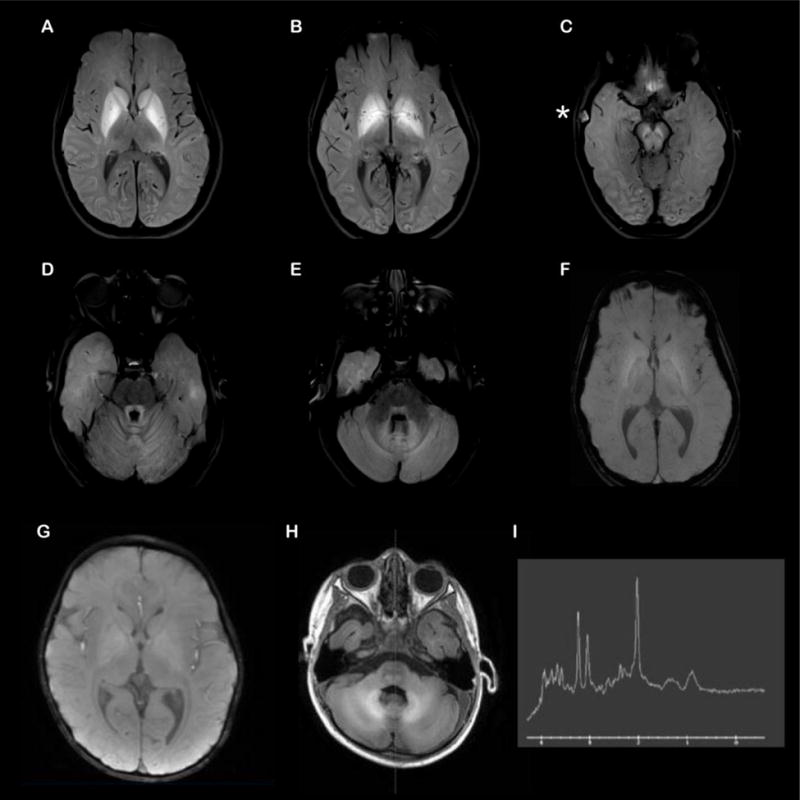
Description:Congenital disorders of manganese metabolism are rare occurrences in children, and medical management of these disorders is complex and challenging. Homozygous exonic mutations in the manganese transporter SLC39A14 have recently been associated with a pediatric-onset neurodegenerative disorder characterized by brain manganese accumulation and clinical signs of manganese neurotoxicity, including parkinsonism-dystonia. We performed whole exome sequencing on DNA samples from two unrelated female children from the United Arab Emirates with progressive movement disorder and brain mineralization, identified a novel homozygous intronic mutation in SLC39A14 in both children, and demonstrated that the mutation leads to aberrant splicing. Both children had consistently elevated serum manganese levels and were diagnosed with SLC39A14-associated manganism. Over a four-year period, we utilized a multidisciplinary management approach for Patient 1 combining decreased manganese dietary intake and chelation with symptomatic management of dystonia. Our treatment strategy appeared to slow disease progression, but did not lead to a cure or reversal of already established deficits. Clinicians should consider testing for noncoding mutations in the diagnosis of congenital disorders of manganese metabolism and utilizing multidisciplinary approaches in the management of these disorders.
-
Subjects:
-
Source:Mol Genet Metab. 124(2):161-167
-
Pubmed ID:29685658
-
Pubmed Central ID:PMC5976541
-
Document Type:
-
Funding:
-
Volume:124
-
Issue:2
-
Collection(s):
-
Main Document Checksum:urn:sha256:f04ee448a2a46cbc6db9815f7b5cc2b86a700ff4f04e21cfb49c204e985e7059
-
Download URL:
-
File Type:
 [PDF
- 580.95 KB
]
[PDF
- 580.95 KB
]
Supporting Files


File Language:
English
ON THIS PAGE



CDC STACKS serves as an archival repository of CDC-published products including
scientific findings,
journal articles, guidelines, recommendations, or other public health information authored or
co-authored by CDC or funded partners.
As a repository, CDC STACKS retains documents in their original published format to ensure public access to scientific information.
As a repository, CDC STACKS retains documents in their original published format to ensure public access to scientific information.
You May Also Like
COLLECTION
CDC Public Access