


a case study
Supporting Files
Public Domain

-
Nov 06 2017
File Language:
English
Details
-
Alternative Title:Rev Inst Med Trop Sao Paulo
-
Personal Author:
-
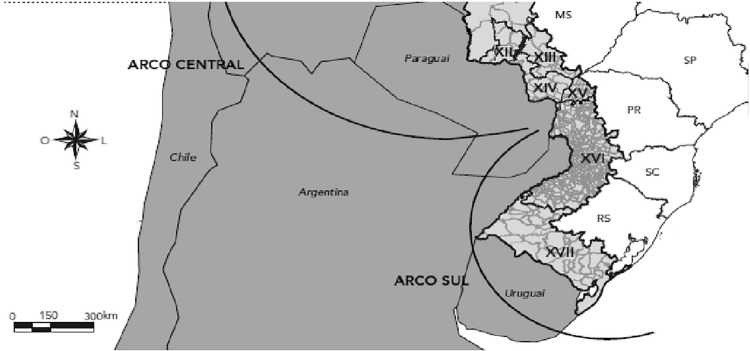
Description:This study aims to analyze the different binational/multinational activities, programs, and structures taking place on the borders of Brazil and the U.S. between 2013 and 2015. A descriptive exploratory study of two border epidemiological surveillance (BES) systems has been performed. Two approaches were used to collect data: i) technical visits to the facilities involved with border surveillance and application of a questionnaire survey; ii) application of an online questionnaire survey. It was identified that, for both surveillance systems, more than 55% of the technicians had realized that the BES and its activities have high priority. Eighty percent of North American and 71% of Brazilian border jurisdictions reported an exchange of information between countries. Less than half of the jurisdictions reported that the necessary tools to carry out information exchange were available. Operational attributes of completeness, feedback, reciprocity, and quality of information were identified as weak or of low quality in both systems. Statements, guidelines, and protocols to develop surveillance activities are available at the U.S.-Mexico border area. The continuous systematic development of surveillance systems at these borders will create more effective actions and responses.
-
Subjects:
-
Source:Rev Inst Med Trop Sao Paulo. 59.
-
Pubmed ID:29116288
-
Pubmed Central ID:PMC5679680
-
Document Type:
-
Place as Subject:
-
Volume:59
-
Collection(s):
-
Main Document Checksum:urn:sha256:644d3477fead57a52ff9c86fed565b7995851f87d9d825a7c8b5997adc6bf925
-
Download URL:
-
File Type:
 [PDF
- 491.56 KB
]
[PDF
- 491.56 KB
]
Supporting Files


File Language:
English
ON THIS PAGE


CDC STACKS serves as an archival repository of CDC-published products including
scientific findings,
journal articles, guidelines, recommendations, or other public health information authored or
co-authored by CDC or funded partners.
As a repository, CDC STACKS retains documents in their original published format to ensure public access to scientific information.
As a repository, CDC STACKS retains documents in their original published format to ensure public access to scientific information.
You May Also Like
COLLECTION
CDC Public Access