



Cardiovascular Autonomic Neuropathy in Adolescents and Young Adults with Type 1 and Type 2 Diabetes: The SEARCH for Diabetes in Youth Cohort Study
Supporting Files

-
6 2018 ; 6-2018
-
Available in CDC Stacks on 2019-06-01T00:00:00Z
File Language:
English
Details
-
Alternative Title:Pediatr Diabetes
-
Personal Author:Jaiswal, Mamta ; Divers, Jasmin ; Urbina, Elaine M. ; Dabelea, Dana ; Bell, Ronny A. ; Pettitt, David J. ; Imperatore, Giuseppina ; Pihoker, Catherine ; Dolan, Lawrence M. ; Liese, Angela D. ; Marcovina, Santica ; Linder, Barbara ; Feldman, Eva L. ; Pop-Busui, Rodica
-
Corporate Authors:
-
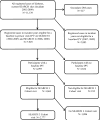
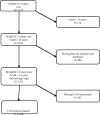
Description:Aims ; To estimate the prevalence of and risk factors for cardiovascular autonomic neuropathy (CAN) in adolescents and young adults with type 1 and type 2 diabetes enrolled in the SEARCH for Diabetes in Youth Study. ; Methods ; The study included 1646 subjects with type 1 diabetes (age 18 ± 4 years, diabetes duration 8 ± 2 years, HbA1c 9.1 ± 1.9%, 76% Non-Hispanic Whites) and 252 with type 2 diabetes (age 22 ± 4 years, diabetes duration 8 ± 2 years, HbA1c 9.2 ± 3.0%, 45% Non-Hispanic Blacks). Cross-sectional and longitudinal risk factors were assessed at baseline and follow-up visits. Area under the curve (AUC) was used to assess the longitudinal glycemic exposure and cardiovascular risk factors. CAN was assessed by time and frequency domain indices of heart rate variability (HRV). CAN was defined as the presence of ≥3 of 5 abnormal HRV indices. ; Results ; The prevalence of CAN was 12% in adolescents and young adults with type 1 diabetes and 17% in those with type 2 diabetes. Poor long-term glycemic control (AUC HbA1c), high blood pressure, and elevated triglyceride levels were correlates of CAN in subjects with type 1 diabetes. In those with type 2 diabetes, CAN was associated with elevated triglycerides and increased urinary albumin excretion. ; Conclusions ; The prevalence of CAN in this multiethnic cohort of adolescents and young adults with type 1 and type 2 diabetes are comparable to those reported in adults with diabetes. Suboptimal glycemic control and elevated triglycerides were the modifiable risk factors associated with CAN.
-
Subjects:
-
Source:Pediatr Diabetes. 19(4):680-689
-
Pubmed ID:29292558
-
Pubmed Central ID:PMC5938122
-
Document Type:
-
Funding:P30 DK057516/DK/NIDDK NIH HHSUnited States/ ; U01 DP000247/DP/NCCDPHP CDC HHSUnited States/ ; U18 DP002710/DP/NCCDPHP CDC HHSUnited States/ ; U18 DP006134/DP/NCCDPHP CDC HHSUnited States/ ; UL1 TR000154/TR/NCATS NIH HHSUnited States/ ; U18 DP002714/DP/NCCDPHP CDC HHSUnited States/ ; U01 DP000248/DP/NCCDPHP CDC HHSUnited States/ ; U01 DP000244/DP/NCCDPHP CDC HHSUnited States/ ; UL1 TR000062/TR/NCATS NIH HHSUnited States/ ; U18 DP002709/DP/NCCDPHP CDC HHSUnited States/ ; UL1 TR000423/TR/NCATS NIH HHSUnited States/ ; U01 DP000250/DP/NCCDPHP CDC HHSUnited States/ ; U18 DP002708/DP/NCCDPHP CDC HHSUnited States/ ; UL1 TR001425/TR/NCATS NIH HHSUnited States/ ; UL1 TR002319/TR/NCATS NIH HHSUnited States/ ; P30 DK020572/DK/NIDDK NIH HHSUnited States/ ; UL1 TR000077/TR/NCATS NIH HHSUnited States/ ; U01 DP000246/DP/NCCDPHP CDC HHSUnited States/ ; U01 DP000254/DP/NCCDPHP CDC HHSUnited States/ ; HIR 10-001/HX/HSRD VAUnited States/ ; P30 DK017047/DK/NIDDK NIH HHSUnited States/
-
Volume:19
-
Issue:4
-
Download URL:
-
File Type:
 [PDF - 543.90 KB]
 -
Collection(s):
-
Main Document Checksum:urn:sha256:0332f7a3de50651ee05dd9a02bb663c8d84fb0eb31c071ccd00e20aa611b5f7d
Supporting Files


File Language:
English
 Was this page helpful?
 Found an issue?



CDC STACKS serves as an archival repository of CDC-published products including
scientific findings, journal articles, guidelines, recommendations, or other public health information authored or
co-authored by CDC or funded partners.
As a repository, CDC STACKS retains documents in their original published format to ensure public access to scientific information.
As a repository, CDC STACKS retains documents in their original published format to ensure public access to scientific information.
You May Also Like
COLLECTION
CDC Public Access