



Progress Toward Poliomyelitis Eradication — Afghanistan and Pakistan, January 2013–August 2014
Supporting Files
Public Domain

-
Oct 31 2014
Details
-
Journal Article:Morbidity and Mortality Weekly Report (MMWR)
-
Personal Author:
-
Corporate Authors:
-
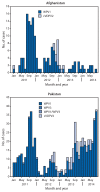
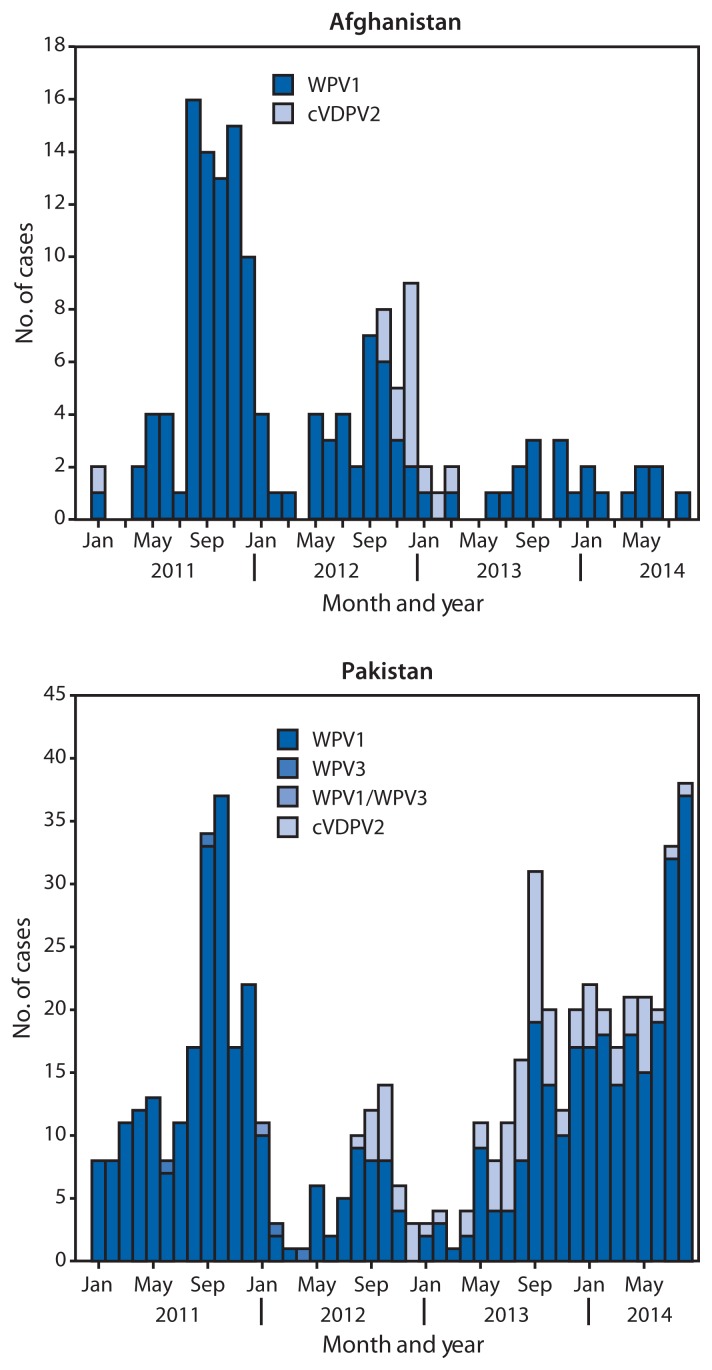
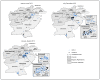
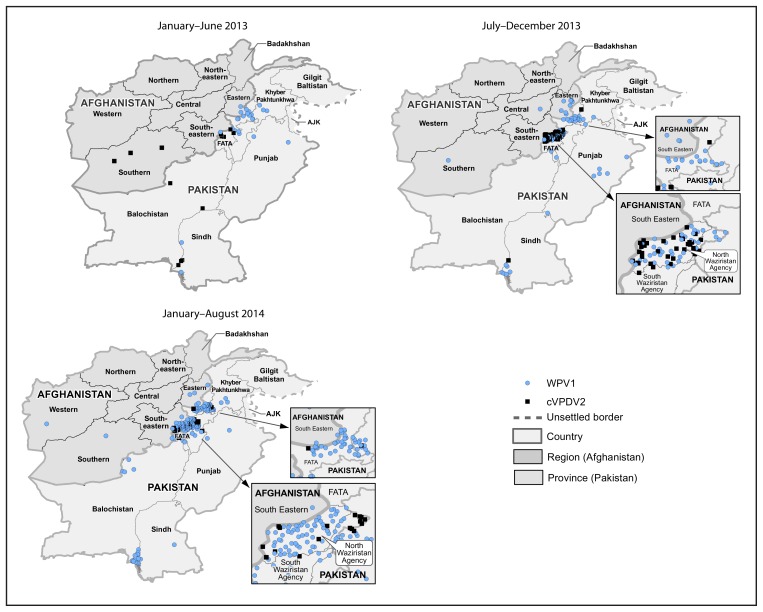
Description:In 2012, the World Health Assembly declared the completion of polio eradication a programmatic emergency for global public health and called for a comprehensive polio endgame strategy. Afghanistan and Pakistan are two of the three remaining countries (the other is Nigeria) where circulation of indigenous wild poliovirus (WPV) has never been interrupted. This report updates previous reports and describes polio eradication activities and progress in Afghanistan and Pakistan during January 2013-August 2014. In Afghanistan, 14 WPV cases were reported in 2013, compared with 37 cases in 2012; nine cases were reported during January-August 2014, compared with six cases during the same period in 2013. In Pakistan, 93 WPV cases were reported in 2013, compared with 58 cases in 2012; 170 cases were reported during January-August 2014, compared with 33 cases during the same period in 2013. All WPV cases reported during January 2013-August 2014 were WPV type 1 (WPV1). Vaccination campaigns have been banned since June 2012 in specific areas in Pakistan, where an estimated 300,000 children aged <5 years reside and where 69% of WPV cases have occurred in 2014. To accomplish the objectives of the Polio Eradication and Endgame Strategic Plan for 2013-2018 both countries should continue to negotiate access of vaccinators to insecure and temporarily inaccessible areas, improve immunization program performance to reach more children in accessible areas, and ensure that political and health leaders at all levels are fully committed to the program, including being committed to providing financial resources needed to fully implement all the recommendations of external technical advisory groups. Both countries should also continue to strengthen cross-border collaboration to improve surveillance and case detection, coordinate outbreak response, and maximize vaccination coverage of children moving between the two countries.
-
Subjects:
-
Source:MMWR Morbidity Mortal Weekly Rep. 2014; 63(43):973-977.
-
Series:
-
ISSN:0149-2195 (print) ; 1545-861X (digital)
-
Pubmed ID:25356605
-
Pubmed Central ID:PMC5779479
-
Document Type:
-
Place as Subject:
-
Pages in Document:5 pdf pages
-
Volume:63
-
Issue:43
-
Download URL:
-
File Type:
 [PDF - 804.38 KB]
 -
Collection(s):
-
Main Document Checksum:urn:sha-512:f5eeedb14ba014edd16c0df64c3350bc876b90441369b772236a232edce2c51462dfa0415e3a0c217938d504c3c004414fa827ef4a95084656957993a044a0af
Supporting Files


 Was this page helpful?
 Found an issue?

CDC STACKS serves as an archival repository of CDC-published products including
scientific findings, journal articles, guidelines, recommendations, or other public health information authored or
co-authored by CDC or funded partners.
As a repository, CDC STACKS retains documents in their original published format to ensure public access to scientific information.
As a repository, CDC STACKS retains documents in their original published format to ensure public access to scientific information.
You May Also Like
COLLECTION
Morbidity and Mortality Weekly Report (MMWR)