



Pool Chemical–Associated Health Events in Public and Residential Settings — United States, 2003–2012, and Minnesota, 2013
Supporting Files
Public Domain

-
May 16 2014
Details
-
Journal Article:Morbidity and Mortality Weekly Report (MMWR)
-
Personal Author:
-
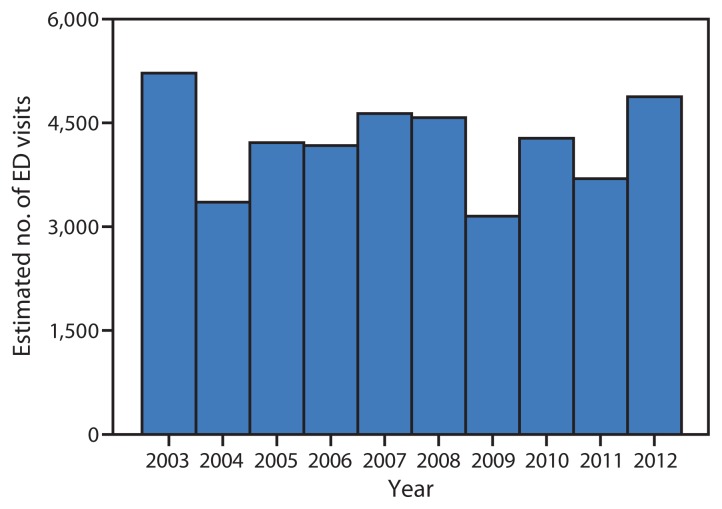
Description:Pool chemicals are added to treated recreational water venues (e.g., pools, hot tubs/spas, and interactive fountains) primarily to protect public health by inactivating pathogens and maximizing the effectiveness of disinfection by controlling pH. However, pool chemicals also can cause injuries when handled or stored improperly. To estimate the number of emergency department (ED) visits for injuries associated with pool chemicals in the United States per year during 2003-2012, CDC analyzed data from the U.S. Consumer Product Safety Commission's National Electronic Injury Surveillance System (NEISS). This report summarizes the results of that analysis. In 2012 alone, an estimated 4,876 persons (95% confidence interval CI = 2,821-6,930) visited an ED for injuries associated with pool chemicals. Almost half of the patients were aged <18 years. This report also describes a pool chemical-associated health event that occurred in Minnesota in 2013, which sent seven children and one adult to an ED. An investigation by the Minnesota Department of Health (MDH) determined the cause to be poor monitoring of or response to pool chemistry. Pool chemical-associated health events are preventable. CDC's Model Aquatic Health Code (MAHC) (1) is a resource that state and local agencies can use to optimize prevention of injuries and illnesses associated with public treated recreational water venues, including pool chemical-associated health events.
-
Subjects:
-
Source:MMWR Morbidity Mortal Weekly Rep. 2014; 63(19):427-430.
-
Series:
-
ISSN:0149-2195 (print) ; 1545-861X (digital)
-
Pubmed ID:24827410
-
Pubmed Central ID:PMC5779411
-
Document Type:
-
Place as Subject:
-
Pages in Document:4 pdf pages
-
Volume:63
-
Issue:19
-
Download URL:
-
File Type:
 [PDF - 221.48 KB]
 -
Collection(s):
-
Main Document Checksum:urn:sha-512:28a604d8d12b74d896dec6d95a9f9efd209bef7525d9a0fe0a69f44b37935c9993815e187e004d8a80c4f341d81d69538dc666655a0e206a58cf8eb09b2a97f9
Supporting Files


 Was this page helpful?
 Found an issue?

CDC STACKS serves as an archival repository of CDC-published products including
scientific findings, journal articles, guidelines, recommendations, or other public health information authored or
co-authored by CDC or funded partners.
As a repository, CDC STACKS retains documents in their original published format to ensure public access to scientific information.
As a repository, CDC STACKS retains documents in their original published format to ensure public access to scientific information.
You May Also Like
COLLECTION
Morbidity and Mortality Weekly Report (MMWR)