



Vital Signs: Communication Between Health Professionals and Their Patients About Alcohol Use — 44 States and the District of Columbia, 2011
Supporting Files
Public Domain

-
Jan 10 2014
Details
-
Alternative Title:Communication Between Health Professionals and Their Patients About Alcohol Use — 44 States and the District of Columbia, 2011
-
Journal Article:Morbidity and Mortality Weekly Report (MMWR)
-
Personal Author:
-
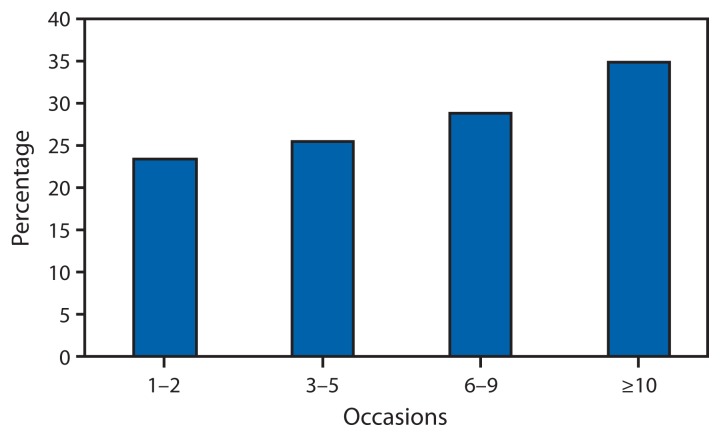
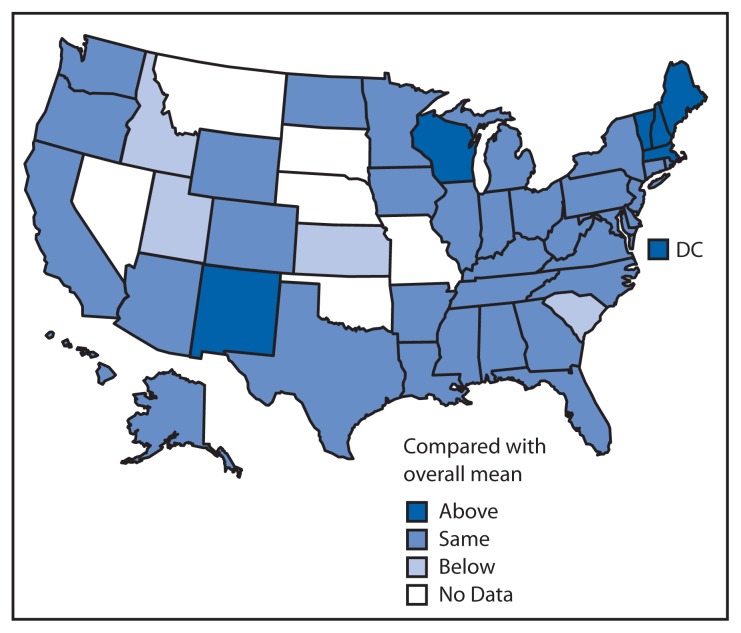
Description:Introduction ; Excessive alcohol use accounted for an estimated 88,000 deaths in the United States each year during 2006–2010, and $224 billion in economic costs in 2006. Since 2004, the U.S. Preventive Services Task Force (USPSTF) has recommended alcohol misuse screening and behavioral counseling (also known as alcohol screening and brief intervention ASBI) for adults to address excessive alcohol use; however, little is known about the prevalence of its implementation. ASBI will also be covered by many health insurance plans because of the Affordable Care Act. ; Methods ; CDC analyzed Behavioral Risk Factor Surveillance System (BRFSS) data from a question added to surveys in 44 states and the District of Columbia (DC) from August 1 to December 31, 2011, about patient-reported communication with a health professional about alcohol. Elements of ASBI are traditionally delivered via conversation. Weighted state-level prevalence estimates of this communication were generated for 166,753 U.S. adults aged ≥18 years by selected demographic characteristics and drinking behaviors. ; Results ; The prevalence of ever discussing alcohol use with a health professional was 15.7% among U.S. adults overall, 17.4% among current drinkers, and 25.4% among binge drinkers. It was most prevalent among those aged 18–24 years (27.9%). However, only 13.4% of binge drinkers reported discussing alcohol use with a health professional in the past year, and only 34.9% of those who reported binge drinking ≥10 times in the past month had ever discussed alcohol with a health professional. State-level estimates of communication about alcohol ranged from 8.7% in Kansas to 25.5% in DC. ; Conclusions ; Only one of six U.S. adults, including binge drinkers, reported ever discussing alcohol consumption with a health professional, despite public health efforts to increase ASBI implementation. ; Implications for Public Health Practice ; Increased implementation of ASBI, including systems-level changes such as integration into electronic health records processes, might reduce excessive alcohol consumption and the harms related to it. Routine surveillance of ASBI by states and communities might support monitoring and increasing its implementation.
-
Subjects:
-
Source:MMWR Morbidity Mortal Weekly Rep. 2014; 63(1):16-22.
-
Series:
-
ISSN:0149-2195 (print) ; 1545-861X (digital)
-
Pubmed ID:24402468
-
Pubmed Central ID:PMC5779334
-
Document Type:
-
Corporate as Subject:
-
Place as Subject:
-
Pages in Document:7 pdf pages
-
Volume:63
-
Issue:1
-
Download URL:
-
File Type:
 [PDF - 467.10 KB]
 -
Collection(s):
-
Main Document Checksum:urn:sha-512:1cb4a249f83e30aa1316dd35a81336c6b357f0bbb64e805939c0dc5e1e4a3ce07255ebef8830f6063b8301910921c2d38ccc43c70f2b991c0028a28d2ef4e5ea
Supporting Files


 Was this page helpful?
 Found an issue?


CDC STACKS serves as an archival repository of CDC-published products including
scientific findings, journal articles, guidelines, recommendations, or other public health information authored or
co-authored by CDC or funded partners.
As a repository, CDC STACKS retains documents in their original published format to ensure public access to scientific information.
As a repository, CDC STACKS retains documents in their original published format to ensure public access to scientific information.
You May Also Like
COLLECTION
Morbidity and Mortality Weekly Report (MMWR)