



Comparison of antigen and antibody responses in repeat lymphatic filariasis transmission assessment surveys in American Samoa
Supporting Files
Public Domain

-
Mar 09 2018
File Language:
English
Details
-
Alternative Title:PLoS Negl Trop Dis
-
Personal Author:Won, Kimberly Y. ; Robinson, Keri ; Hamlin, Katy L. ; Tufa, Joseph ; Seespesara, Margaret ; Wiegand, Ryan E. ; Gass, Katherine ; Kubofcik, Joseph ; Nutman, Thomas B. ; Lammie, Patrick J. ; Fuimaono, Saipale
-
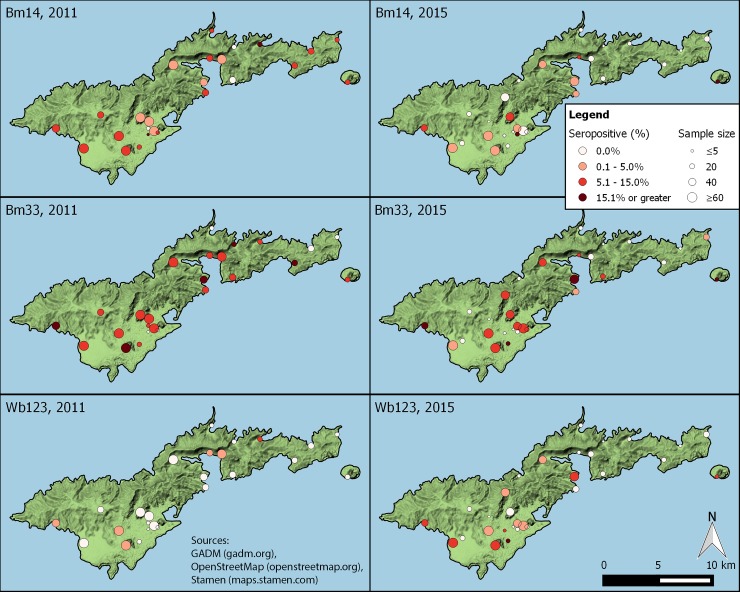
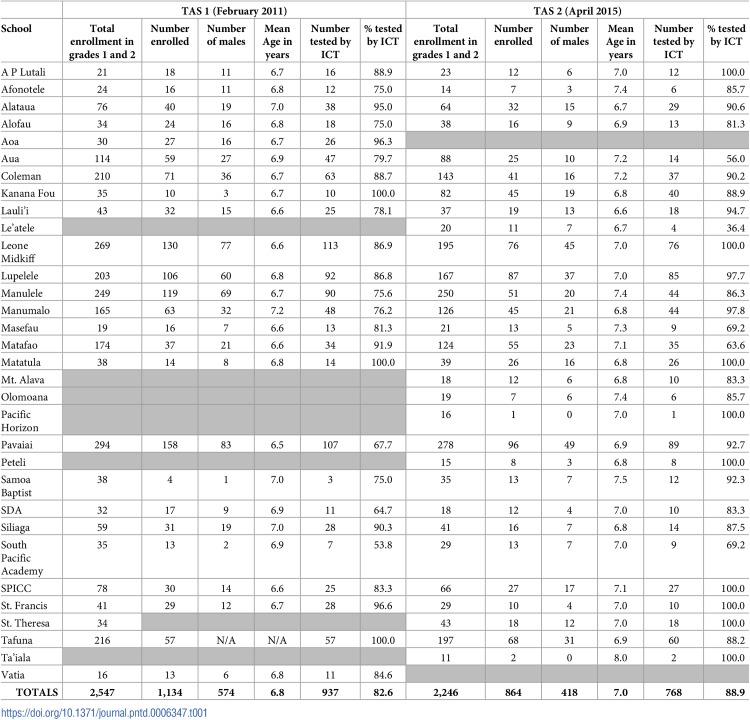
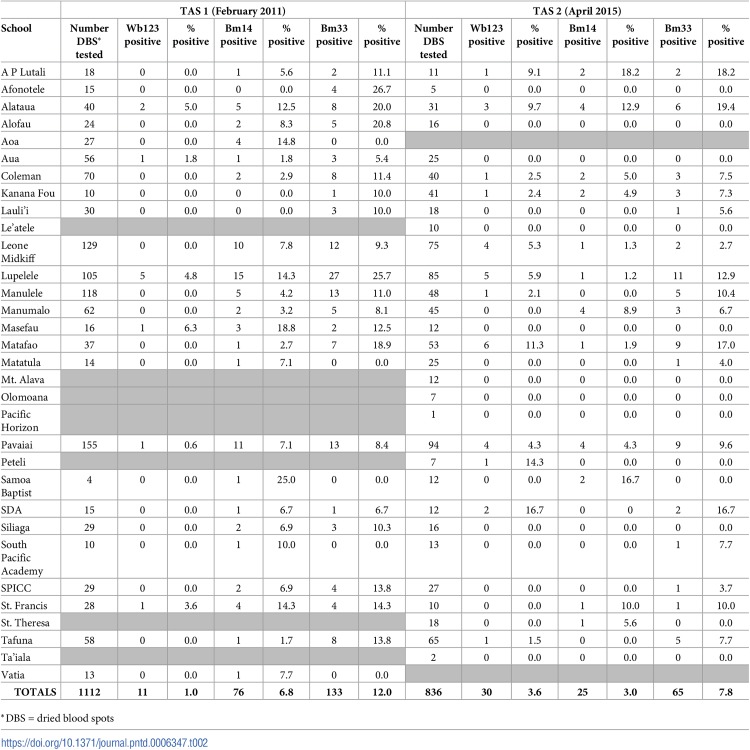
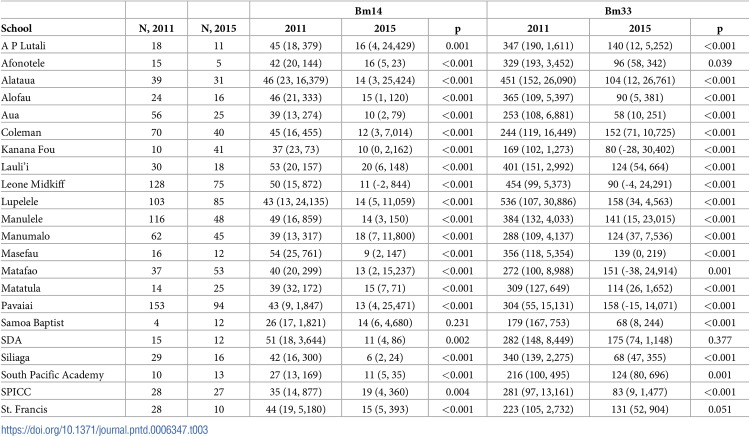
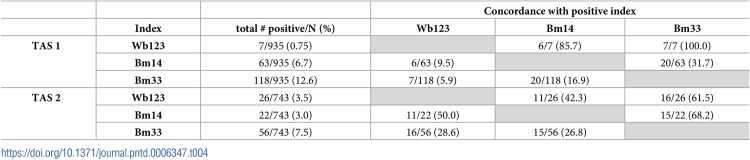
Description:Background ; Current WHO recommendations for lymphatic filariasis (LF) surveillance advise programs to implement activities to monitor for new foci of transmission after stopping mass drug administration (MDA). A current need in the global effort to eliminate LF is to standardize diagnostic tools and surveillance activities beyond the recommended transmission assessment survey (TAS). ; Methodology ; TAS was first conducted in American Samoa in 2011 (TAS 1) and a repeat TAS was carried out in 2015 (TAS 2). Circulating filarial antigen (CFA) and serologic results from both surveys were analyzed to determine whether interruption of LF transmission has been achieved in American Samoa. ; Principal findings ; A total of 1,134 and 864 children (5–10 years old) were enrolled in TAS 1 and TAS 2, respectively. Two CFA-positive children were identified in TAS 1, and one CFA-positive child was identified in TAS 2. Results of both surveys were below the threshold for which MDA was warranted. Additionally, 1,112 and 836 dried blood spots from TAS 1 and TAS 2, respectively were tested for antibodies to Wb123, Bm14 and Bm33 by luciferase immunoprecipitation system (LIPS) assay and multiplex bead assay. In 2011, overall prevalence of responses to Wb123, Bm14, and Bm33 was 1.0%, 6.8% and 12.0%, respectively. In 2015, overall prevalence of positive Bm14 and Bm33 responses declined significantly to 3.0% (p<0.001) and 7.8% (p = 0.013), respectively. ; Conclusions/Significance ; Although passing TAS 1 and TAS 2 and an overall decline in the prevalence of antibodies to Bm14 and Bm33 between these surveys suggests decreased exposure and infection among young children, there were persistent responses in some schools. Clustering and persistence of positive antibody responses in schools may be an indication of ongoing transmission. There is a need to better understand the limitations of current antibody tests, but our results suggest that serologic tools can have a role in guiding programmatic decision making.
-
Subjects:
-
Source:PLoS Negl Trop Dis. 12(3).
-
Pubmed ID:29522520
-
Pubmed Central ID:PMC5862496
-
Document Type:
-
Place as Subject:
-
Volume:12
-
Issue:3
-
Download URL:
-
File Type:
 [PDF - 4.16 MB]
 -
Collection(s):
-
Main Document Checksum:urn:sha256:22919635affafb8f3cc93499ed79d77ffadac608ca404b5e75e2e8274fdddbe2
Supporting Files


File Language:
English
 Was this page helpful?
 Found an issue?





CDC STACKS serves as an archival repository of CDC-published products including
scientific findings, journal articles, guidelines, recommendations, or other public health information authored or
co-authored by CDC or funded partners.
As a repository, CDC STACKS retains documents in their original published format to ensure public access to scientific information.
As a repository, CDC STACKS retains documents in their original published format to ensure public access to scientific information.
You May Also Like
COLLECTION
CDC Public Access