


The seasonality of nonpolio enteroviruses in the United States: Patterns and drivers
Supporting Files

-
March 20 2018
-
File Language:
English
Details
-
Alternative Title:Proc Natl Acad Sci U S A
-
Personal Author:
-
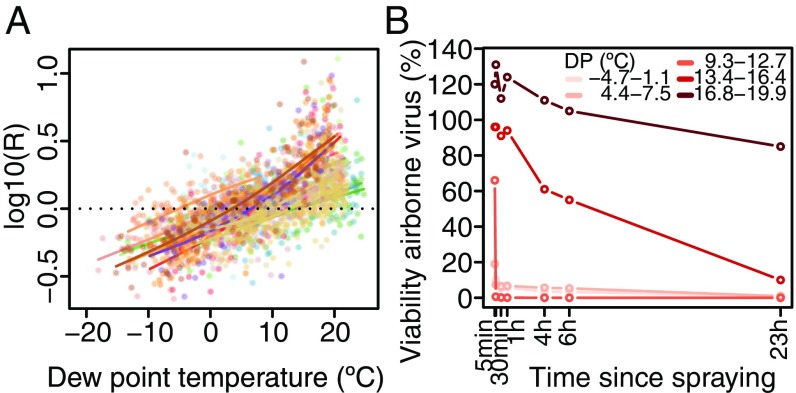
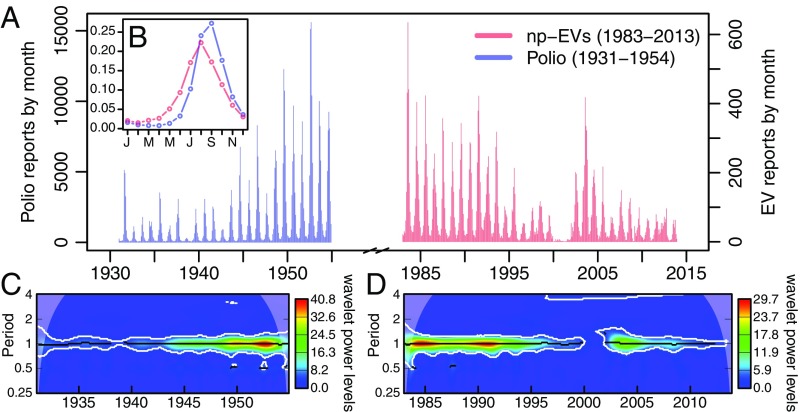
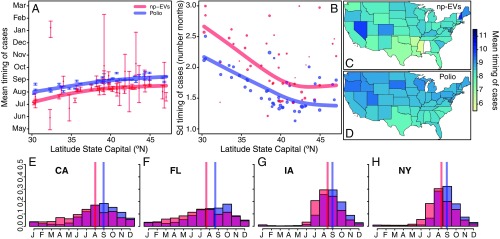
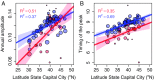
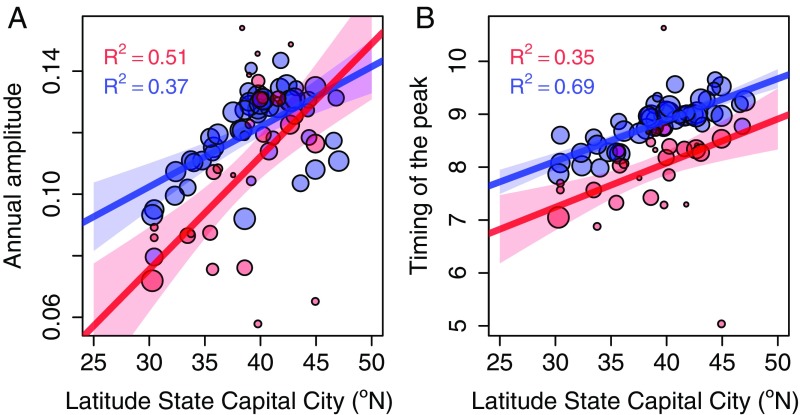
Description:Nonpolio enteroviruses are diverse and common viruses that can circulate year-round but tend to peak in summer. Although most infections are asymptomatic, they can result in a wide range of neurological and other diseases. Many serotypes circulate every year, and different serotypes predominate in different years, but the drivers of their geographical and temporal dynamics are not understood. We use national enterovirus surveillance data collected by the US Centers for Disease Control and Prevention during 1983-2013, as well as demographic and climatic data for the same period, to study the patterns and drivers of the seasonality of these infections. We find that the seasonal pattern of enterovirus cases is spatially structured in the United States and similar to that observed for historical prevaccination poliomyelitis (1931-1954). We identify latitudinal gradients for the amplitude and the timing of the peak of cases, meaning that those are more regularly distributed all year-round in the south and have a more pronounced peak that arrives later toward the north. The peak is estimated to occur between July and September across the United States, and 1 month earlier than that for historical poliomyelitis. Using mixed-effects models, we find that climate, but not demography, is likely to drive the seasonal pattern of enterovirus cases and that the dew point temperature alone explains ∼30% of the variation in the intensity of transmission. Our study contributes to a better understanding of the epidemiology of enteroviruses, demonstrates important similarities in their circulation dynamics with polioviruses, and identifies potential drivers of their seasonality.
-
Subjects:
-
Source:Proc Natl Acad Sci U S A. 2018; 115(12):3078-3083
-
Pubmed ID:29507246
-
Pubmed Central ID:PMC5866597
-
Document Type:
-
Funding:
-
Place as Subject:
-
Volume:115
-
Issue:12
-
Collection(s):
-
Main Document Checksum:urn:sha256:defb019f713e9394d6e1f4efe14480b83b3bb4ef9b0fbc1f38bfa5fc87736dec
-
Download URL:
-
File Type:
 [PDF
- 8.04 MB
]
[PDF
- 8.04 MB
]
Supporting Files


File Language:
English
ON THIS PAGE




CDC STACKS serves as an archival repository of CDC-published products including
scientific findings,
journal articles, guidelines, recommendations, or other public health information authored or
co-authored by CDC or funded partners.
As a repository, CDC STACKS retains documents in their original published format to ensure public access to scientific information.
As a repository, CDC STACKS retains documents in their original published format to ensure public access to scientific information.
You May Also Like
COLLECTION
CDC Public Access