


Influenza A(H7N9) Virus Antibody Responses in Survivors 1 Year after Infection, China, 2017
Supporting Files
Public Domain

-
Apr 17 2018
-
File Language:
English
Details
-
Alternative Title:Emerg Infect Dis
-
Personal Author:
-
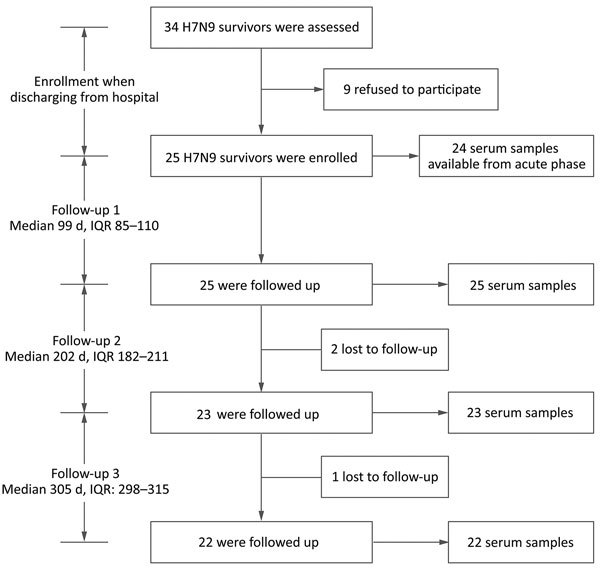
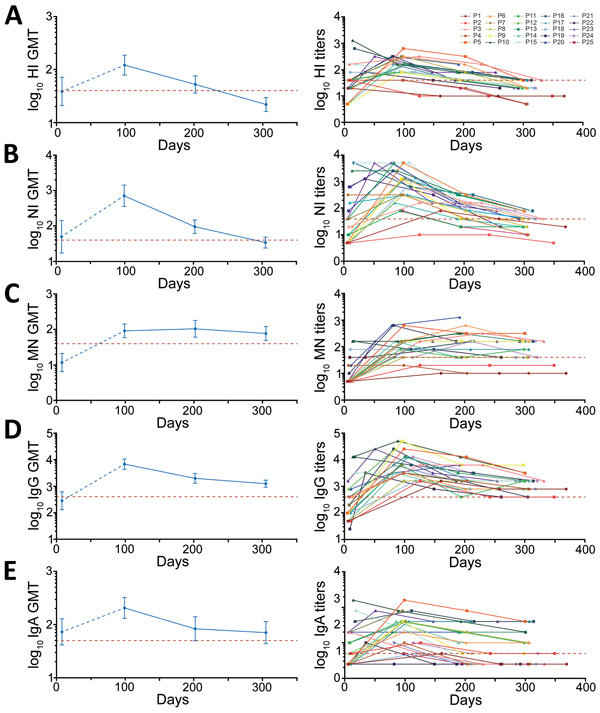
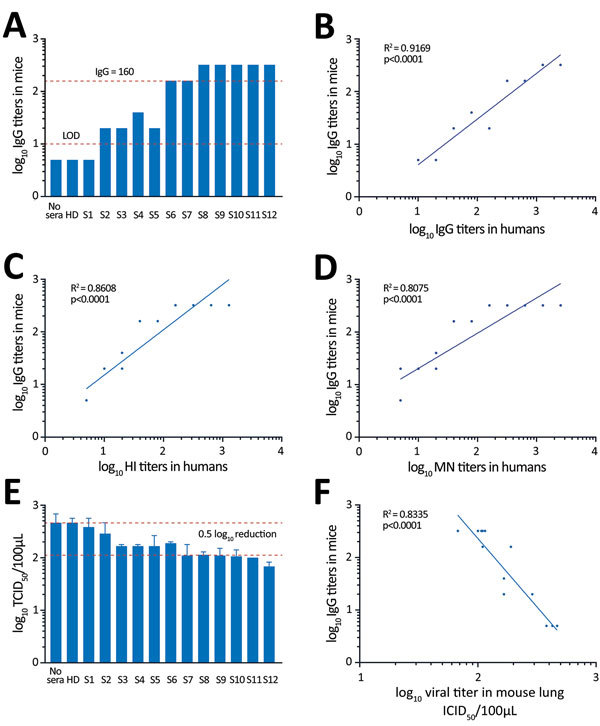
Description:Avian influenza A(H7N9) virus has caused 5 epidemic waves in China since its emergence in 2013. We investigated the dynamic changes of antibody response to this virus over 1 year postinfection in 25 patients in Suzhou City, Jiangsu Province, China, who had laboratory-confirmed infections during the fifth epidemic wave, October 1, 2016-February 14, 2017. Most survivors had relatively robust antibody responses that decreased but remained detectable at 1 year. Antibody response was variable; several survivors had low or undetectable antibody titers. Hemagglutination inhibition titer was >1:40 for <40% of the survivors. Measured in vitro in infected mice, hemagglutination inhibition titer predicted serum protective ability. Our findings provide a helpful serologic guideline for identifying subclinical infections and for developing effective vaccines and therapeutics to counter H7N9 virus infections.
-
Subjects:
-
Source:Emerg Infect Dis. 24(4):663-672.
-
Pubmed ID:29432091
-
Pubmed Central ID:PMC5875250
-
Document Type:
-
Place as Subject:
-
Location:
-
Volume:24
-
Issue:4
-
Collection(s):
-
Main Document Checksum:urn:sha256:d3bfdb8a94a28bec4a4bdd65c482dfdcadcc28736a7f3b587e6494b5f120c551
-
Download URL:
-
File Type:
 [PDF
- 2.34 MB
]
[PDF
- 2.34 MB
]
Supporting Files


File Language:
English
ON THIS PAGE



CDC STACKS serves as an archival repository of CDC-published products including
scientific findings,
journal articles, guidelines, recommendations, or other public health information authored or
co-authored by CDC or funded partners.
As a repository, CDC STACKS retains documents in their original published format to ensure public access to scientific information.
As a repository, CDC STACKS retains documents in their original published format to ensure public access to scientific information.
You May Also Like
COLLECTION
Emerging Infectious Diseases