



The Global Polio Laboratory Network as a Platform for the Viral Vaccine-Preventable and Emerging Diseases Laboratory Networks
Supporting Files

-
7 01 2017 ; 7-01-
-
Available in CDC Stacks on July 01, 2018, 12:00 AM
File Language:
English
Details
-
Alternative Title:J Infect Dis
-
Personal Author:
-
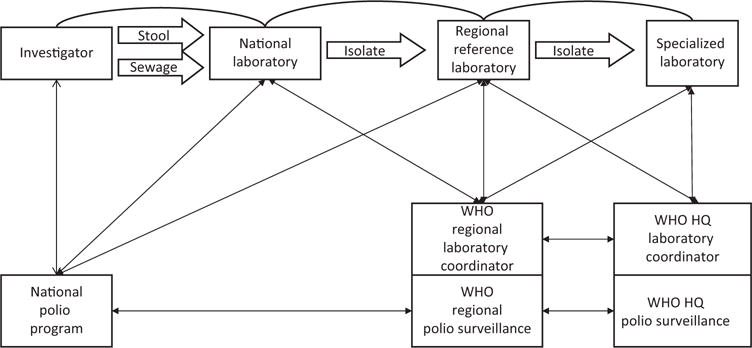
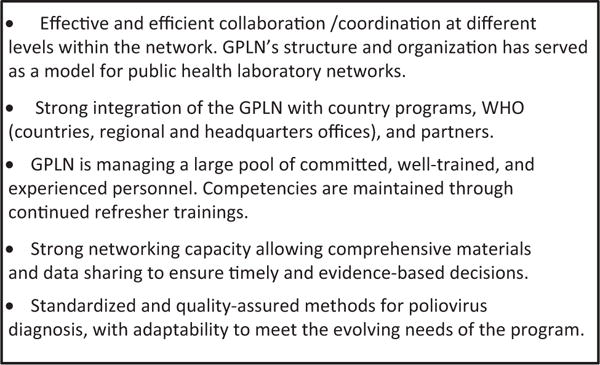
Description:The Global Polio Laboratory Network (GPLN) began building in the late 1980s on a 3-tiered structure of 146 laboratories with different and complementary technical and support capacities (poliovirus isolation, molecular strain characterization including sequencing, quality assurance, and research). The purpose of this network is to provide timely and accurate laboratory results to the Global Polio Eradication Initiative. Deeply integrated with field case-based surveillance, it ultimately provides molecular epidemiological data from polioviruses used to inform programmatic and immunization activities. This network of global coverage requires substantial investments in laboratory infrastructure, equipment, supplies, reagents, quality assurance, staffing and training, often in resource-limited settings. The GPLN has not only developed country capacities, but it also serves as a model to other global laboratory networks for vaccine-preventable diseases that will endure after the polio eradication goal is achieved. Leveraging lessons learned during past 27 years, the authors discuss options for transitioning GPLN assets to support control of other viral vaccine-preventable, emerging, and reemerging diseases.
-
Subjects:
-
Keywords:
-
Source:J Infect Dis. 216(Suppl 1):S299-S307
-
Pubmed ID:28838192
-
Pubmed Central ID:PMC5853949
-
Document Type:
-
Funding:
-
Volume:216
-
Download URL:
-
File Type:
 [PDF - 568.11 KB]
 -
Collection(s):
-
Main Document Checksum:urn:sha-512:665518a9bac07db48f40e6d83ae3efcc25cb3a429938ba951338b60f1102e5627fcf294d35957fb003ee58297c8a3cb555db38c2438e2b66886a9263bb50354d
Supporting Files


File Language:
English
 Was this page helpful?
 Found an issue?




CDC STACKS serves as an archival repository of CDC-published products including
scientific findings, journal articles, guidelines, recommendations, or other public health information authored or
co-authored by CDC or funded partners.
As a repository, CDC STACKS retains documents in their original published format to ensure public access to scientific information.
As a repository, CDC STACKS retains documents in their original published format to ensure public access to scientific information.
You May Also Like
COLLECTION
CDC Public Access