



Feasibility and acceptability of a clinic-based Mediterranean-style diet intervention to reduce cardiovascular risk for Hispanic Americans with type 2 diabetes
Supporting Files

-
6 2017 ; 6-2017
-
Available in CDC Stacks on 2018-06-01T00:00:00Z
File Language:
English
Details
-
Alternative Title:Diabetes Educ
-
Personal Author:
-
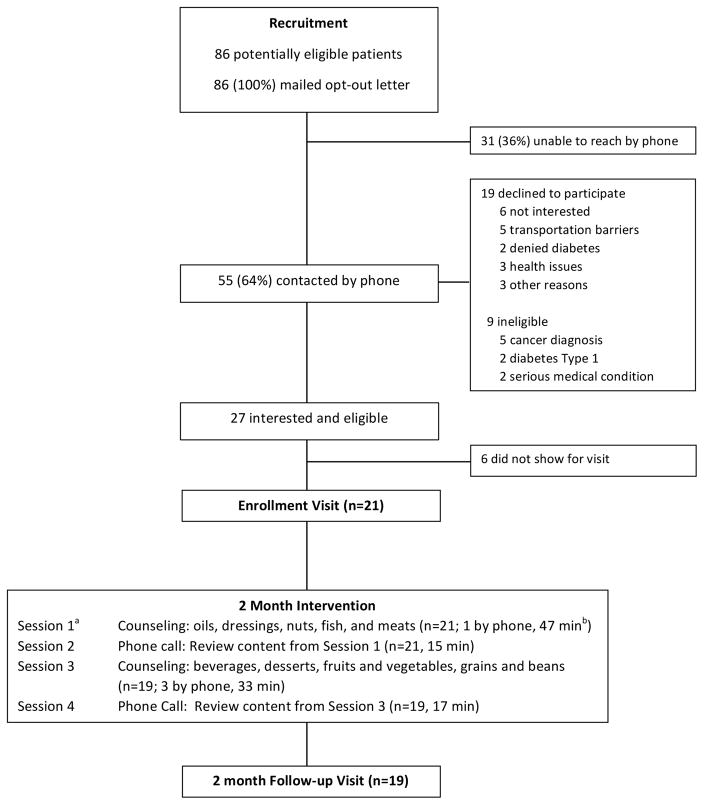
Description:Purpose ; The purpose of the study was to modify a previously tested Spanish language version of a Mediterranean (Med)-style dietary intervention so that the dietary recommendations align with the cultural and social needs of Hispanic Americans (HAs) with type 2 diabetes (T2D) and evaluate the modified intervention’s feasibility and acceptability. ; Methods ; In phase I (formative), semi-structured interviews and focus groups were used to refine the intervention content and format for delivery to HAs with T2D receiving care at a large primary care practice. In phase II (clinical pilot), the 2-month intervention that promoted a Medstyle dietary pattern was given to all participants via 2 face-to-face counseling sessions and 2 telephone counseling sessions. Major outcomes were engagement with study activities and intervention acceptability; dietary behavior change at 2 months using the PREDIMED Med-diet score (range, 0–14, higher indicating better dietary pattern) is also reported. ; Results ; From clinic records, we identified 86 potentially eligible participants and enrolled 21. Baseline characteristics were: mean age = 52 years, 12 (57%) female, 15 (71%) from Mexico, mean years in the US = 19, low acculturation scores for all, and mean BMI = 33.7 kg/m2. Engagement and acceptability were high, with 19 (90%) completing all intervention visits and follow-up measures, all of whom would recommend the program to others. Mean Med-diet score improved from 5.7 to 7.9 (difference = 2.3; 95% CI, 1.0–3.5; P = .001). ; Conclusions ; Intervention engagement and acceptability were high, and there was improvement in self-reported dietary behaviors. This type of intervention should be evaluated in randomized trials enrolling HAs with diabetes.
-
Subjects:
-
Source:Diabetes Educ. 43(3):286-296
-
Pubmed ID:28427311
-
Pubmed Central ID:PMC5800306
-
Document Type:
-
Funding:
-
Volume:43
-
Issue:3
-
Download URL:
-
File Type:
 [PDF - 291.04 KB]
 -
Collection(s):
-
Main Document Checksum:urn:sha256:67d4244f39ee5f56d34ef3d9da0f95cd4458637ca22861c448fe94fad0275dec
Supporting Files


File Language:
English
 Was this page helpful?
 Found an issue?


CDC STACKS serves as an archival repository of CDC-published products including
scientific findings, journal articles, guidelines, recommendations, or other public health information authored or
co-authored by CDC or funded partners.
As a repository, CDC STACKS retains documents in their original published format to ensure public access to scientific information.
As a repository, CDC STACKS retains documents in their original published format to ensure public access to scientific information.
You May Also Like
COLLECTION
CDC Public Access