


Trends in driver licensing status and driving among high school seniors in the United States, 1996–2010☆
Supporting Files

-
May 07 2013
File Language:
English
Details
-
Alternative Title:J Safety Res
-
Personal Author:
-
Description:Introduction
Understanding the reasons for fluctuations in teenage driver crashes over time in the United States is clouded by the lack of information on licensure rates and driving exposure.
Methods
We examined results from the Monitoring the Future survey to estimate the proportion of high school seniors who possessed a driver’s license and the proportion of seniors who did not drive “during an average week” during the 15-year period of 1996–2010.
Results
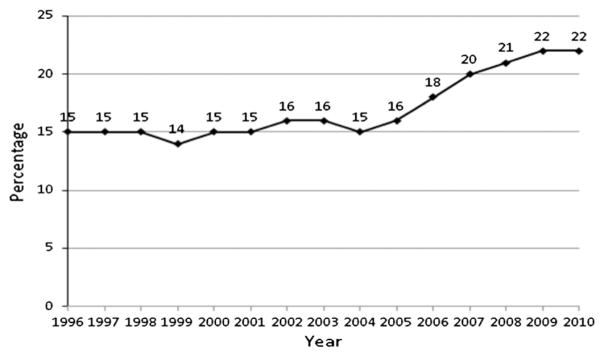
During 1996–2010, the proportion of high school seniors in United States who reported having a driver’s license declined by 12 percentage points (14%) from 85% to 73%. Two-thirds of the decline (8 percentage points) occurred during 2006–2010. During the same 15-year period, the proportion of high school seniors who did not drive during an average week increased by 7 percentage points (47%) from 15% in 1996 to 22% in 2010, with essentially all of the increase occurring during 2006–2009.
Discussion
Findings in this report suggest that the economic recession in recent years has reduced rates of licensure and driving among high school seniors.
-
Subjects:
-
Source:J Safety Res. 46:167-170.
-
Pubmed ID:23932698
-
Pubmed Central ID:PMC5751409
-
Document Type:
-
Funding:
-
Place as Subject:
-
Volume:46
-
Collection(s):
-
Main Document Checksum:urn:sha256:5b8cea2928fb8ef560b88a3c1c499dbde385a92a05be862190f25f7659e26553
-
Download URL:
-
File Type:
 [PDF
- 418.13 KB
]
[PDF
- 418.13 KB
]
Supporting Files


File Language:
English
ON THIS PAGE


CDC STACKS serves as an archival repository of CDC-published products including
scientific findings,
journal articles, guidelines, recommendations, or other public health information authored or
co-authored by CDC or funded partners.
As a repository, CDC STACKS retains documents in their original published format to ensure public access to scientific information.
As a repository, CDC STACKS retains documents in their original published format to ensure public access to scientific information.
You May Also Like
COLLECTION
CDC Public Access