


Occupational exposure to disinfectants and asthma control in U.S. nurses
Supporting Files

-
October 05 2017
-
File Language:
English
Details
-
Alternative Title:Eur Respir J
-
Personal Author:
-
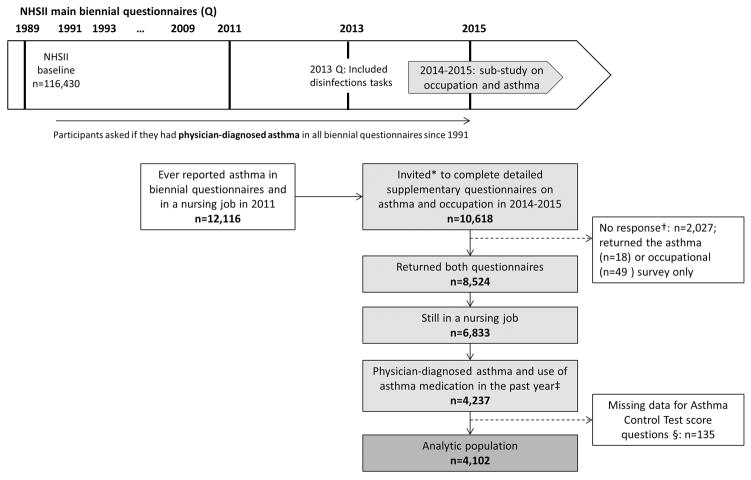
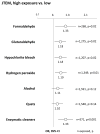
Description:Disinfectant use has been associated with adverse respiratory effects among healthcare workers. However, the specific harmful agents have not been elucidated. We examined the association between occupational exposure to disinfectants and asthma control in the Nurses' Health Study II, a large cohort of female nurses.Nurses with asthma were invited in 2014 to complete two questionnaires on their current occupation and asthma (response rate 80%). Asthma control was defined by the Asthma Control Test (ACT). Exposure to major disinfectants was evaluated by a job-task-exposure matrix (JTEM).Analyses included 4102 nurses with asthma (mean age 58 years). Asthma control was poor (ACT score 16-19) in 12% of nurses and very poor (ACT score ≤15) in 6% of nurses. Use of disinfectants to clean medical instruments (19% exposed) was associated with poorly (OR 1.37; 95% CI 1.05-1.79) and very poorly (OR 1.88, 95% CI 1.38-2.56) controlled asthma (p|=0.004, after adjustment for potential confounders). Using JTEM estimates, exposure to formaldehyde, glutaraldehyde, hypochlorite bleach, hydrogen peroxide and enzymatic cleaners was associated with poor asthma control (all p|<0.05); exposure to quaternary ammonium compounds and alcohol was not.Use of several disinfectants was associated with poor asthma control. Our findings suggest targets for future efforts to prevent worsening of asthma control in healthcare workers.
-
Subjects:
-
Source:Eur Respir J. 50(4)
-
Pubmed ID:28982772
-
Pubmed Central ID:PMC5702691
-
Document Type:
-
Funding:
-
Volume:50
-
Issue:4
-
Collection(s):
-
Main Document Checksum:urn:sha256:56db54b444ea37e0415b899a57ea0f007c97d6eb31012acdbd6cf00bb311a31c
-
Download URL:
-
File Type:
 [PDF
- 617.12 KB
]
[PDF
- 617.12 KB
]
Supporting Files


File Language:
English
ON THIS PAGE


CDC STACKS serves as an archival repository of CDC-published products including
scientific findings,
journal articles, guidelines, recommendations, or other public health information authored or
co-authored by CDC or funded partners.
As a repository, CDC STACKS retains documents in their original published format to ensure public access to scientific information.
As a repository, CDC STACKS retains documents in their original published format to ensure public access to scientific information.
You May Also Like
COLLECTION
CDC Public Access