


Relating coccidioidomycosis (valley fever) incidence to soil moisture conditions
Supporting Files

-
Mar 25 2017
-
File Language:
English
Details
-
Alternative Title:Geohealth
-
Personal Author:
-
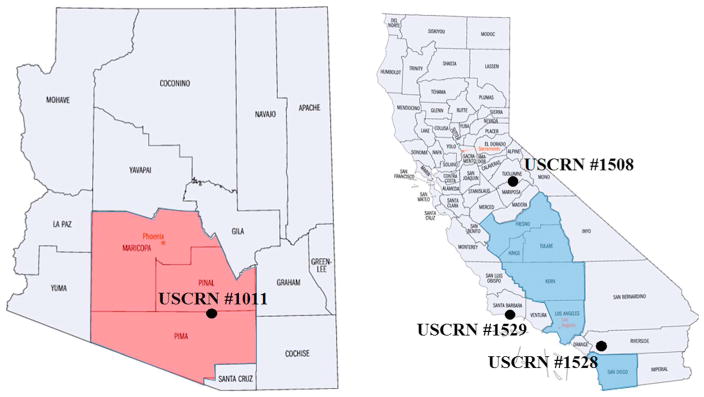
Description:Coccidioidomycosis (also called Valley fever) is caused by a soilborne fungus, | spp.| in arid regions of the southwestern United States. Though some who develop infections from this fungus remain asymptomatic, others develop respiratory disease as a consequence. Less commonly, severe illness and death can occur when the infection spreads to other regions of the body. Previous analyses have attempted to connect the incidence of coccidioidomycosis to broadly available climatic measurements, such as precipitation or temperature. However, with the limited availability of long-term, in situ soil moisture data sets, it has not been feasible to perform a direct analysis of the relationships between soil moisture levels and coccidioidomycosis incidence on a larger temporal and spatial scale. Utilizing in situ soil moisture gauges throughout the southwest from the U.S. Climate Reference Network and a model with which to extend those estimates, this work connects periods of higher and lower soil moisture in Arizona and California between 2002 and 2014 to the reported incidence of coccidioidomycosis. The results indicate that in both states, coccidioidomycosis incidence is related to soil moisture levels from previous summers and falls. Stated differently, a higher number of coccidioidomycosis cases are likely to be reported if previous bands of months have been atypically wet or dry, depending on the location.
-
Subjects:
-
Source:Geohealth. 1:51-63.
-
Pubmed ID:29124249
-
Pubmed Central ID:PMC5672948
-
Document Type:
-
Funding:
-
Volume:1
-
Collection(s):
-
Main Document Checksum:urn:sha256:24ebaf1bfadb59fe885227e81ae1bee834bde76f1c7476d9674828144a825e21
-
Download URL:
-
File Type:
 [PDF
- 567.44 KB
]
[PDF
- 567.44 KB
]
Supporting Files


File Language:
English
ON THIS PAGE

CDC STACKS serves as an archival repository of CDC-published products including
scientific findings,
journal articles, guidelines, recommendations, or other public health information authored or
co-authored by CDC or funded partners.
As a repository, CDC STACKS retains documents in their original published format to ensure public access to scientific information.
As a repository, CDC STACKS retains documents in their original published format to ensure public access to scientific information.
You May Also Like
COLLECTION
CDC Public Access