


Relationship Between Total and Bioaccessible Lead on Children’s Blood Lead Levels in Urban Residential Philadelphia Soils
Supporting Files

-
Aug 23 2017
-
File Language:
English
Details
-
Alternative Title:Environ Sci Technol
-
Personal Author:
-
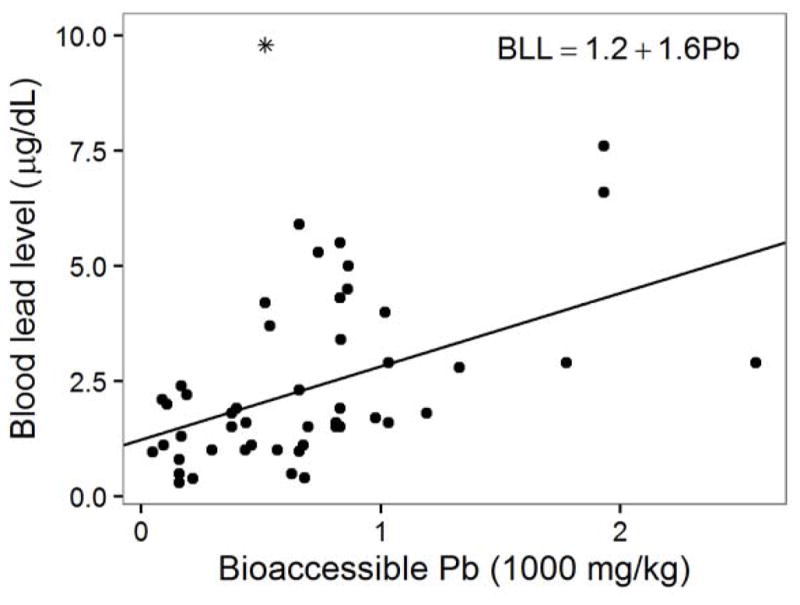
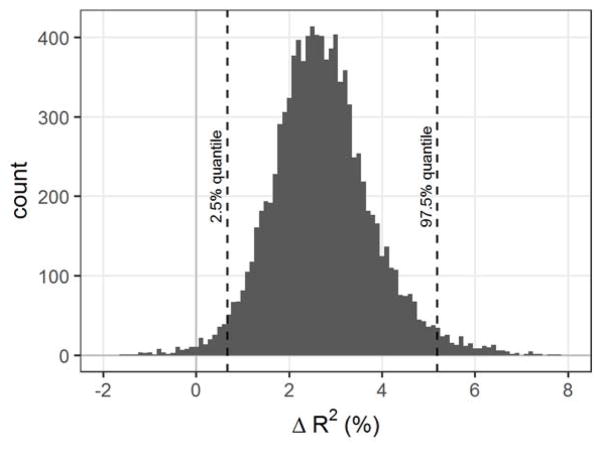
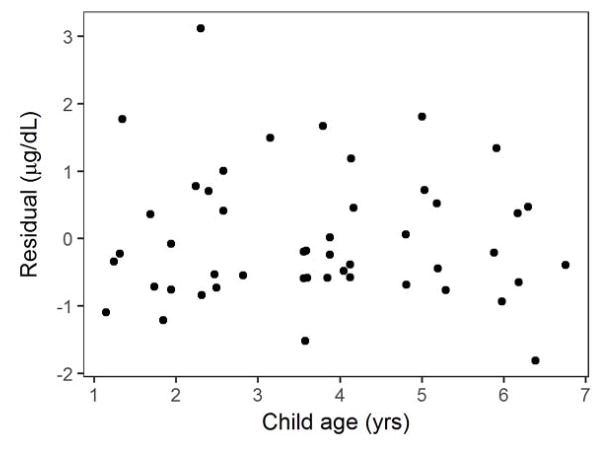
Description:Relationships between total soil or bioaccessible lead (Pb), measured using an in vitro bioaccessibility assay, and children's blood lead levels (BLL) were investigated in an urban neighborhood in Philadelphia, PA, with a history of soil Pb contamination. Soil samples from 38 homes were analyzed to determine whether accounting for the bioaccessible Pb fraction improves statistical relationships with children's BLLs. Total soil Pb concentration ranged from 58 to 2821 mg/kg; the bioaccessible Pb concentration ranged from 47 to 2567 mg/kg. Children's BLLs ranged from 0.3 to 9.8 μg/dL. Hierarchical models were used to compare relationships between total or bioaccessible Pb in soil and children's BLLs. Total soil Pb concentration as the predictor accounted for 23% of the variability in child BLL; bioaccessible soil Pb concentration as the predictor accounted for 26% of BLL variability. A bootstrapping analysis confirmed a significant increase in R(2) for the model using bioaccessible soil Pb concentration as the predictor with 99.0% of bootstraps showing a positive increase. Estimated increases of 1.3 μg/dL and 1.5 μg/dL in BLL per 1000 mg/kg Pb in soil were observed for this study area using total and bioaccessible Pb concentrations, respectively. Children's age did not contribute significantly to the prediction of BLLs.
-
Subjects:
-
Source:Environ Sci Technol. 51(17):10005-10011.
-
Pubmed ID:28787152
-
Pubmed Central ID:PMC5675733
-
Document Type:
-
Funding:
-
Place as Subject:
-
Volume:51
-
Issue:17
-
Collection(s):
-
Main Document Checksum:urn:sha256:3f4a82cd9fb3bd27b0c3e6529680888191726a82fdfee1a4c695bc575a83c96e
-
Download URL:
-
File Type:
 [PDF
- 629.80 KB
]
[PDF
- 629.80 KB
]
Supporting Files


File Language:
English
ON THIS PAGE



CDC STACKS serves as an archival repository of CDC-published products including
scientific findings,
journal articles, guidelines, recommendations, or other public health information authored or
co-authored by CDC or funded partners.
As a repository, CDC STACKS retains documents in their original published format to ensure public access to scientific information.
As a repository, CDC STACKS retains documents in their original published format to ensure public access to scientific information.
You May Also Like
COLLECTION
CDC Public Access