


Neuroinvasive Arboviral Disease in the United States: 2003 to 2012
Supporting Files

-
August 11 2014
-
File Language:
English
Details
-
Alternative Title:Pediatrics
-
Personal Author:
-
Description:OBJECTIVE
To describe the epidemiologic and clinical syndromes associated with pediatric neuroinvasive arboviral infections among children in the United States from 2003 through 2012.
METHODS
We reviewed data reported by state health departments to ArboNET, the national arboviral surveillance system, for 2003 through 2012. Children (<18 years) with neuroinvasive arboviral infections (eg, meningitis, encephalitis, or acute flaccid paralysis) were included. Demographic, clinical syndrome, outcome, geographic, and temporal data were analyzed for all cases.
RESULTS
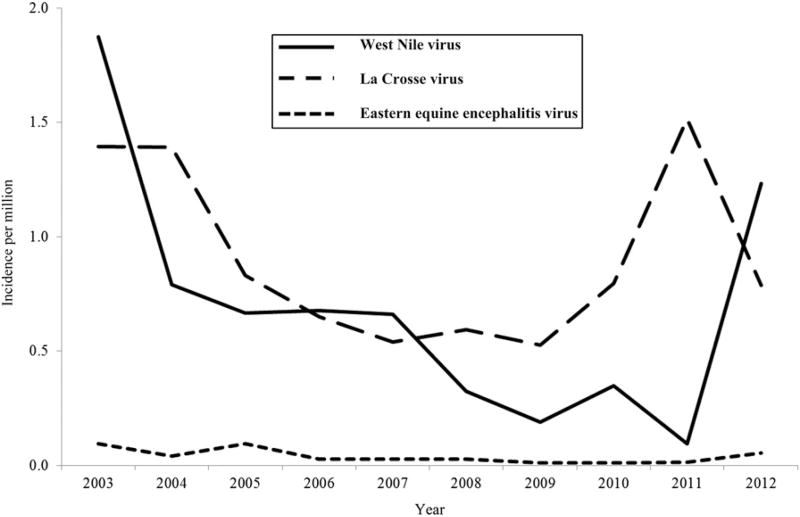
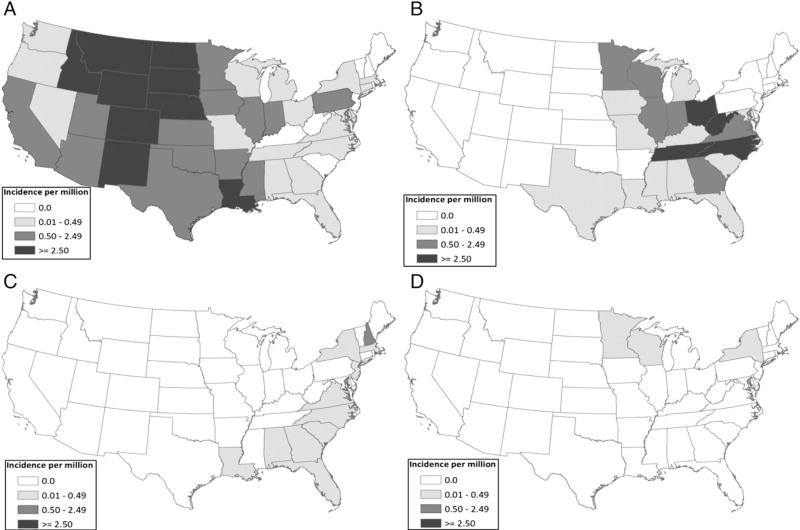
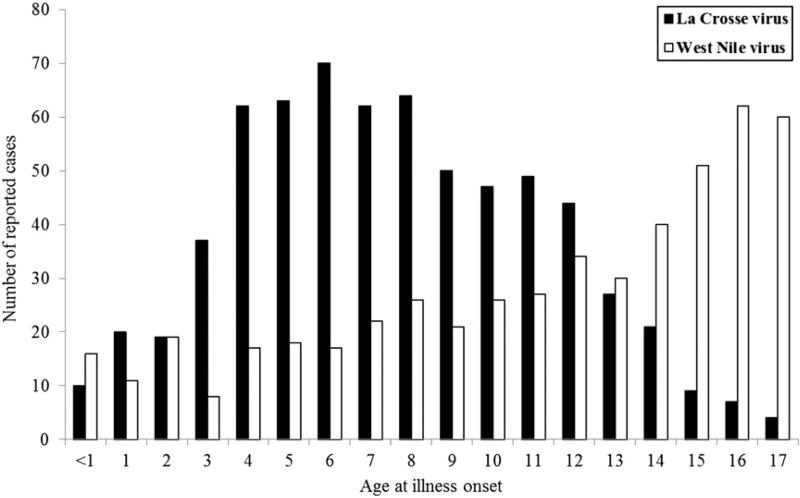
During the study period, 1217 cases and 22 deaths due to pediatric neuroinvasive arboviral infection were reported from the 48 contiguous states. La Crosse virus (665 cases; 55%) and West Nile virus (505 cases; 41%) were the most common etiologies identified. Although less common, Eastern equine encephalitis virus (30 cases; 2%) resulted in 10 pediatric deaths. La Crosse virus primarily affected younger children, whereas West Nile virus was more common in older children and adolescents. West Nile virus disease cases occurred throughout the country, whereas La Crosse and the other arboviruses were more focally distributed.
CONCLUSIONS
Neuroinvasive arboviral infections were an important cause of pediatric disease from 2003 through 2012. Differences in the epidemiology and clinical disease result from complex interactions among virus, vector, host, and the environment. Decreasing the morbidity and mortality from these agents depends on vector control, personal protection to reduce mosquito and tick bites, and blood donor screening. Effective surveillance is critical to inform clinicians and public health officials about the epidemiologic features of these diseases and to direct prevention efforts.
-
Subjects:
-
Source:Pediatrics. 134(3):e642-e650
-
Pubmed ID:25113294
-
Pubmed Central ID:PMC5662468
-
Document Type:
-
Funding:
-
Volume:134
-
Issue:3
-
Collection(s):
-
Main Document Checksum:urn:sha256:5588e5d9d120c80240b6628ab933415ae82e1796c8d026d520c4f6d73f120fb8
-
Download URL:
-
File Type:
 [PDF
- 1.47 MB
]
[PDF
- 1.47 MB
]
Supporting Files


File Language:
English
ON THIS PAGE


CDC STACKS serves as an archival repository of CDC-published products including
scientific findings,
journal articles, guidelines, recommendations, or other public health information authored or
co-authored by CDC or funded partners.
As a repository, CDC STACKS retains documents in their original published format to ensure public access to scientific information.
As a repository, CDC STACKS retains documents in their original published format to ensure public access to scientific information.
You May Also Like
COLLECTION
CDC Public Access