


Prevalence and Diversity of Tick-Borne Pathogens in Nymphal Ixodes scapularis (Acari: Ixodidae) in Eastern National Parks
Supporting Files

-
5 01 2017
-
File Language:
English
Details
-
Alternative Title:J Med Entomol
-
Personal Author:
-
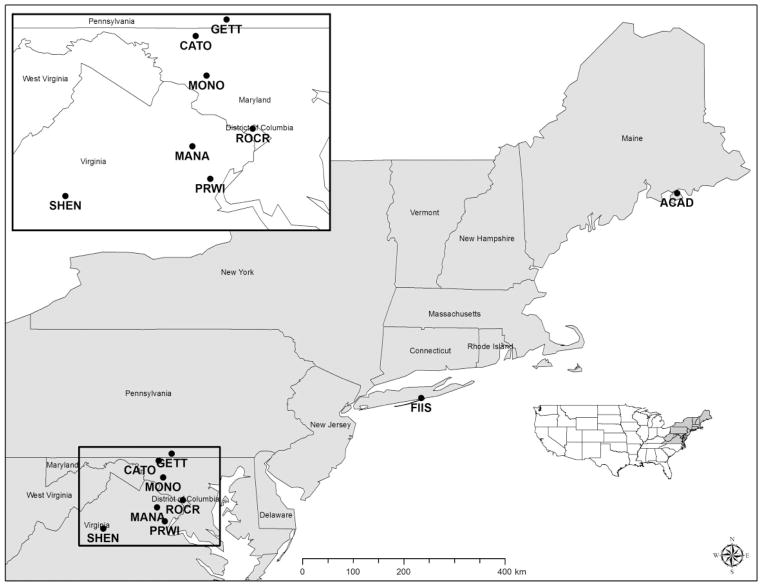
Description:Tick-borne pathogens transmitted by Ixodes scapularis Say (Acari: Ixodidae), also known as the deer tick or blacklegged tick, are increasing in incidence and geographic distribution in the United States. We examined the risk of tick-borne disease exposure in 9 national parks across six Northeastern and Mid-Atlantic States and the District of Columbia in 2014 and 2015. To assess the recreational risk to park visitors, we sampled for ticks along frequently used trails and calculated the density of I. scapularis nymphs (DON) and the density of infected nymphs (DIN). We determined the nymphal infection prevalence of I. scapularis with a suite of tick-borne pathogens including Borrelia burgdorferi, Borrelia miyamotoi, Anaplasma phagocytophilum, and Babesia microti. Ixodes scapularis nymphs were found in all national park units; DON ranged from 0.40 to 13.73 nymphs per 100 m2. Borrelia burgdorferi, the causative agent of Lyme disease, was found at all sites where I. scapularis was documented; DIN with B. burgdorferi ranged from 0.06 to 5.71 nymphs per 100 m2. Borrelia miyamotoi and A. phagocytophilum were documented at 60% and 70% of the parks, respectively, while Ba. microti occurred at just 20% of the parks. Ixodes scapularis is well established across much of the Northeastern and Mid-Atlantic States, and our results are generally consistent with previous studies conducted near the areas we sampled. Newly established I. scapularis populations were documented in two locations: Washington, D.C. (Rock Creek Park) and Greene County, Virginia (Shenandoah National Park). This research demonstrates the potential risk of tick-borne pathogen exposure in national parks and can be used to educate park visitors about the importance of preventative actions to minimize tick exposure.
-
Subjects:
-
Source:J Med Entomol. 54(3):742-751
-
Pubmed ID:28028138
-
Pubmed Central ID:PMC5657145
-
Document Type:
-
Funding:
-
Volume:54
-
Issue:3
-
Collection(s):
-
Main Document Checksum:urn:sha256:55d5099b0e2ade9591c782ea5d3f2e94d10d9f5df0f56a11fd6219f948c4c1f3
-
Download URL:
-
File Type:
 [PDF
- 517.38 KB
]
[PDF
- 517.38 KB
]
Supporting Files


File Language:
English
ON THIS PAGE

CDC STACKS serves as an archival repository of CDC-published products including
scientific findings,
journal articles, guidelines, recommendations, or other public health information authored or
co-authored by CDC or funded partners.
As a repository, CDC STACKS retains documents in their original published format to ensure public access to scientific information.
As a repository, CDC STACKS retains documents in their original published format to ensure public access to scientific information.
You May Also Like
COLLECTION
CDC Public Access