


Updated estimation of the impact of a Japanese encephalitis immunization program with live, attenuated SA 14-14-2 vaccine in Nepal
Supporting Files
Public Domain

-
Sep 21 2017
-
File Language:
English
Details
-
Alternative Title:PLoS Negl Trop Dis
-
Personal Author:
-
Description:Background
Japanese encephalitis (JE) is a mosquito-borne disease that is associated with considerable morbidity and mortality in many Asian countries. The objective of this study was to describe the impact of the JE immunization program using SA 14-14-2 JE vaccine implemented in Nepal during 2006 through 2011. A previous assessment after the initial program implementation phase described a significantly lower post-campaign JE incidence compared to expected incidence; however, the previous evaluation had limited post-campaign data for some districts.
Methodology/Principal findings
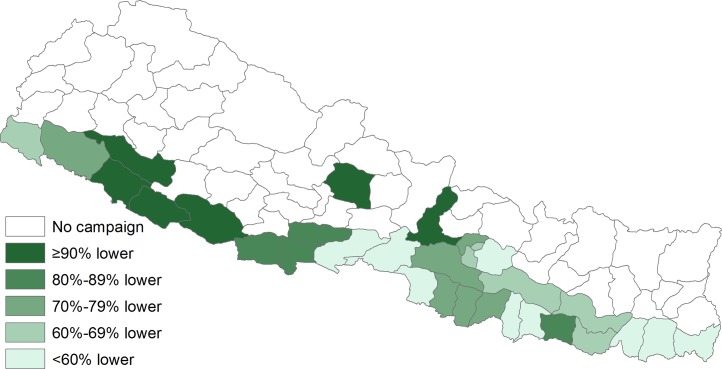
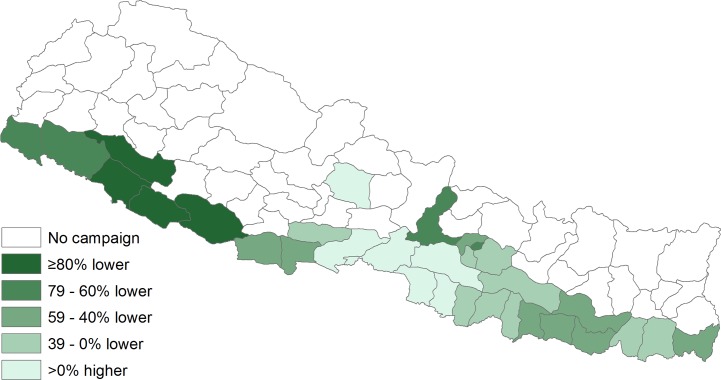
JE and acute encephalitis syndrome (AES) data gathered through Nepal’s routine surveillance system from 2004 through 2014 were analyzed to assess the impact of the JE immunization program implemented in 31 districts. Expected incidence rates were determined by calculating the incidence of cases per 100,000 person-years in each district before the vaccination campaigns. This rate was applied to the relevant population after the vaccination campaigns, which provided the expected number of cases had the campaign not occurred. The observed incidence rate was the number of reported cases per 100,000 person-years post-campaign. Expected and observed JE and AES cases and incidence rates were compared. The post-campaign JE incidence rate of 0.7 cases per 100,000 was 78% (95% CI 76%–79%) lower than expected had no campaign occurred and an estimated 3,011 (95% CI 2,941–3,057) JE cases were prevented. The post-vaccination AES incidence of 5.5 cases per 100,000 was 59% (58%–60%) lower than the expected and an estimated 9,497 (95% CI 9,268–9,584) AES cases were prevented.
Conclusions/Significance
This analysis strengthens previous findings of the substantial impact of Nepal’s JE immunization program using SA 14-14-2 JE vaccine.
-
Subjects:
-
Source:PLoS Negl Trop Dis. 11(9).
-
Pubmed ID:28934197
-
Pubmed Central ID:PMC5608168
-
Document Type:
-
Place as Subject:
-
Volume:11
-
Issue:9
-
Collection(s):
-
Main Document Checksum:urn:sha256:73e7307c72e93250807885eddee1f88837a73df79fa7590473ff9f71f6752b74
-
Download URL:
-
File Type:
 [PDF
- 1.11 MB
]
[PDF
- 1.11 MB
]
Supporting Files


File Language:
English
ON THIS PAGE







CDC STACKS serves as an archival repository of CDC-published products including
scientific findings,
journal articles, guidelines, recommendations, or other public health information authored or
co-authored by CDC or funded partners.
As a repository, CDC STACKS retains documents in their original published format to ensure public access to scientific information.
As a repository, CDC STACKS retains documents in their original published format to ensure public access to scientific information.
You May Also Like
COLLECTION
CDC Public Access