



Ray Tracing and Modal Methods for Modeling Radio Propagation in Tunnels with Rough Walls
Supporting Files

-
2017/05/01
-
Available in CDC Stacks on 2017-09-19T00:00:00Z
File Language:
English
Details
-
Alternative Title:IEEE Trans Antennas Propag
-
Personal Author:
-
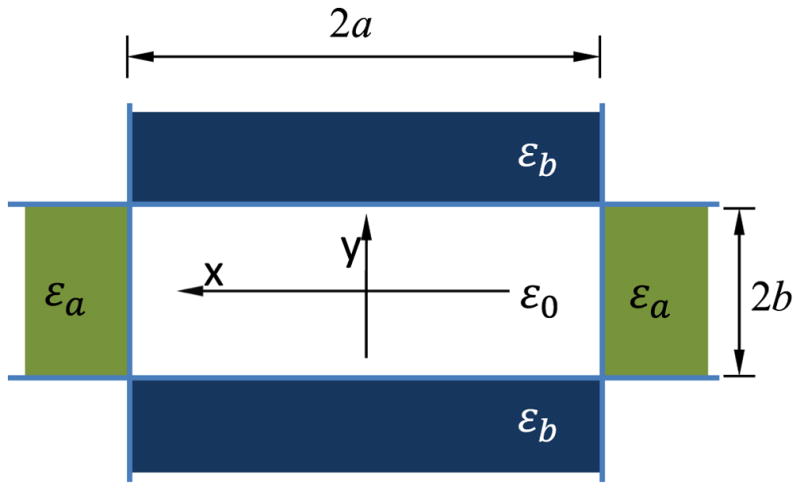
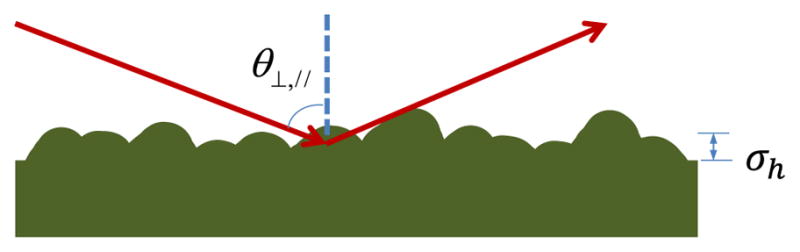
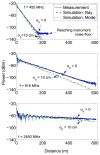
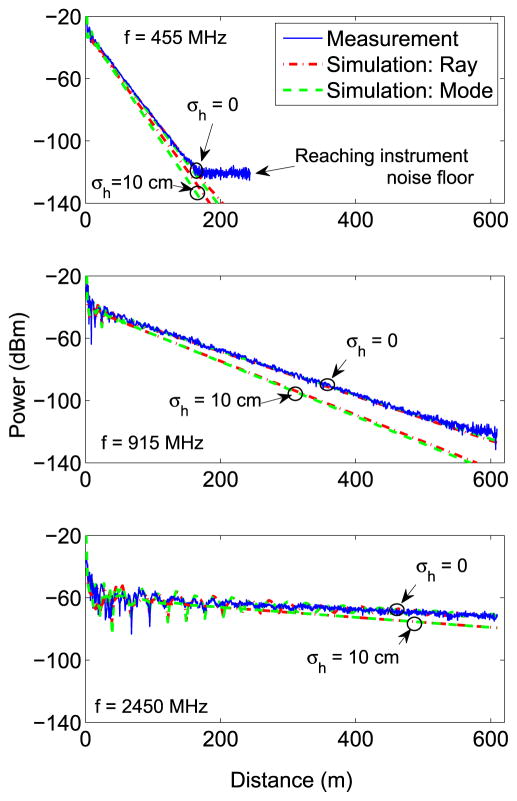
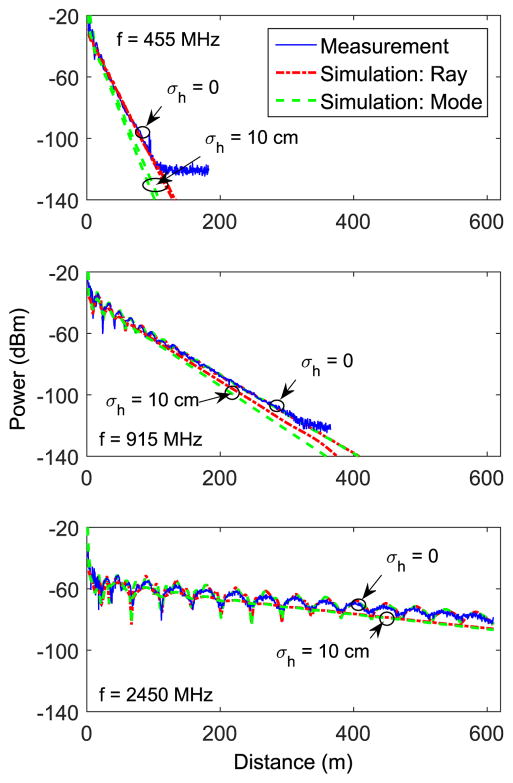
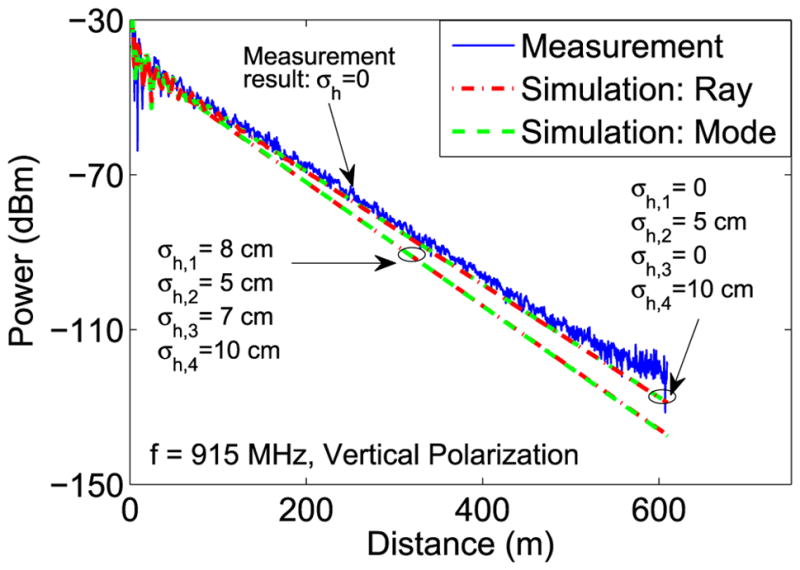
Description:At the ultrahigh frequencies common to portable radios, tunnels such as mine entries are often modeled by hollow dielectric waveguides. The roughness condition of the tunnel walls has an influence on radio propagation, and therefore should be taken into account when an accurate power prediction is needed. This paper investigates how wall roughness affects radio propagation in tunnels, and presents a unified ray tracing and modal method for modeling radio propagation in tunnels with rough walls. First, general analytical formulas for modeling the influence of the wall roughness are derived, based on the modal method and the ray tracing method, respectively. Second, the equivalence of the ray tracing and modal methods in the presence of wall roughnesses is mathematically proved, by showing that the ray tracing-based analytical formula can converge to the modal-based formula through the Poisson summation formula. The derivation and findings are verified by simulation results based on ray tracing and modal methods.
-
Subjects:
-
Source:IEEE Trans Antennas Propag. 65(5):2624-2634.
-
Pubmed ID:28935995
-
Pubmed Central ID:PMC5603257
-
Document Type:
-
Funding:
-
Genre:
-
Place as Subject:
-
CIO:
-
Topic:
-
Location:
-
Pages in Document:34 pdf pages
-
Volume:65
-
Issue:5
-
Download URL:
-
File Type:
 [PDF - 1.71 MB]
 -
Collection(s):
-
Main Document Checksum:urn:sha-512:84f24e741a979c5a9c8b5377814b43ea0841a4e60b6188a84d363480e48426a0db66982734ee0f5ec0ac1a99d93c45ab406adc891833fcb9d12cef01fc4697dd
Supporting Files


File Language:
English
 Was this page helpful?
 Found an issue?






CDC STACKS serves as an archival repository of CDC-published products including
scientific findings, journal articles, guidelines, recommendations, or other public health information authored or
co-authored by CDC or funded partners.
As a repository, CDC STACKS retains documents in their original published format to ensure public access to scientific information.
As a repository, CDC STACKS retains documents in their original published format to ensure public access to scientific information.
You May Also Like
COLLECTION
CDC Public Access