


Bayesian latent class estimation of the incidence of chest radiograph-confirmed pneumonia in rural Thailand
Supporting Files

-
March 02 2016
-
File Language:
English
Details
-
Alternative Title:Epidemiol Infect
-
Personal Author:
-
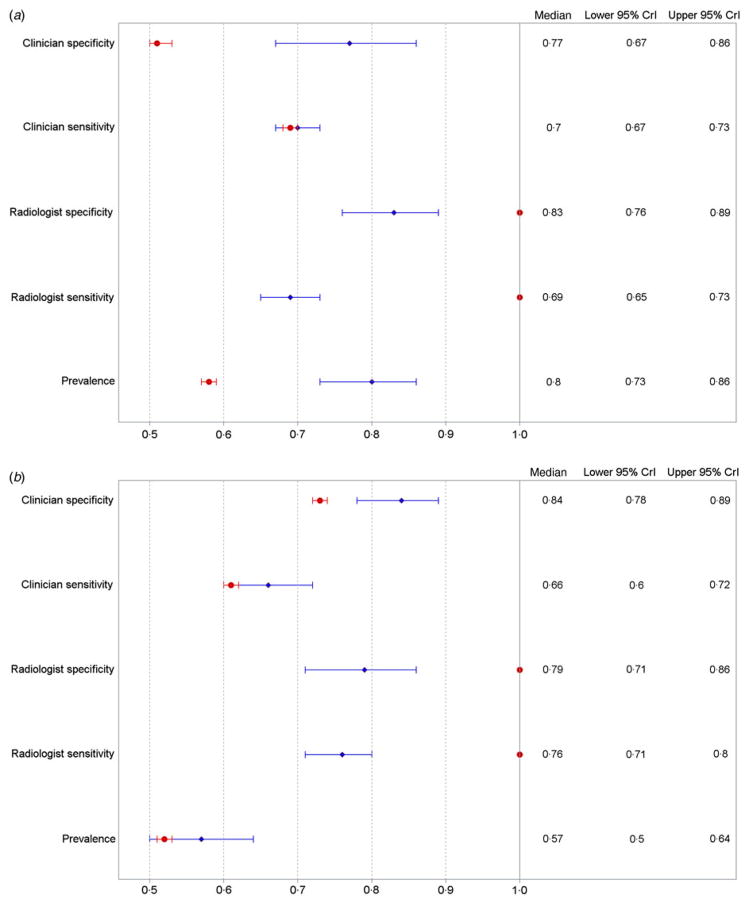
Description:Pneumonia is a leading cause of mortality and morbidity worldwide with radiographically confirmed pneumonia a key disease burden indicator. This is usually determined by a radiology panel which is assumed to be the best available standard; however, this assumption may introduce bias into pneumonia incidence estimates. To improve estimates of radiographic pneumonia incidence, we applied Bayesian latent class modelling (BLCM) to a large database of hospitalized patients with acute lower respiratory tract illness in Sa Kaeo and Nakhon Phanom provinces, Thailand from 2005 to 2010 with chest radiographs read by both a radiology panel and a clinician. We compared these estimates to those from conventional analysis. For children aged <5 years, estimated radiographically confirmed pneumonia incidence by BLCM was 2394/100 000 person-years (95% credible interval 2185-2574) vs. 1736/100 000 person-years (95% confidence interval 1706-1766) from conventional analysis. For persons aged ⩾5 years, estimated radiographically confirmed pneumonia incidence was similar between BLCM and conventional analysis (235 vs. 215/100 000 person-years). BLCM suggests the incidence of radiographically confirmed pneumonia in young children is substantially larger than estimated from the conventional approach using radiology panels as the reference standard.
-
Subjects:
-
Source:Epidemiol Infect. 144(13):2858-2865
-
Pubmed ID:26932149
-
Pubmed Central ID:PMC5607062
-
Document Type:
-
Funding:
-
Place as Subject:
-
Volume:144
-
Issue:13
-
Collection(s):
-
Main Document Checksum:urn:sha256:e722aab6f3dceed85f02a769462638fda87bc6f8f426faaa4cdfbed8024f143d
-
Download URL:
-
File Type:
 [PDF
- 500.62 KB
]
[PDF
- 500.62 KB
]
Supporting Files


File Language:
English
ON THIS PAGE

CDC STACKS serves as an archival repository of CDC-published products including
scientific findings,
journal articles, guidelines, recommendations, or other public health information authored or
co-authored by CDC or funded partners.
As a repository, CDC STACKS retains documents in their original published format to ensure public access to scientific information.
As a repository, CDC STACKS retains documents in their original published format to ensure public access to scientific information.
You May Also Like
COLLECTION
CDC Public Access