


Surveillance of high-grade cervical cancer precursors (CIN III/AIS) in four population-based cancer registries, United States, 2009–2012
Supporting Files

-
Jul 29 2017
-
File Language:
English
Details
-
Alternative Title:Prev Med
-
Personal Author:
-
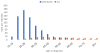
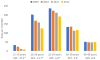
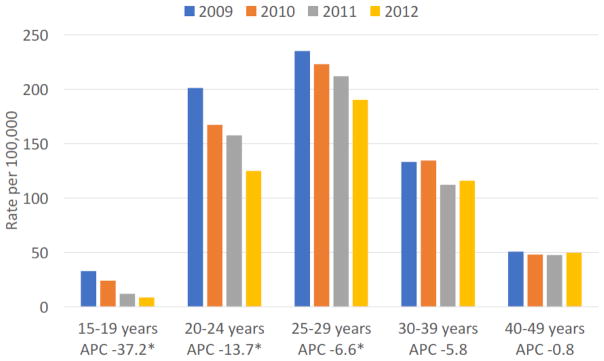
Description:Surveillance of cervical intraepithelial neoplasia grade III (CIN III) and adenocarcinoma in situ (AIS) is important for determining the burden of a preventable disease, identifying effects of vaccination on future diagnoses, and developing targeted programs. We analyzed population-based rates of high-grade cervical cancer precursor lesions using data from four central cancer registries (diagnosis years 2009-2012 from Louisiana, Kentucky, Michigan, and diagnosis years 2011-2012 from Los Angeles) by age, race, and histology. We also compared rates of precursors to invasive cancers. With 4 complete years of data from Michigan, we were able to conduct a trend analysis for that state. Data analysis was conducted in Atlanta during 2016. Kentucky reported the highest rate of CIN III/AIS (69.8), followed by Michigan (55.4), Louisiana (42.3), and Los Angeles (19.2). CIN III/AIS rates declined among women in Michigan by 37% each year for women aged 15-19, 14% for those aged 20-24, and 7% for those aged 25-29. Rates of CIN III/AIS vary by registry, and were higher than invasive cancer. In Michigan, declines in CIN III/AIS among women aged 15-29 are likely related in part to updated screening recommendations, and to the impact of human papillomavirus vaccination.
-
Subjects:
-
Source:Prev Med. 103:60-65.
-
Pubmed ID:28765084
-
Pubmed Central ID:PMC5591775
-
Document Type:
-
Funding:
-
Volume:103
-
Collection(s):
-
Main Document Checksum:urn:sha256:67c4262c7741da2ef0d1bae198c19bb8cc70abbeeb77d48746d562adf8f50ebf
-
Download URL:
-
File Type:
 [PDF
- 283.12 KB
]
[PDF
- 283.12 KB
]
Supporting Files


File Language:
English
ON THIS PAGE


CDC STACKS serves as an archival repository of CDC-published products including
scientific findings,
journal articles, guidelines, recommendations, or other public health information authored or
co-authored by CDC or funded partners.
As a repository, CDC STACKS retains documents in their original published format to ensure public access to scientific information.
As a repository, CDC STACKS retains documents in their original published format to ensure public access to scientific information.
You May Also Like
COLLECTION
CDC Public Access