



Increase in Drug Overdose Deaths Involving Fentanyl – Rhode Island, January 2012 – March 2014
Supporting Files

-
3 01 2018 ; 3-01-
-
Available in CDC Stacks on March 01, 2019, 12:00 AM
File Language:
English
Details
-
Alternative Title:Pain Med
-
Personal Author:
-
Description:Objective
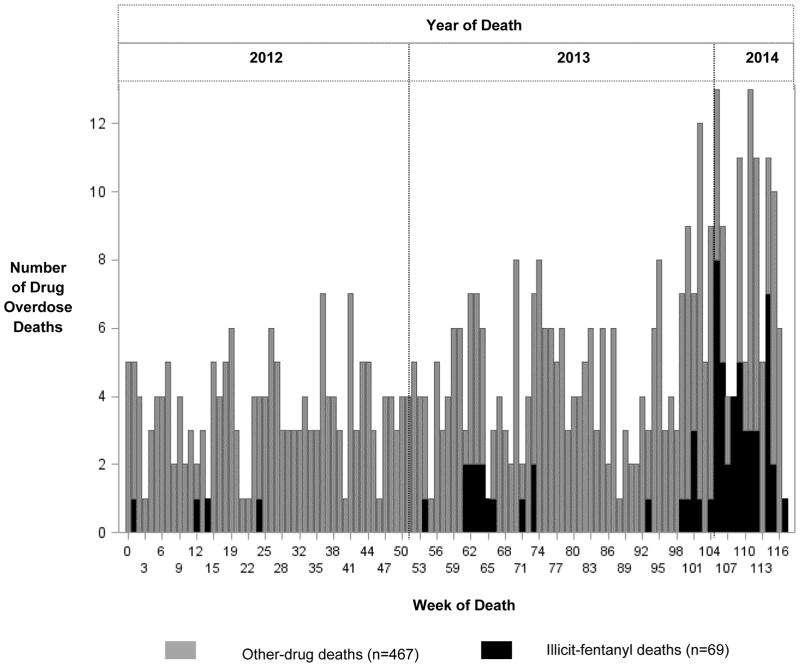
This study identified socio-demographic, substance use, and multiple opioid prescriber and dispenser risk factors among drug overdose decedents in Rhode Island (RI), in response to an increase in overdose deaths (OD) involving fentanyl.
Methods
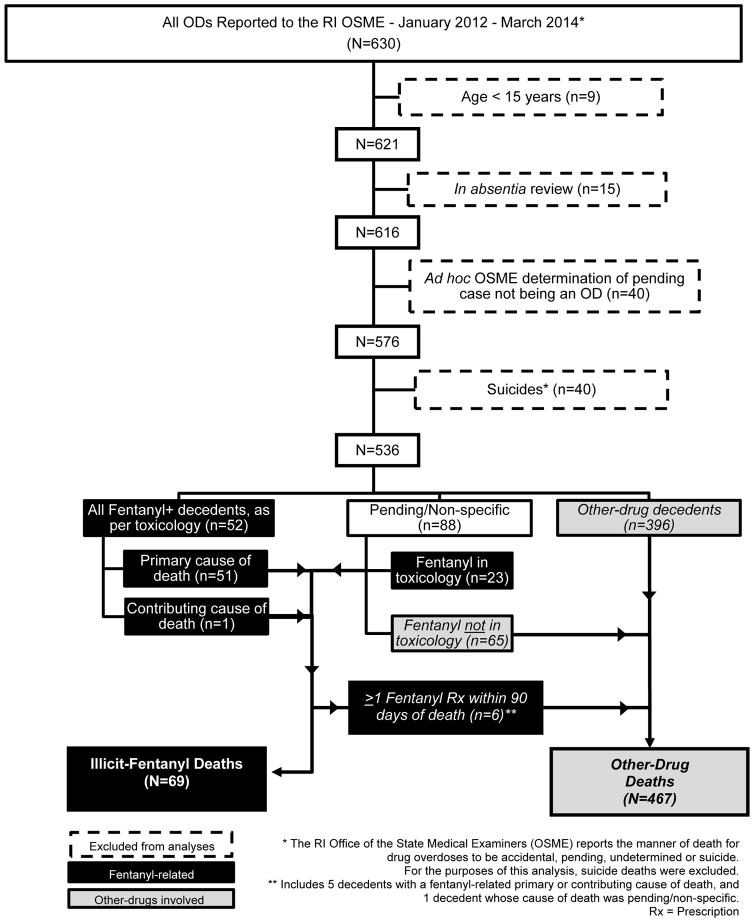
This cross-sectional investigation comprised all ODs reviewed by RI’s Office of the State Medical Examiners (OSME) during January 2012–March 2014. Data for 536 decedents were abstracted from OSME’s charts, death certificates, toxicology reports, and Prescription Monitoring Program (PMP) databases. Decedents whose cause of death involved illicit-fentanyl (N=69) were compared to decedents whose cause of deaths did not involve fentanyl (N=467).
Results
Illicit-fentanyl-decedents were younger than other-drug decedents (p=0.005). While more other-drug than illicit-fentanyl decedents had postmortem toxicological evidence of consuming heroin (31.9% vs. 19.8%; p<0.001) and various pharmaceutical substances (p=0.002–0.027), third-party reports indicated more recent heroin use among illicit-fentanyl decedents (62.3% v. 45.6%; p=0.002). Approximately 35% of decedents filled an opioid prescription within 90 days of death; of these, one-third had a mean daily dosage of >100 morphine milligram equivalents. Most decedents’ opioid prescriptions were filled at 1–2 dispensers (83.9%), and written by 1–2 prescribers (75.8%). Notably, 29.2% of illicit-fentanyl and 10.5% of other-drug decedents filled prescriptions for buprenorphine, used to treat opioid use disorders.
Conclusions
Illicit-fentanyl deaths frequently involved other illicit drugs (e.g., cocaine, heroin). The proportion of all decedents acquiring >100 MME/day prescription dosages written and/or filled by few prescribers and dispensers is concerning. To protect patients, prescribers and dispensers should review PMP records and substance abuse history prior to providing opioids. -
Subjects:
-
Keywords:
-
Source:Pain Med. 19(3):511-523
-
Pubmed ID:28340233
-
Pubmed Central ID:PMC5587352
-
Document Type:
-
Funding:
-
Volume:19
-
Issue:3
-
Download URL:
-
File Type:
 [PDF - 841.80 KB]
 -
Collection(s):
-
Main Document Checksum:urn:sha256:e105dd78023e6da6b873e129f496d0d8f16548ff2786a8e73f16b222d436c517
Supporting Files


File Language:
English
 Was this page helpful?
 Found an issue?


CDC STACKS serves as an archival repository of CDC-published products including
scientific findings, journal articles, guidelines, recommendations, or other public health information authored or
co-authored by CDC or funded partners.
As a repository, CDC STACKS retains documents in their original published format to ensure public access to scientific information.
As a repository, CDC STACKS retains documents in their original published format to ensure public access to scientific information.
You May Also Like
COLLECTION
CDC Public Access