


The role of supplementary environmental surveillance to complement acute flaccid paralysis surveillance for wild poliovirus in Pakistan – 2011–2013
Supporting Files
Public Domain

-
2017
-
File Language:
English
Details
-
Alternative Title:PLoS One
-
Personal Author:
-
Description:Background
More than 99% of poliovirus infections are non-paralytic and therefore, not detected by acute flaccid paralysis (AFP) surveillance. Environmental surveillance (ES) can detect circulating polioviruses from sewage without relying on clinical presentation. With extensive ES and continued circulation of polioviruses, Pakistan presents a unique opportunity to quantify the impact of ES as a supplement to AFP surveillance on overall completeness and timeliness of poliovirus detection.
Methods
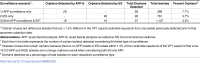
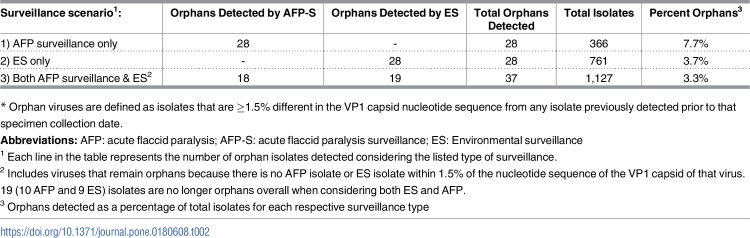
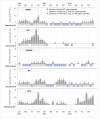
Genetic, geographic and temporal data were obtained for all wild poliovirus (WPV) isolates detected in Pakistan from January 2011 through December 2013. We used viral genetics to assess gaps in AFP surveillance and ES as measured by detection of ‘orphan viruses’ (≥1.5% different in VP1 capsid nucleotide sequence). We compared preceding detection of closely related circulating isolates (≥99% identity) detected by AFP surveillance or ES to determine which surveillance system first detected circulation before the presentation of each polio case.
Findings
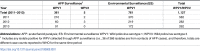
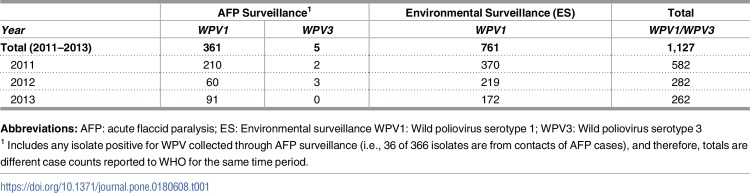
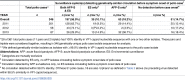
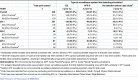
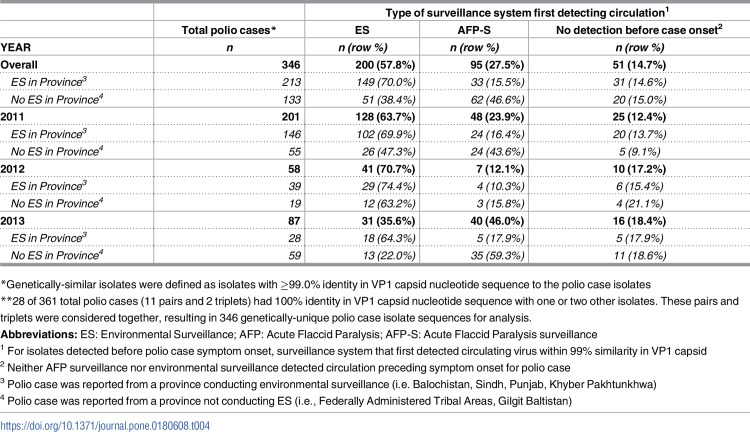
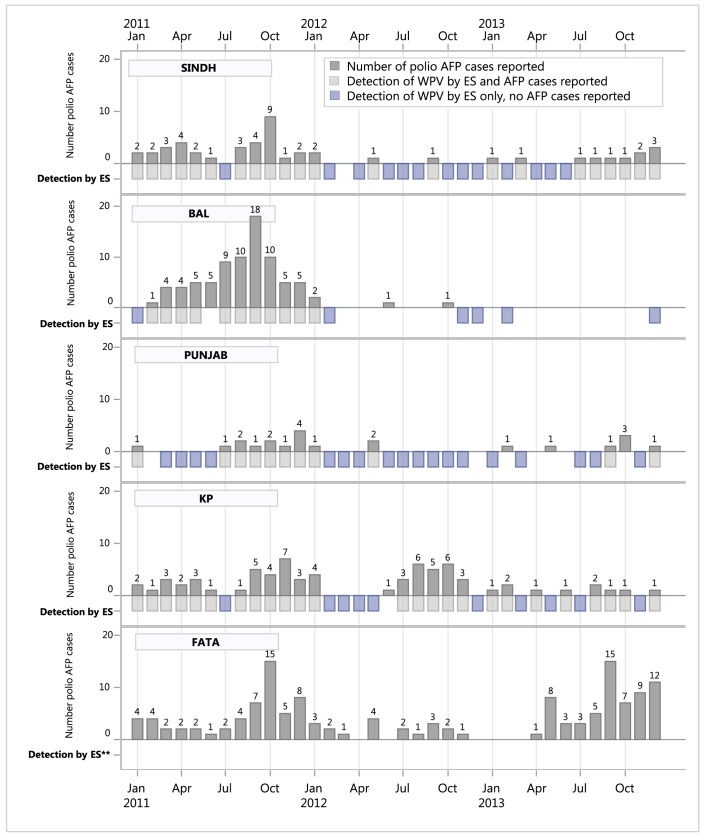
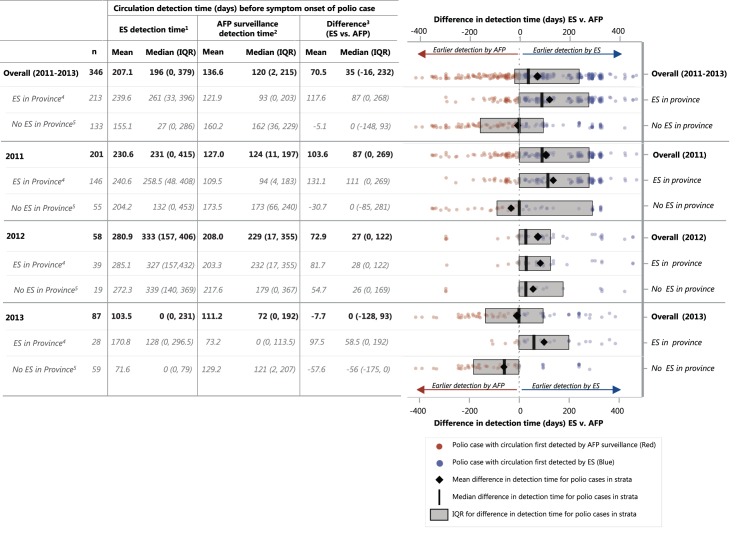
A total of 1,127 WPV isolates were detected by AFP surveillance and ES in Pakistan from 2011–2013. AFP surveillance and ES combined exhibited fewer gaps (i.e., % orphan viruses) in detection than AFP surveillance alone (3.3% vs. 7.7%, respectively). ES detected circulation before AFP surveillance in nearly 60% of polio cases (200 of 346). For polio cases reported from provinces conducting ES, ES detected circulation nearly four months sooner on average (117.6 days) than did AFP surveillance.
Interpretation
Our findings suggest ES in Pakistan is providing earlier, more sensitive detection of wild polioviruses than AFP surveillance alone. Overall, targeted ES through strategic selection of sites has important implications in the eradication endgame strategy.
-
Subjects:
-
Source:PLoS One. 12(7)
-
Pubmed ID:28742803
-
Pubmed Central ID:PMC5526532
-
Document Type:
-
Place as Subject:
-
Volume:12
-
Issue:7
-
Collection(s):
-
Main Document Checksum:urn:sha256:31adbb03550cec018f7b9514e93274d06748602b08691d11090cee5ab4218d3b
-
Download URL:
-
File Type:
 [PDF
- 3.56 MB
]
[PDF
- 3.56 MB
]
Supporting Files


File Language:
English
ON THIS PAGE



CDC STACKS serves as an archival repository of CDC-published products including
scientific findings,
journal articles, guidelines, recommendations, or other public health information authored or
co-authored by CDC or funded partners.
As a repository, CDC STACKS retains documents in their original published format to ensure public access to scientific information.
As a repository, CDC STACKS retains documents in their original published format to ensure public access to scientific information.
You May Also Like
COLLECTION
CDC Public Access