



Evaluation of the efficacy, acceptability and palatability of calcium montmorillonite clay used to reduce aflatoxin B1 dietary exposure in a crossover study in Kenya
Supporting Files

-
Jan 2017
-
Available in CDC Stacks on January 01, 2018, 12:00 AM
File Language:
English
Details
-
Alternative Title:Food Addit Contam Part A Chem Anal Control Expo Risk Assess
-
Personal Author:
-
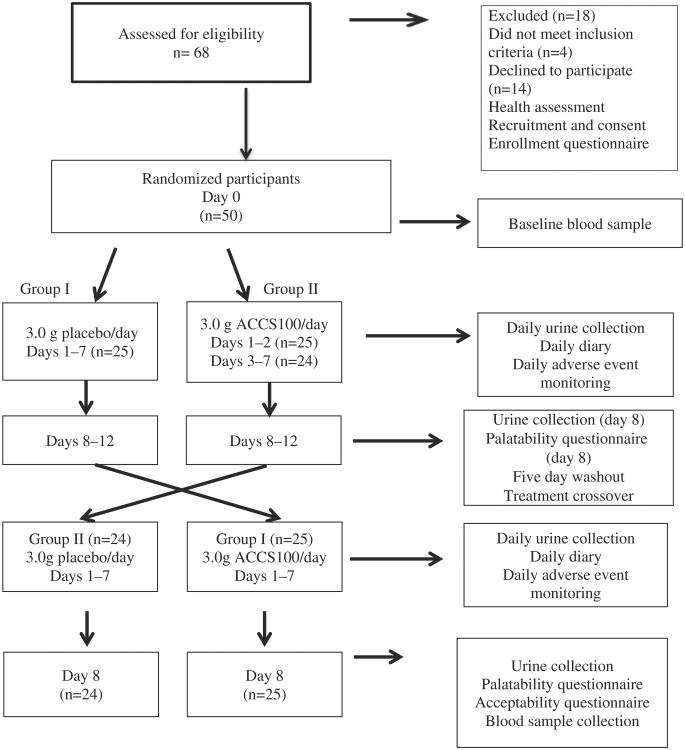
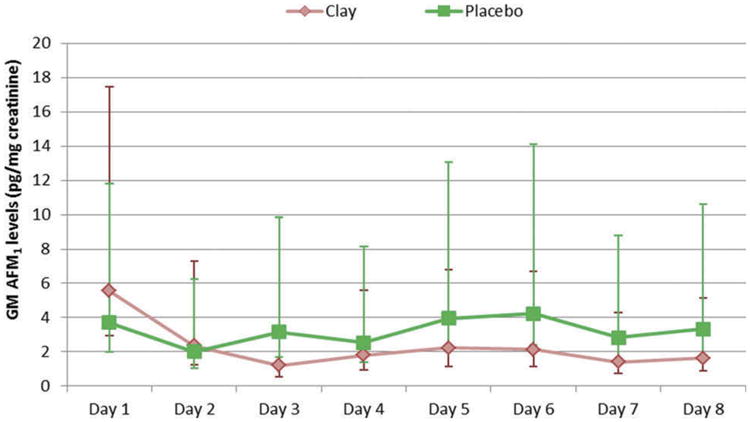
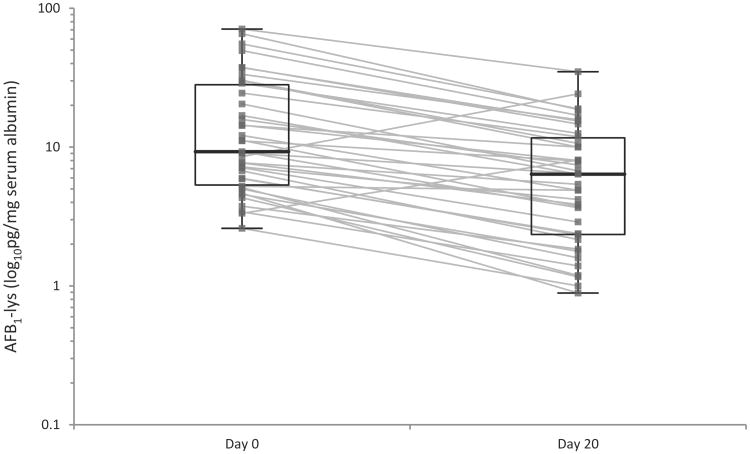
Description:Acute aflatoxin exposure can cause death and disease (aflatoxicosis) in humans. Aflatoxicosis fatality rates have been documented to be as high as 40% in Kenya. The inclusion in the diet of calcium silicate 100 (ACCS100), a calcium montmorillonite clay, may reduce aflatoxin bioavailability, thus potentially decreasing the risk of aflatoxicosis. We investigated the efficacy, acceptability and palatability of ACCS100 in a population in Kenya with recurring aflatoxicosis outbreaks. Healthy adult participants were enrolled in this double-blinded, crossover clinical trial in 2014. Following informed consent, participants (n = 50) were randomised to receive either ACCS100 (3 g day-1) or placebo (3 g day-1) for 7 days. Treatments were switched following a 5-day washout period. Urine samples were collected daily and assessed for urinary aflatoxin M1 (AFM1). Blood samples were collected at the beginning and end of the trial and assessed for aflatoxin B1-lysine adducts from serum albumin (AFB1-lys). AFM1 concentrations in urine were significantly reduced while taking ACCS100 compared with calcium carbonate placebo (β = 0.49, 95% confidence limit = 0.32-0.75). The 20-day interval included both the placebo and ACCS100 treatments as well as a washout period. There were no statistically significant differences in reported taste, aftertaste, appearance, colour or texture by treatment. There were no statistically significant differences in self-reported adverse events by treatment. Most participants would be willing to take ACCS100 (98%) and give it to their children (98%). ACCS100 was effective, acceptable and palatable. More work is needed to test ACCS100 among vulnerable populations and to determine if it remains effective at the levels of aflatoxin exposure that induce aflatoxicosis.
-
Subjects:
-
Source:Food Addit Contam Part A Chem Anal Control Expo Risk Assess. 34(1):93-102.
-
Pubmed ID:27603954
-
Pubmed Central ID:PMC5561728
-
Document Type:
-
Funding:
-
Place as Subject:
-
Volume:34
-
Issue:1
-
Download URL:
-
File Type:
 [PDF - 1019.11 KB]
 -
Collection(s):
-
Main Document Checksum:urn:sha256:4c67e49be9a7416700246f15199d93576daa12829b3b7fdd1303006b5c236114
Supporting Files


File Language:
English
 Was this page helpful?
 Found an issue?



CDC STACKS serves as an archival repository of CDC-published products including
scientific findings, journal articles, guidelines, recommendations, or other public health information authored or
co-authored by CDC or funded partners.
As a repository, CDC STACKS retains documents in their original published format to ensure public access to scientific information.
As a repository, CDC STACKS retains documents in their original published format to ensure public access to scientific information.
You May Also Like
COLLECTION
CDC Public Access