



Maternal Use of Opioids During Pregnancy and Congenital Malformations: A Systematic Review
Supporting Files

-
6 2017 ; 6-2017
-
Available in CDC Stacks on June 01, 2018, 12:00 AM
File Language:
English
Details
-
Alternative Title:Pediatrics
-
Personal Author:
-
Description:CONTEXT
Opioid use and abuse have increased dramatically in recent years, particularly among women.
OBJECTIVES
We conducted a systematic review to evaluate the association between prenatal opioid use and congenital malformations.
DATA SOURCES
We searched Medline and Embase for studies published from 1946 to 2016 and reviewed reference lists to identify additional relevant studies.
STUDY SELECTION
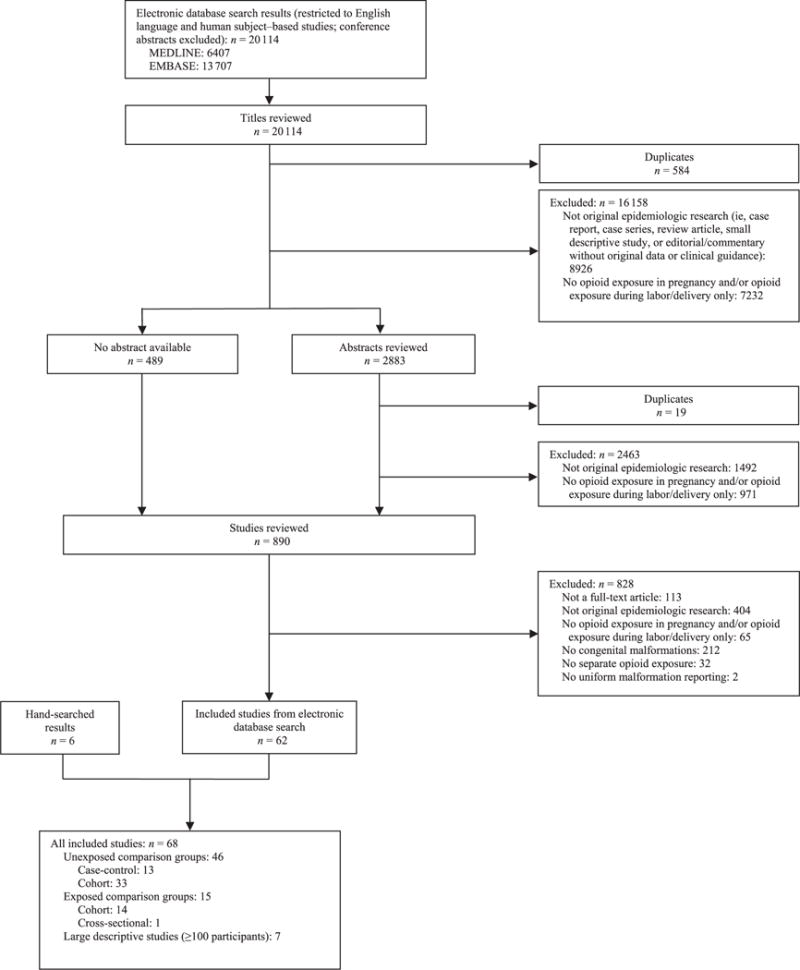
We included studies that were full-text journal articles and reported the results of original epidemiologic research on prenatal opioid exposure and congenital malformations. We assessed study eligibility in multiple phases using a standardized, duplicate review process.
DATA EXTRACTION
Data on study characteristics, opioid exposure, timing of exposure during pregnancy, congenital malformations (collectively or as individual subtypes), length of follow-up, and main findings were extracted from eligible studies.
RESULTS
Of the 68 studies that met our inclusion criteria, 46 had an unexposed comparison group; of those, 30 performed statistical tests to measure associations between maternal opioid use during pregnancy and congenital malformations. Seventeen of these (10 of 12 case-control and 7 of 18 cohort studies) documented statistically significant positive associations. Among the case-control studies, associations with oral clefts and ventricular septal defects/atrial septal defects were the most frequently reported specific malformations. Among the cohort studies, clubfoot was the most frequently reported specific malformation.
LIMITATIONS
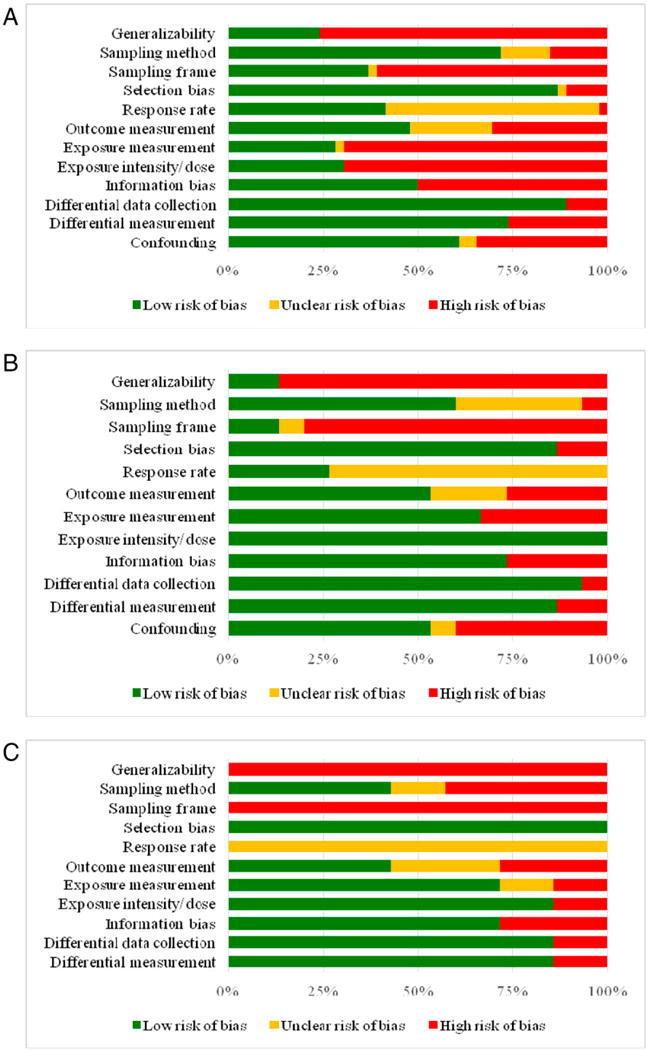
Variabilities in study design, poor study quality, and weaknesses with outcome and exposure measurement.
CONCLUSIONS
Uncertainty remains regarding the teratogenicity of opioids; a careful assessment of risks and benefits is warranted when considering opioid treatment for women of reproductive age. -
Subjects:
-
Source:Pediatrics. 139(6)
-
Pubmed ID:28562278
-
Pubmed Central ID:PMC5561453
-
Document Type:
-
Funding:
-
Volume:139
-
Issue:6
-
Download URL:
-
File Type:
 [PDF - 698.08 KB]
 -
Collection(s):
-
Main Document Checksum:urn:sha256:0e3caa665a31cb79adc2cee9b81b4bb36c1681c3e1ebd36972f2acd7df3ace3b
Supporting Files


File Language:
English
 Was this page helpful?
 Found an issue?


CDC STACKS serves as an archival repository of CDC-published products including
scientific findings, journal articles, guidelines, recommendations, or other public health information authored or
co-authored by CDC or funded partners.
As a repository, CDC STACKS retains documents in their original published format to ensure public access to scientific information.
As a repository, CDC STACKS retains documents in their original published format to ensure public access to scientific information.
You May Also Like
COLLECTION
CDC Public Access