


Cost projections for implementation of safety interventions to prevent transfusion-transmitted Zika virus infection in the United States
Supporting Files

-
June 2017
-
File Language:
English
Details
-
Alternative Title:Transfusion
-
Personal Author:
-
Description:BACKGROUND
In August 2016, the Food and Drug Administration advised US blood centers to screen all whole blood and apheresis donations for Zika virus (ZIKV) with an individual-donor nucleic acid test (ID-NAT) or to use approved pathogen reduction technology (PRT). The cost of implementing this guidance nationally has not been assessed.
STUDY DESIGN AND METHODS
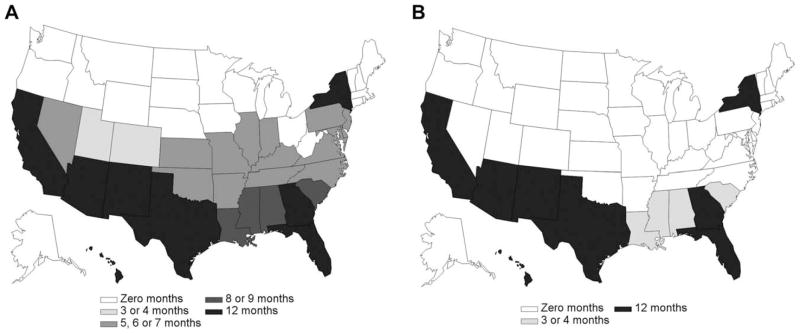
Scenarios were constructed to characterize approaches to ZIKV screening, including universal ID-NAT, risk-based seasonal allowance of minipool (MP) NAT by state, and universal MP-NAT. Data from the 2015 National Blood Collection and Utilization Survey (NBCUS) were used to characterize the number of donations nationally and by state. For each scenario, the estimated cost per donor ($3–$9 for MP-NAT, $7–$13 for ID-NAT) was multiplied by the estimated number of relevant donations from the NBCUS. Cost of PRT was calculated by multiplying the cost per unit ($50–$125) by the number of units approved for PRT. Prediction intervals for costs were generated using Monte Carlo simulation methods.
RESULTS
Screening all donations in the 50 states and DC for ZIKV by ID-NAT would cost $137 million (95% confidence interval [CI], $109–$167) annually. Allowing seasonal MP-NAT in states with lower ZIKV risk could reduce NAT screening costs by 18% to 25%. Application of PRT to all platelet (PLT) and plasma units would cost $213 million (95% CI, $156–$304).
CONCLUSION
Universal ID-NAT screening for ZIKV will cost US blood centers more than $100 million annually. The high cost of PRT for apheresis PLTs and plasma could be mitigated if, once validated, testing for transfusion transmissible pathogens could be eliminated.
-
Subjects:
-
Source:Transfusion. 57(Suppl 2):1625-1633
-
Pubmed ID:28591470
-
Pubmed Central ID:PMC5556918
-
Document Type:
-
Funding:
-
Place as Subject:
-
Volume:57
-
Collection(s):
-
Main Document Checksum:urn:sha256:a6d1c11d3d1a815217afc362b381651bfbfadd41d5eb6dbbe8a384f127016f61
-
Download URL:
-
File Type:
 [PDF
- 431.72 KB
]
[PDF
- 431.72 KB
]
Supporting Files


File Language:
English
ON THIS PAGE


CDC STACKS serves as an archival repository of CDC-published products including
scientific findings,
journal articles, guidelines, recommendations, or other public health information authored or
co-authored by CDC or funded partners.
As a repository, CDC STACKS retains documents in their original published format to ensure public access to scientific information.
As a repository, CDC STACKS retains documents in their original published format to ensure public access to scientific information.
You May Also Like
COLLECTION
CDC Public Access