



Epidemiology of Isolated vs. Non-Isolated Mild Traumatic Brain Injury Treated in Emergency Departments in the United States, 2006–2012: Sociodemographic Characteristics
Supporting Files

-
2017 ; Jul-Aug 2017
-
Available in CDC Stacks on July 01, 2018, 12:00 AM
File Language:
English
Details
-
Alternative Title:J Head Trauma Rehabil
-
Personal Author:
-
Description:Objectives
To describe the frequencies and rates of MTBI ED visits, and analyze the trend across the years; and to compare sociodemographic characteristics of visits by MTBI type (i.e., MTBI as the only injury, or present along with other injuries).
Design
Population-based descriptive study using data from the Nationwide Emergency Department Sample (NEDS, 2006–2012).
Methods
Joinpoint regression was used to calculate the average annual percent changes (AAPCs) of MTBI incidence rates. Characteristics between isolated and non-isolated visits were compared, and the odds ratios were reported.
Results
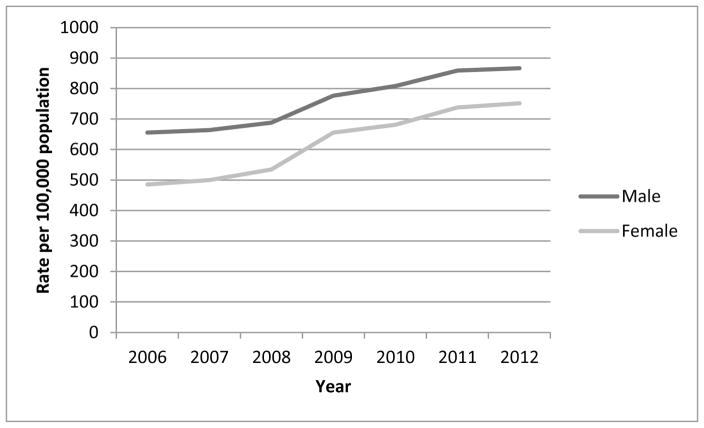
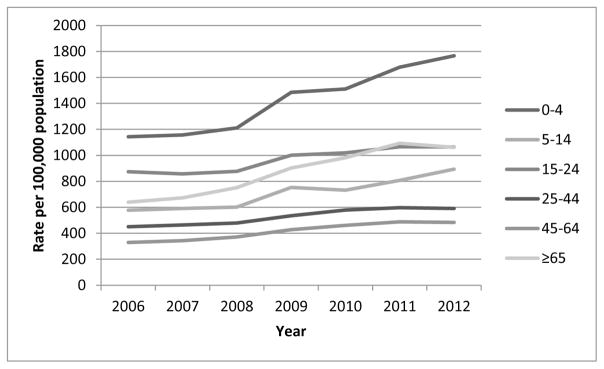
The rate per 100,000 population of MTBI ED visits in the U.S. increased significantly from 569.4 in 2006 to 807.9 in 2012. The highest rates were observed in 0–4 year olds, followed by 15–24 year old males, and ≥65 year old females; the lowest rates were among 45–64 year olds. The majority (70%) of all visits were non-isolated, and occurred more frequently in residents of metropolitan areas. Falls were the leading external cause. Most visits were privately insured or covered by Medicare/Medicaid, and the injury occurred on weekdays in predominantly metropolitan hospitals in the South region.
Conclusions
The burden of MTBI in U.S. EDs is high. Most MTBI ED visits present with other injuries. Awareness of sociodemographic factors associated with non-isolated MTBI may help improve diagnosis in U.S. EDs. This information has implications for resource planning and MTBI screening in EDs. -
Subjects:
-
Keywords:
-
Source:J Head Trauma Rehabil. 32(4):E37-E46
-
Pubmed ID:28489698
-
Pubmed Central ID:PMC5554936
-
Document Type:
-
Funding:
-
Volume:32
-
Issue:4
-
Download URL:
-
File Type:
 [PDF - 280.17 KB]
 -
Collection(s):
-
Main Document Checksum:urn:sha256:22c7c5861a1cb3bf83725a76492f0891a46257164b3d502a706ee04cf45e0410
Supporting Files


File Language:
English
 Was this page helpful?
 Found an issue?



CDC STACKS serves as an archival repository of CDC-published products including
scientific findings, journal articles, guidelines, recommendations, or other public health information authored or
co-authored by CDC or funded partners.
As a repository, CDC STACKS retains documents in their original published format to ensure public access to scientific information.
As a repository, CDC STACKS retains documents in their original published format to ensure public access to scientific information.
You May Also Like
COLLECTION
CDC Public Access