


Mesothelial Cell Autoantibodies Upregulate Transcription Factors Associated with Fibrosis
Supporting Files

-
Jan 2017
-
File Language:
English
Details
-
Alternative Title:Inhal Toxicol
-
Personal Author:
-
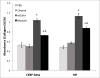
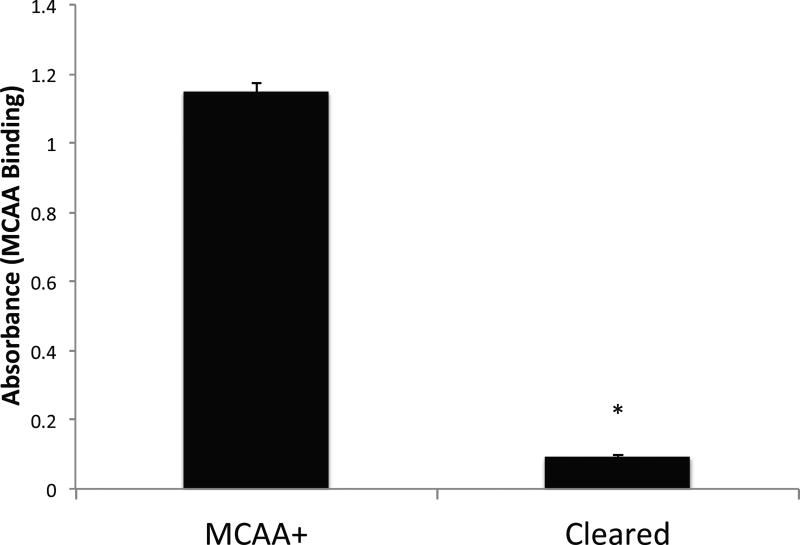
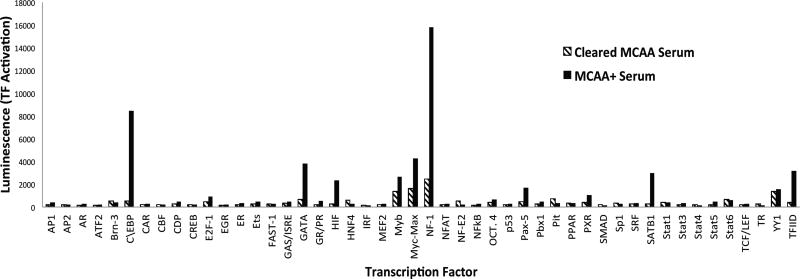
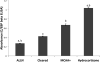
Description:Amphibole asbestos exposure is associated with the production of mesothelial cell autoantibodies (MCAA). These MCAA have been linked with pleural fibrotic disease in the asbestos exposed community of Libby, Montana, and induce collagen deposition by cultured mesothelial cells. However, the exact intracellular mechanism by which these autoantibodies cause an increase in collagen deposition remains unknown. This study sought to gain insight into the transcription factors involved in the collagen production after human mesothelial cells are exposed to MCAA. In this study, transcription factor activation profiles were generated from human mesothelial cells (Met5A) treated with serum from Libby subjects, and were compared to cells treated with serum cleared of IgG, and therefore containing no MCAA. Analysis of those profiles indicated C/EBP-beta and hypoxia inducible factor 1 alpha (HIF-1α) are significantly increased in the nucleus, indicating activation, due to MCAA exposure compared to controls. Inhibition of either of these transcription factors significantly reduced collagen 1 deposition by these cells following exposure to MCAA. These data suggest autoantibodies are directly involved in type I collagen deposition and may elucidate potential therapeutic targets for autoantibody mediated fibrosis.
-
Subjects:
-
Source:Inhal Toxicol. 29(1):10-17.
-
Pubmed ID:28183202
-
Pubmed Central ID:PMC5554606
-
Document Type:
-
Funding:
-
Volume:29
-
Issue:1
-
Collection(s):
-
Main Document Checksum:urn:sha256:c9131b97f7a5895752d3d81fe707d7c4d37b581874f26a0767802c8298289d8a
-
Download URL:
-
File Type:
 [PDF
- 1.26 MB
]
[PDF
- 1.26 MB
]
Supporting Files


File Language:
English
ON THIS PAGE






CDC STACKS serves as an archival repository of CDC-published products including
scientific findings,
journal articles, guidelines, recommendations, or other public health information authored or
co-authored by CDC or funded partners.
As a repository, CDC STACKS retains documents in their original published format to ensure public access to scientific information.
As a repository, CDC STACKS retains documents in their original published format to ensure public access to scientific information.
You May Also Like
COLLECTION
CDC Public Access