


Tissue-Specific Cell Cycle Indicator Reveals Unexpected Findings for Cardiac Myocyte Proliferation
Supporting Files

-
Oct 15 2015
File Language:
English
Details
-
Alternative Title:Circ Res
-
Personal Author:
-
Description:Rationale
Discerning cardiac myocyte cell cycle behavior is challenging owing to commingled cell types with higher proliferative activity.
Objective
To investigate cardiac myocyte cell cycle activity in development and the early postnatal period.
Methods and Results
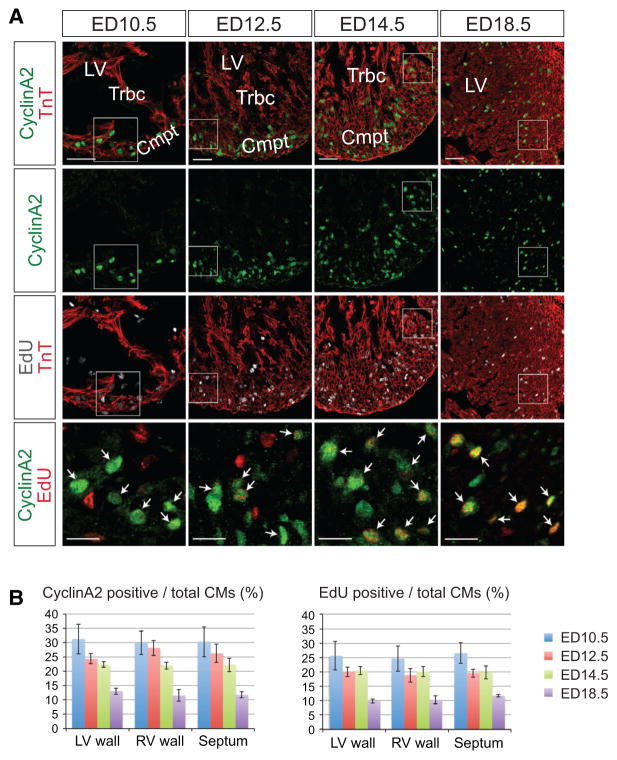
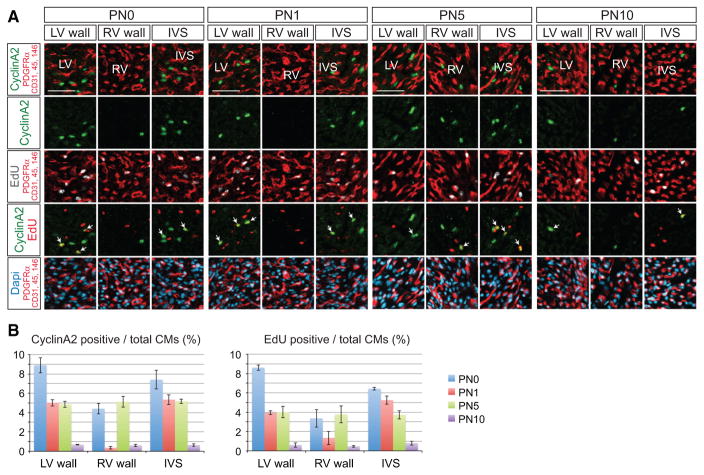
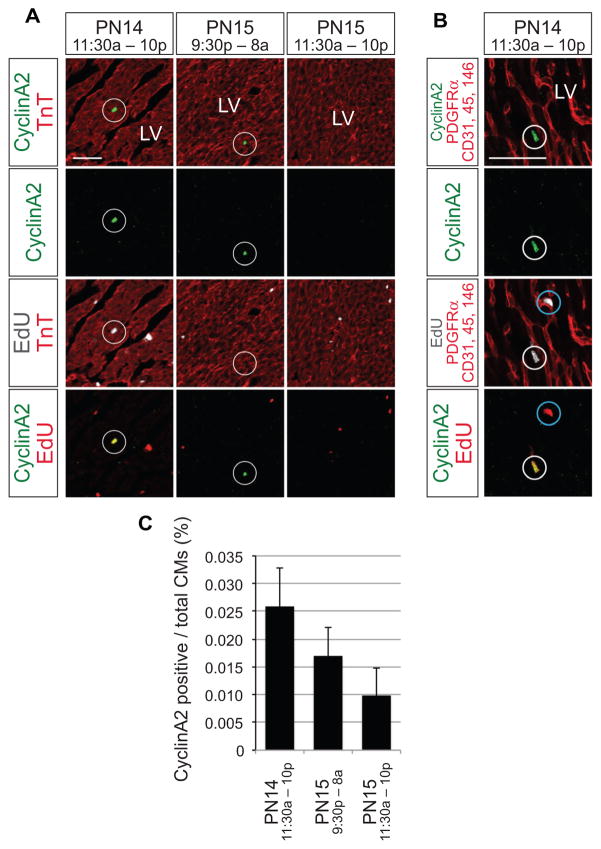
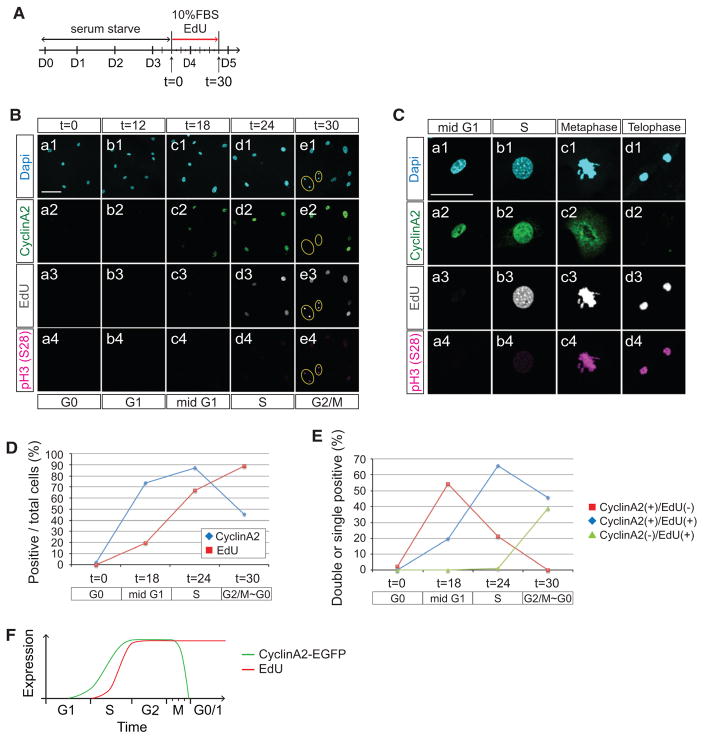
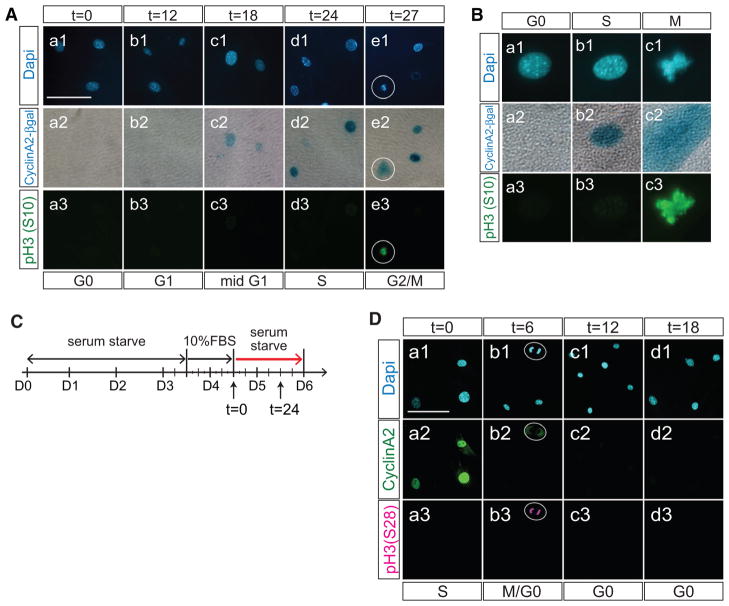
To facilitate studies of cell type–specific proliferation, we have generated tissue-specific cell cycle indicator BAC transgenic mouse lines. Experiments using embryonic fibroblasts from CyclinA2-LacZ-floxed-EGFP, or CyclinA2-EGFP mice, demonstrated that CyclinA2-βgal and CyclinA2-EGFP were expressed from mid-G1 to mid-M phase. Using Troponin T-Cre;CyclinA2-LacZ-EGFP mice, we examined cardiac myocyte cell cycle activity during embryogenesis and in the early postnatal period. Our data demonstrated that right ventricular cardiac myocytes exhibited reduced cell cycle activity relative to left ventricular cardiac myocytes in the immediate perinatal period. Additionally, in contrast to a recent report, we could find no evidence to support a burst of cardiac myocyte cell cycle activity at postnatal day 15.
Conclusions
Our data highlight advantages of a cardiac myocyte–specific cell cycle reporter for studies of cardiac myocyte cell cycle regulation.
-
Subjects:
-
Source:Circ Res. 118(1):20-28.
-
Pubmed ID:26472817
-
Pubmed Central ID:PMC5533092
-
Document Type:
-
Funding:UM1 HL128773/HL/NHLBI NIH HHS/United States ; DP1HL117649/DP/NCCDPHP CDC HHS/United States ; P30 NS047101/NS/NINDS NIH HHS/United States ; DP1 OD006428/OD/NIH HHS/United States ; R01 HL123747/HL/NHLBI NIH HHS/United States ; R01HL123747/HL/NHLBI NIH HHS/United States ; DP1 HL117649/HL/NHLBI NIH HHS/United States
-
Volume:118
-
Issue:1
-
Collection(s):
-
Main Document Checksum:urn:sha256:07b293e7251c51dd23c1bdd55a745aaed6197377b8932e39e502364ffda5bff8
-
Download URL:
-
File Type:
 [PDF
- 1.86 MB
]
[PDF
- 1.86 MB
]
Supporting Files


File Language:
English
ON THIS PAGE







CDC STACKS serves as an archival repository of CDC-published products including
scientific findings,
journal articles, guidelines, recommendations, or other public health information authored or
co-authored by CDC or funded partners.
As a repository, CDC STACKS retains documents in their original published format to ensure public access to scientific information.
As a repository, CDC STACKS retains documents in their original published format to ensure public access to scientific information.
You May Also Like
COLLECTION
CDC Public Access