


Heat pain detection threshold is associated with the area of secondary hyperalgesia following brief thermal sensitization: a study of healthy male volunteers
Supporting Files

-
Jan 27 2017
Details
-
Alternative Title:J Pain Res
-
Personal Author:
-
Description:Introduction
The area of secondary hyperalgesia following brief thermal sensitization (BTS) of the skin and heat pain detection thresholds (HPDT) may both have predictive abilities in regards to pain sensitivity and clinical pain states. The association between HPDT and secondary hyperalgesia, however, remains unsettled, and the dissimilarities in physiologic properties suggest that they may represent 2 distinctively different pain entities. The aim of this study was to investigate the association between HPDT and BTS-induced secondary hyperalgesia.
Methods
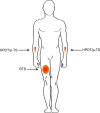
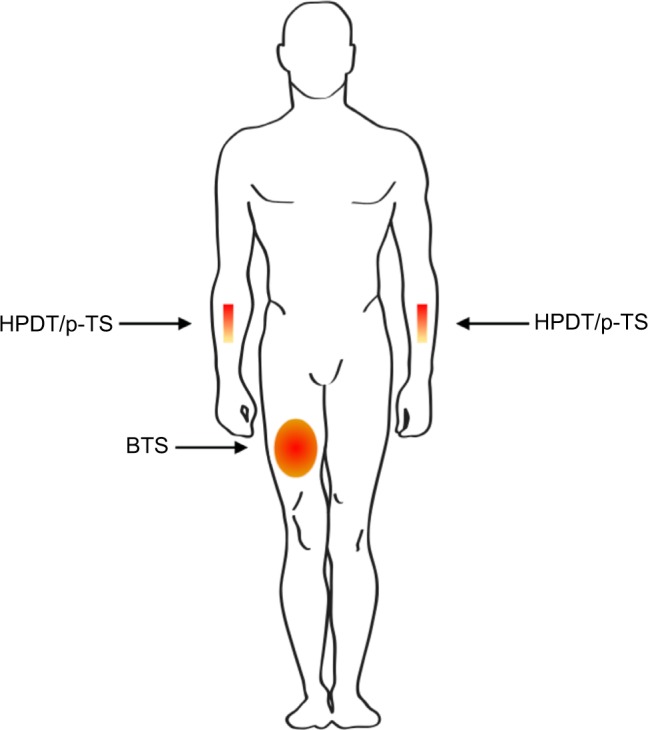
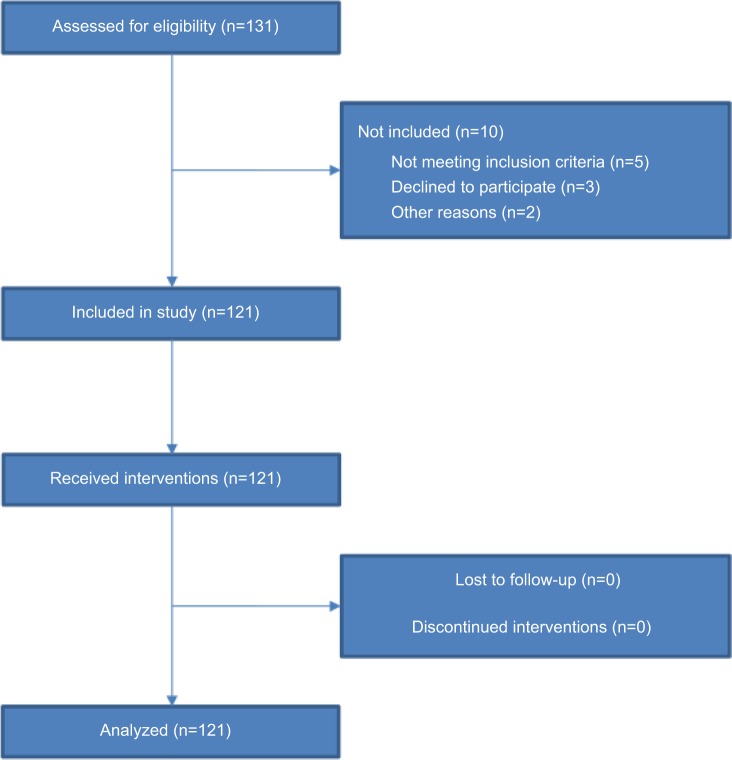
A sample of 121 healthy male participants was included and tested on 2 separate study days with BTS (45°C, 3 minutes), HPDT, and pain during thermal stimulation (45°C, 1 minute). Areas of secondary hyperalgesia were quantified after monofilament pinprick stimulation. The pain catastrophizing scale (PCS) and hospital anxiety and depression scale (HADS) were also applied.
Results
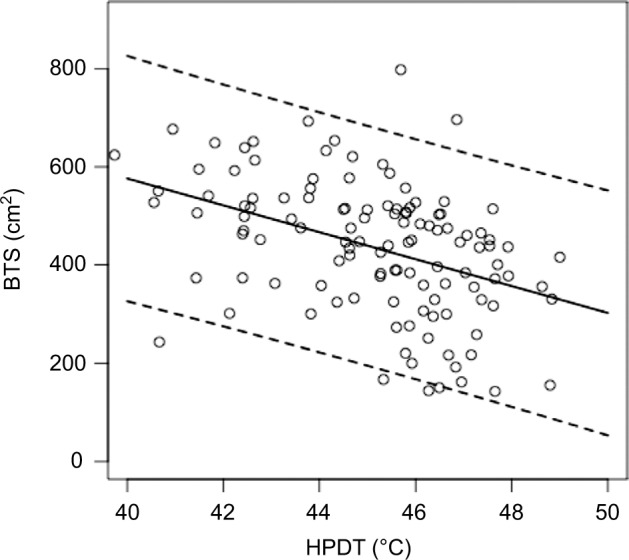
A significant association between HPDT and the size of the area of secondary hyperalgesia (p<0.0001) was found. The expected change in area of secondary hyperalgesia due to a 1-degree increase in HPDT was estimated to be −27.38 cm2, 95% confidence interval (CI) of −37.77 to −16.98 cm2, with an R2 of 0.19. Likewise, a significant association between HADS-depression subscore and area of secondary hyperalgesia (p=0.046) was found, with an estimated expected change in secondary hyperalgesia to a 1-point increase in HADS-depression subscore of 11 cm2, 95% CI (0.19–21.82), and with R2 of 0.03. We found no significant associations between secondary hyperalgesia area and PCS score or pain during thermal stimulation.
Conclusion
HPDT and the area of secondary hyperalgesia after BTS are significantly associated; however, with an R2 of only 19%, HPDT only offers a modest explanation of the inter-participant variation in the size of the secondary hyperalgesia area elicited by BTS.
-
Subjects:
-
Source:J Pain Res. 2017; 10:265-274.
-
Pubmed ID:28184167
-
Pubmed Central ID:PMC5291329
-
Document Type:
-
Funding:
-
Volume:10
-
Collection(s):
-
Main Document Checksum:urn:sha256:1ec2d564deeae58ac7830212d082a72278c172891fbd71ce1e33b620462dbe7b
-
Download URL:
-
File Type:
 [PDF
- 487.58 KB
]
[PDF
- 487.58 KB
]
Supporting Files


ON THIS PAGE



CDC STACKS serves as an archival repository of CDC-published products including
scientific findings,
journal articles, guidelines, recommendations, or other public health information authored or
co-authored by CDC or funded partners.
As a repository, CDC STACKS retains documents in their original published format to ensure public access to scientific information.
As a repository, CDC STACKS retains documents in their original published format to ensure public access to scientific information.
You May Also Like
COLLECTION
CDC Public Access