


Assessment of Airborn Multiwalled Carbon Nanotubes in a Manufactoring Environment
Supporting Files

-
1 2016
-
File Language:
English
Details
-
Alternative Title:Nanotechnol Russ
-
Personal Author:
-
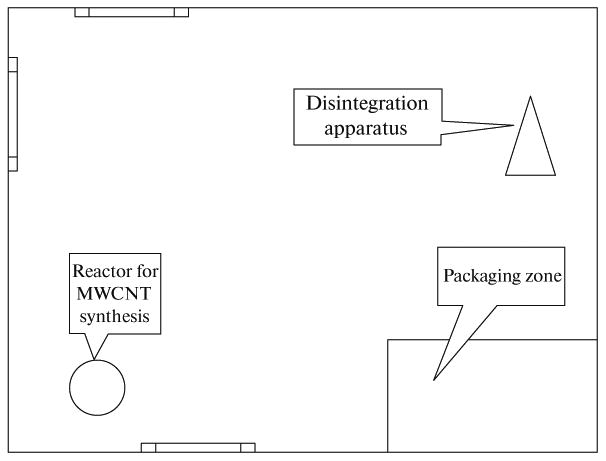
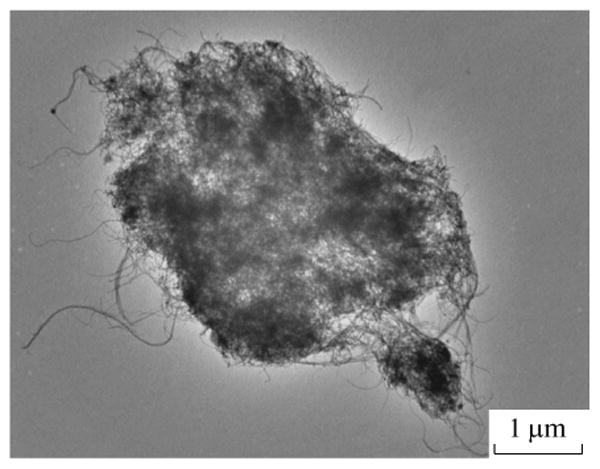
Description:This study was carried out in a factory producing multiwalled carbon nanotubes (MWCNTs) by the catalytic chemical vapor deposition method in a pyrolysis reactor. Air samples of the personal breathing areas were collected simultaneously on mixed cellulose ester filters, for analysis by transmission electron microscopy (TEM), and on high-purity quartz filters for thermal-optical analysis of elemental carbon (EC). It is found that the production of MWCNTs is accompanied by the release of the MWCNT structures in the air of different working zones. The concentration of respirable aerosol in the personal breathing areas, averaged over an 8-hour period, ranges from 0.54 to 6.11 μg/m| based on EC. Airborne MWCNTs were found in the form of agglomerates that range in size from about 1 to 10 μm. These data are consistent with measurements in different plants by two other international groups (from the United States and Sweden) using similar methodology (TEM in combination with EC analysis). In the absence of convincing data on the potential health risks of MWCNTs, and following the principle of reasonable precautions, preventive measures should be taken to minimize exposure to these materials.
-
Source:Nanotechnol Russ. 11(1):110-116
-
Pubmed ID:28603597
-
Pubmed Central ID:PMC5464609
-
Document Type:
-
Funding:
-
Volume:11
-
Issue:1
-
Collection(s):
-
Main Document Checksum:urn:sha256:3cff8cbc91f1a8d70c41acd3d4bd7092f40b9ee1666a21c27ecb9e257da34a61
-
Download URL:
-
File Type:
 [PDF
- 165.85 KB
]
[PDF
- 165.85 KB
]
Supporting Files


File Language:
English
ON THIS PAGE




CDC STACKS serves as an archival repository of CDC-published products including
scientific findings,
journal articles, guidelines, recommendations, or other public health information authored or
co-authored by CDC or funded partners.
As a repository, CDC STACKS retains documents in their original published format to ensure public access to scientific information.
As a repository, CDC STACKS retains documents in their original published format to ensure public access to scientific information.
You May Also Like
COLLECTION
CDC Public Access